Turkish Jewelry Traditions: Wedding Gold, Nazar, Maşallah and Şahmeran
Turkish jewelry traditions explained by Grand Bazaar goldsmiths: wedding gold pinning, nazar, maşallah charms, crescent and star, Şahmeran and baby g…

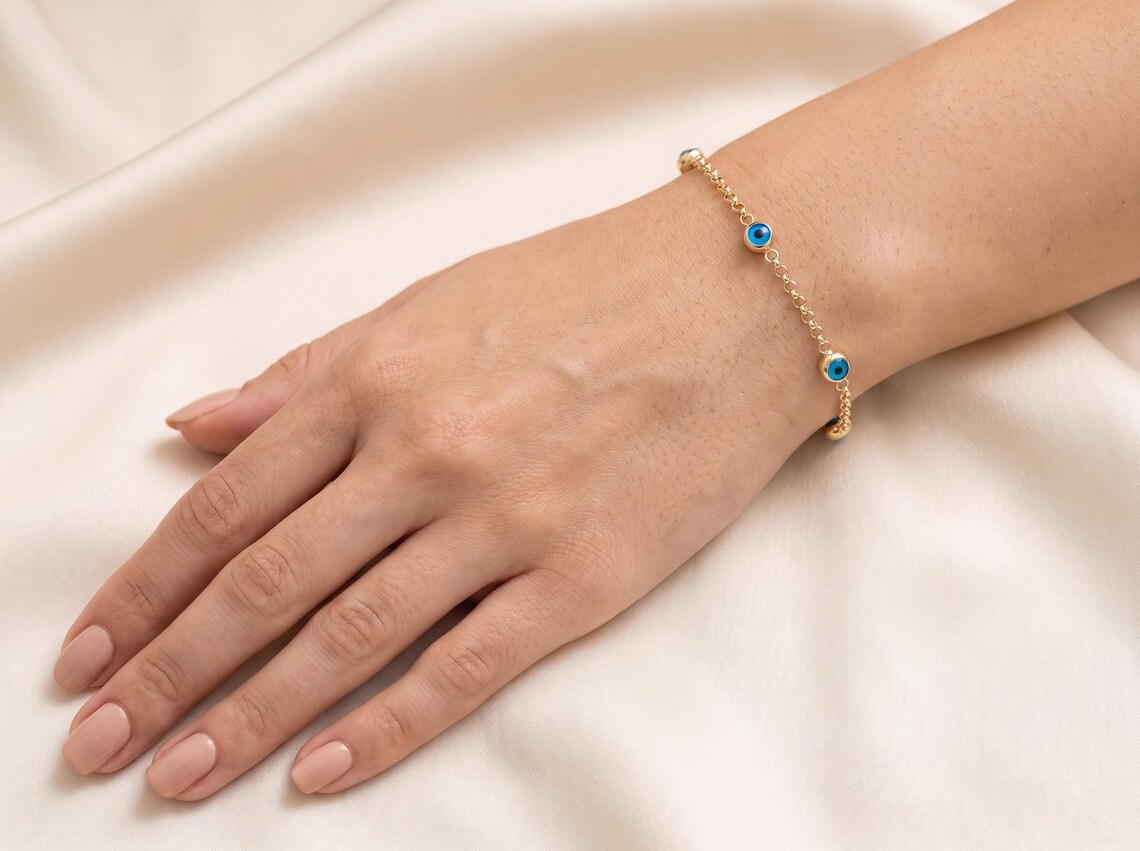
Walk through any street in Istanbul and you will see it everywhere: a blue glass eye hanging above shop doors, pinned to babies' clothes, dangling from car mirrors and set into gold. It is the nazar, the Turkish evil eye, and it is one of the oldest protective symbols still in daily use.
The belief behind the nazar is much older than the bead itself. Across the Mediterranean and the Middle East, people have long believed that an envious or admiring look can bring bad luck to the person, home or child it falls on. In Turkish this is called nazar, from the Arabic word for sight or look. Someone who has been affected is said to have been "touched by the eye".
The nazar bead, or nazar boncuğu, is the answer to that look. It is thought to catch the harmful gaze and turn it away from the wearer.
The traditional nazar is made of layered glass in rings of dark blue, white, light blue and black, forming the shape of an eye. Blue has long been linked with protection in Anatolia, and the glass bead tradition is centuries old. Workshops in villages near İzmir still make nazar beads by hand, shaping molten glass around a rod in the same way it has been done for generations.
In Turkish tradition, a nazar that cracks or breaks has done its job. It absorbed a bad look that was meant for you. The custom is not to repair it but to thank it and replace it with a new one.
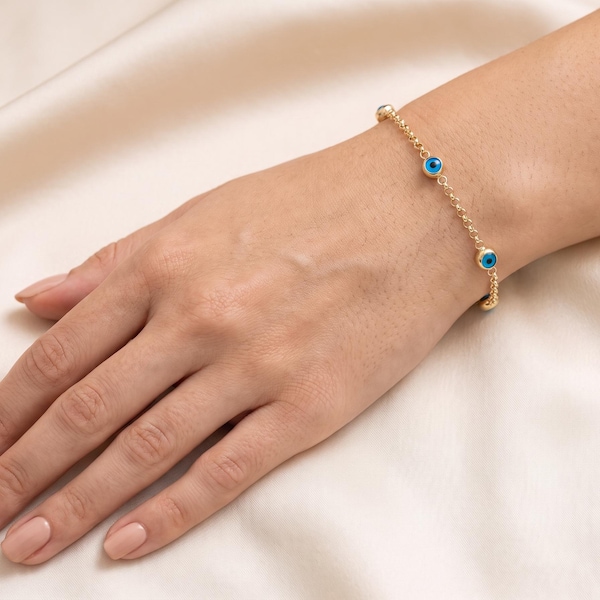 Evil Eye Bracelet with Five Glass Nazar Beads
View Evil Eye Bracelet with Five Glass Nazar Beads on Etsy
 Evil Eye Necklace
View Evil Eye Necklace on Etsy
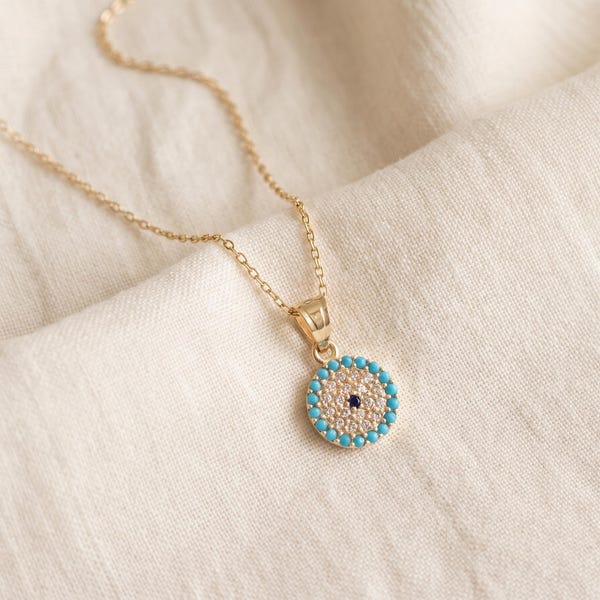 Turquoise Evil Eye Necklace
View Turquoise Evil Eye Necklace on Etsy
There is no strict rule. Many people wear a nazar bracelet on the left wrist, close to the heart, or on the hand they use less so it stays visible. What matters in the tradition is that the eye faces outward, toward the world.
Giving someone a nazar means wishing them well and wanting them protected. That makes it a natural gift for a new baby, a new home, a new job, a graduation or a friend going through a hard time. In solid gold it becomes something they can wear every day for the rest of their life.
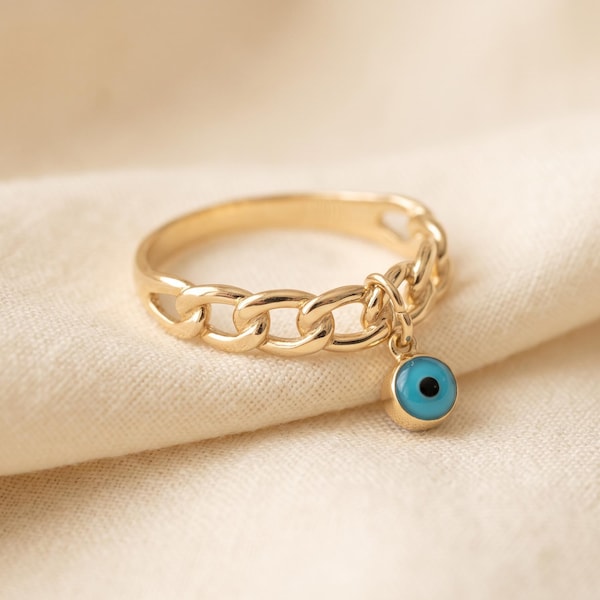 Curb Chain Ring with Turkish Nazar Charm
View Curb Chain Ring with Turkish Nazar Charm on Etsy
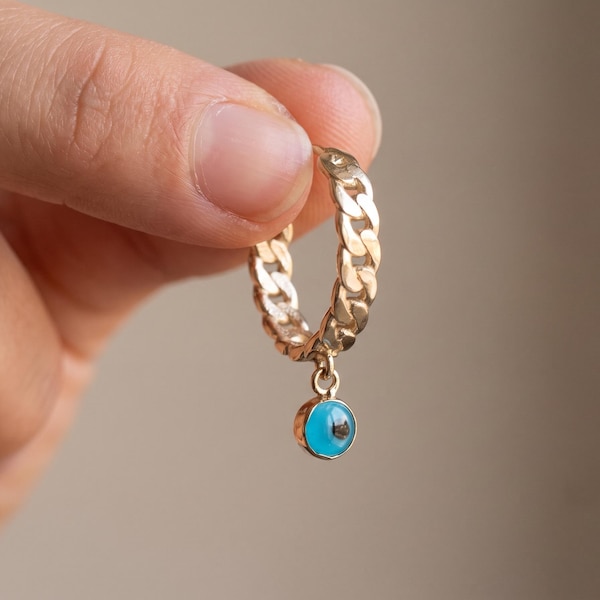 Curb Chain Hoop Earrings with Turkish Nazar Charm
View Curb Chain Hoop Earrings with Turkish Nazar Charm on Etsy
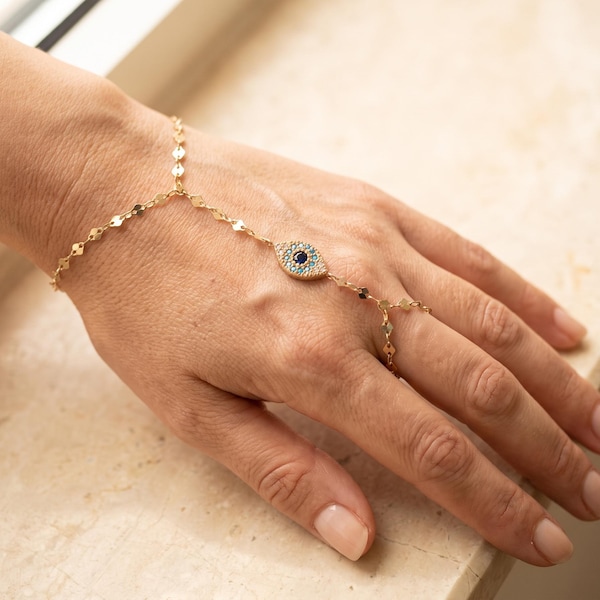 Evil Eye Hand Chain Bracelet
View Evil Eye Hand Chain Bracelet on Etsy
The evil eye is often combined with the hamsa, an open hand symbol found in Middle Eastern and North African traditions, which is also worn for protection. You will see both together on bracelets and pendants.
We make our nazar pieces in solid 14K gold in our Grand Bazaar atelier, with glass, enamel or stone eyes depending on the design. Each one is stamped 585.
Yes. In Turkish tradition, giving someone a nazar is a way of wishing them well and wanting them protected. Many people believe a nazar works best when it is given rather than bought for yourself.
In Turkish tradition, a nazar that cracks or breaks is believed to have absorbed a bad look meant for you. It is thanked and replaced, not repaired.
Yes. The nazar is a cultural symbol of protection and good wishes, worn by people of all backgrounds and beliefs.
The evil eye is the blue eye symbol that turns away envious looks. The hamsa is an open hand symbol from Middle Eastern and North African traditions, also worn for protection. They are often combined.
Share:
Turkish jewelry traditions explained by Grand Bazaar goldsmiths: wedding gold pinning, nazar, maşallah charms, crescent and star, Şahmeran and baby g…
Gemstone meanings for amethyst, blue topaz, turquoise, emerald, ruby, garnet and pearl, plus an honest guide to natural stones vs cubic zirconia in g…
Our pearl jewelry guide: how freshwater pearls form, judging luster and shape, how to care for them, June birthstone meaning and choosing bridal pear…