Bracelet Size Guide: How to Measure Your Wrist and Choose a Fit
Bracelet size guide with a cm and inch chart: how to measure your wrist, how much ease to add for a snug, comfort or loose fit, and sizing for kids.


Yes, you can sleep in solid gold jewelry, and the gold itself will not be harmed: 14K gold does not rust, and a night against your skin will not make it tarnish. The real question is mechanical. Fine chains get twisted and pulled, prongs snag on bedding, and some earrings press into your head, so whether you should sleep in a piece depends far more on its design than on the metal.
Our goldsmiths answer this question almost every week. Here is how we think about it, piece by piece.
Solid 14K gold, stamped 585, is 58.5% pure gold alloyed with other metals for strength. It does not react to sweat or skin oils the way plated or base metal jewelry can, and it will not turn your skin green. If you want the full explanation, our guide on whether 14K gold tarnishes covers it in detail.
Plated pieces are a different story. Friction against sheets and pillows wears down a thin gold layer, so if a piece is plated or gold filled, sleeping in it shortens its life. Every piece we make is solid gold, so for our jewelry the concern is only about the shape and construction.
When you turn over in your sleep, a necklace does not turn with you. The chain rolls against the pillow, the pendant slides around to the back, and the links twist on themselves. Over many nights this can create kinks, knots and, eventually, a weak link.
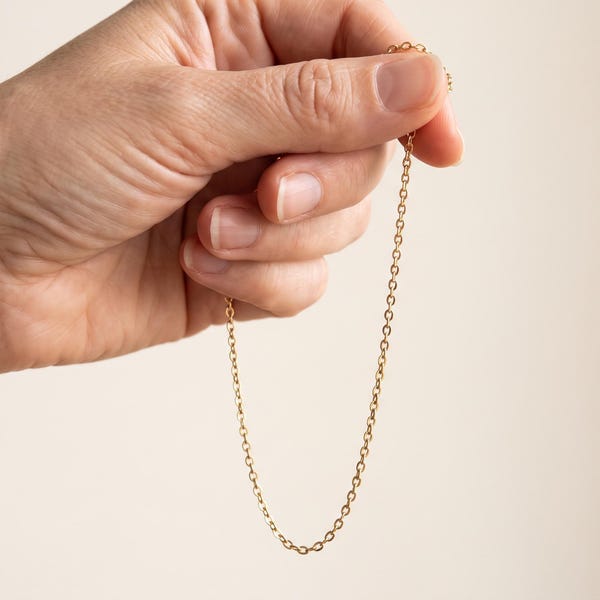
A short, sturdy chain with a small smooth pendant is the safest thing to sleep in. A long, fine chain with a large pendant is the riskiest. Layered necklaces should always come off at night: two or three chains rolling together will tangle almost every time.
 Wheat Chain Necklace
View Wheat Chain Necklace on Etsy
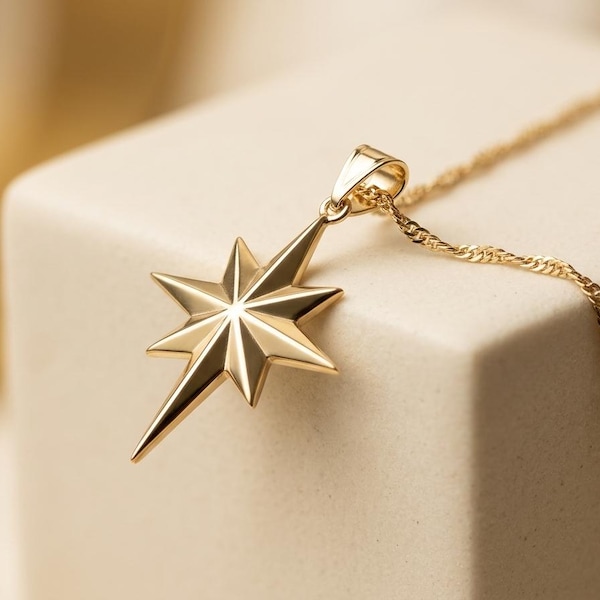 North Star Necklace
View North Star Necklace on Etsy
 Pave Heart Necklace
View Pave Heart Necklace on Etsy
Fingers tend to swell slightly overnight, especially in warm weather or after a salty meal. A ring that fits perfectly at noon can feel tight at 3 a.m. A plain, comfortable band is usually fine to sleep in. Rings with raised settings are not.
Prong-set solitaires and cluster rings sit high off the finger. They can scratch your skin, catch on sheets, and over time the prongs can be bent by pressure while you sleep on your hand. A loose prong is how stones get lost. If your ring has any raised stone, take it off. If you are not sure your rings fit well, our ring size guide explains how to check.
Earrings are the category where comfort matters most, because your ear is pressed into the pillow for hours.
| Earring type | Sleep in it? | Why |
|---|---|---|
| Small seamless sleeper hoops | Usually yes | Designed for this: smooth, light and close to the lobe. |
| Small huggies | Usually yes | Sit snugly against the ear with nothing sticking out. |
| Flat ball or dome studs | Often fine | Comfortable, but butterfly backs can dig in behind the ear. |
| Stone studs with prongs | Better not | Prongs can catch hair and the setting can press into skin. |
| Large or chunky hoops | No | Can bend out of shape or catch and pull on the lobe. |
| Drop and dangle earrings | No | Easily tangled in hair and bent. |
If you want earrings you never have to think about, small sleeper hoops or plain huggies are the answer. A common complaint with studs is the post back: a flat disc back is far more comfortable for sleeping than a standard butterfly.
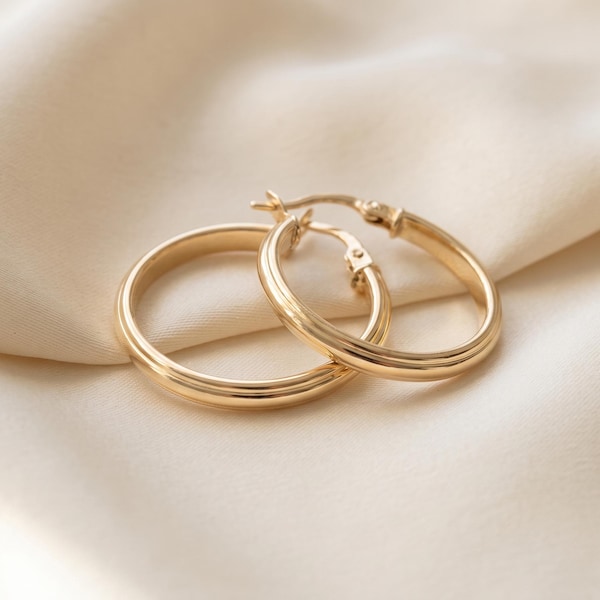 Tube Hoop Earrings
View Tube Hoop Earrings on Etsy
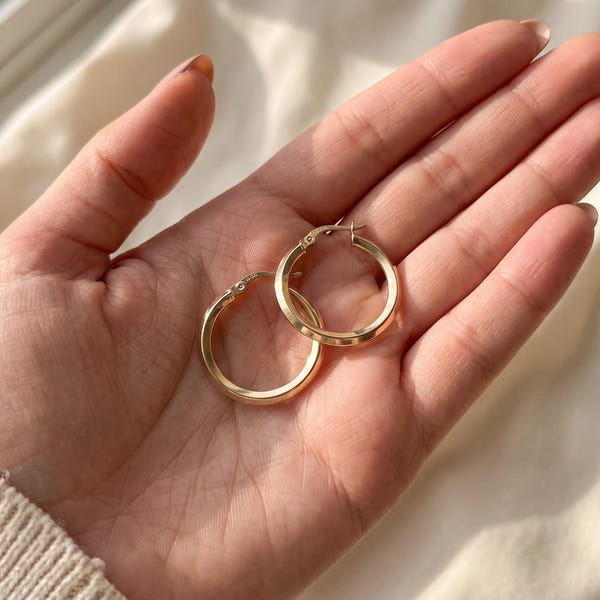 Sleeper Earrings Square Edge Hoops
View Sleeper Earrings Square Edge Hoops on Etsy
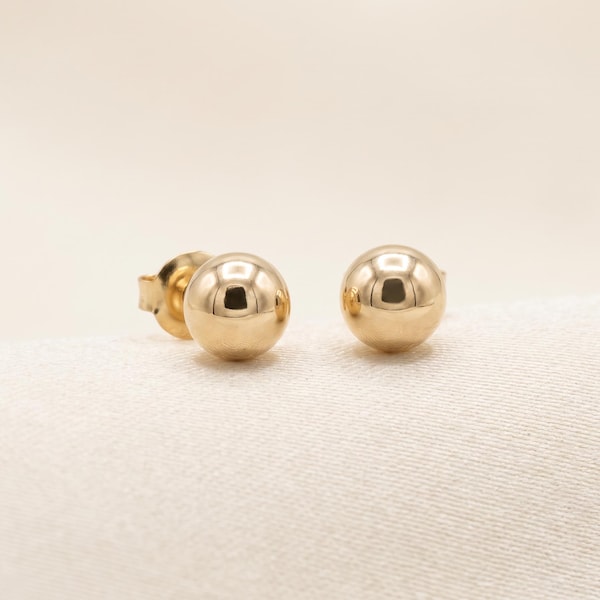 Ball Stud Earrings
View Ball Stud Earrings on Etsy
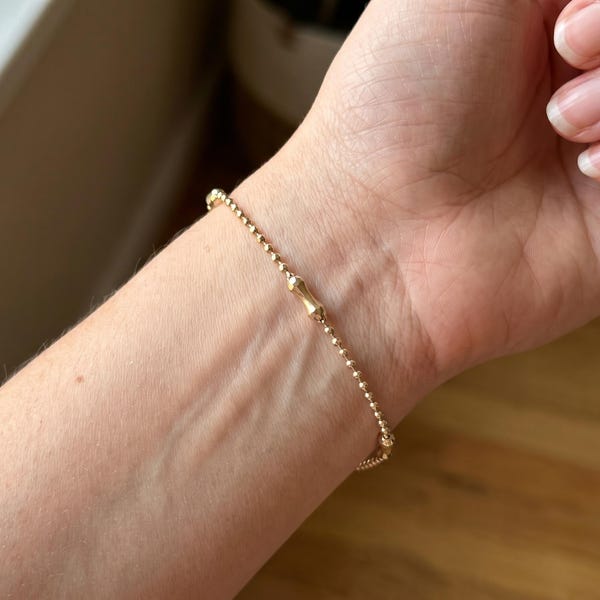
Bracelets are the most likely piece to catch on something in bed: a sheet, a blanket, your partner's hair. Fine chain bracelets can snap at the clasp, and charm bracelets press into the skin when you lie on your arm. We recommend taking bracelets off at night, with one exception: a well-fitted, smooth chain that you already forget you are wearing during the day.
Hand chains should always come off. The finger loop and the chain across the back of the hand are under tension whenever you clench your fist, and sleeping hands clench and move. Our hand chain bracelet guide covers how to wear them comfortably during the day.
You can safely sleep in a piece if it is:
If a piece fails any of these, put it in its box at night. It takes ten seconds and saves a repair.
Beyond bedtime, there are moments when all jewelry should come off:
If you do sleep in a necklace or ring every night, give it a quick check once a week. Run the chain through your fingers looking for kinks, check that the clasp closes firmly, and look at any stones under a light. Clean it more often too, because skin oils collect faster when a piece is worn day and night. Our guide to cleaning gold jewelry at home takes about five minutes.
Should anything bend or loosen, message us. Our lifetime guarantee covers craftsmanship, and Şerif answers every message himself.
Browse our earrings for sleeper hoops and huggies, or our necklaces for sturdy everyday chains.
No. Solid 14K gold does not tarnish from contact with skin overnight. Any dullness comes from skin oils and lotion, which a gentle wash removes.
It is not harmful to you, but fine chains can kink, knot or snap from the twisting that happens while you sleep. A short, sturdy chain with a small smooth pendant is the safest option.
A plain band is usually fine. A raised prong setting is better removed, because pressure and snagging can loosen prongs over time and put the stone at risk.
Small seamless sleeper hoops and plain huggies are the most comfortable. Studs with flat backs work for many people, while large hoops and drop earrings should always come off.
No. Pearls are soft and organic, and friction, sweat and creams can damage their surface. Always take pearls off before bed.
Share:
Bracelet size guide with a cm and inch chart: how to measure your wrist, how much ease to add for a snug, comfort or loose fit, and sizing for kids.
How to layer necklaces so they sit well and stay untangled: lengths in cm and inches, chain weights, pendant spacing and mixing yellow and white gold.
How to store gold jewelry at home and on the road: separate compartments, tangle-free chains, pearls apart, humidity tips and what our box is for.