Yellow vs White vs Rose Gold Guide: How 14K Colors and Two-Tone Differ
Yellow, white and rose gold guide: how 14K alloys create each color, what rhodium on white gold really is, choosing by preference, and caring for two…

Solid 14K gold does not tarnish the way silver or plated jewelry does. It will never rust, flake or wear through to another color, but because it is 58.5% gold and 41.5% other metals, it can develop a slight dullness or faint film over time, which a simple wash removes.
That small film is what people usually mean when they ask if 14K gold tarnishes. Below we explain where it comes from, which everyday things speed it up, how 14K compares with plated jewelry, and how our goldsmiths bring the shine back.
Pure gold is one of the least reactive metals there is. Oxygen, water and most household chemicals leave it untouched, which is why ancient gold objects come out of the ground still bright. Pure gold is also very soft, so jewelers mix it with other metals to make it strong enough to wear every day.
In 14K gold, the other 41.5% is usually a mix of silver, copper and zinc, and sometimes nickel or palladium in white gold. These alloy metals are what can react:
Because the gold content is high enough, the reaction stays at the very surface and is minor. You will not see the black tarnish silver gets. At most you see a slightly flat, less reflective finish, often mixed with a layer of skin oil and lotion. Higher karats resist this even better, which is one of the trade-offs we cover in 14K vs 18K gold.
The real problem most people have experienced is not tarnish on gold. It is a thin plated layer wearing away to expose the metal underneath. That cannot happen with solid gold.
| Type | What it is | What happens over time | Can the shine be restored? |
|---|---|---|---|
| Solid 14K gold | 14K alloy all the way through | Light surface dulling; scratches are still gold | Yes, by washing or professional polishing, repeatedly |
| Gold filled | Thick gold layer bonded to brass | Can last years, eventually wears at edges | Cleaning yes; heavy polishing removes the layer |
| Gold plated | Very thin gold layer over base metal | Wears through, base metal tarnishes and shows | Only by re-plating |
| Vermeil | Gold layer over sterling silver | Layer wears, silver underneath tarnishes dark | Only by re-plating |
For a full breakdown of these constructions, see our guide to solid gold vs gold filled vs gold plated.
Chlorine in pools, hot tubs and bleach is the biggest risk to gold alloys. It does not just dull the surface: with repeated exposure it can attack the alloy metals and, over time, weaken solder joints and prongs, a problem known as stress corrosion. Take gold off before swimming in a pool or cleaning with bleach.
Sulfur compounds are found in hot springs, some cosmetics, rubber bands and certain foods such as eggs and onions. They react mainly with the silver in the alloy. Occasional contact is fine; storing gold next to rubber or wearing it in sulfur springs is not.
These rarely react with the metal, but they leave a film that makes gold look cloudy, especially in the links of a chain and behind stones. Put jewelry on last, after products have dried.
Everyday wear adds tiny surface scratches that scatter light. That is not tarnish, but it reduces the mirror shine. It is normal and fully reversible.
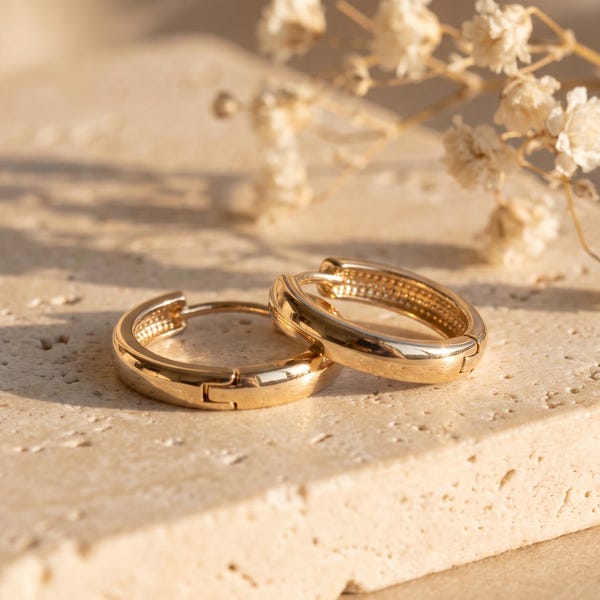 Huggie Hoop Earrings Thick Domed Band
View Huggie Hoop Earrings Thick Domed Band on Etsy
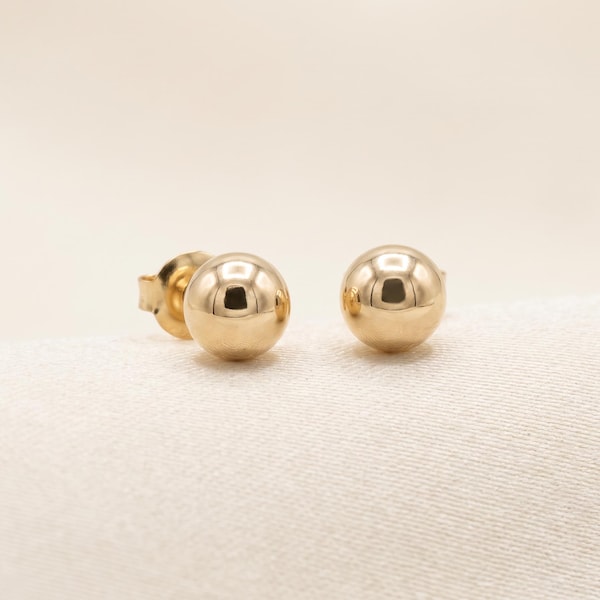 Ball Stud Earrings
View Ball Stud Earrings on Etsy
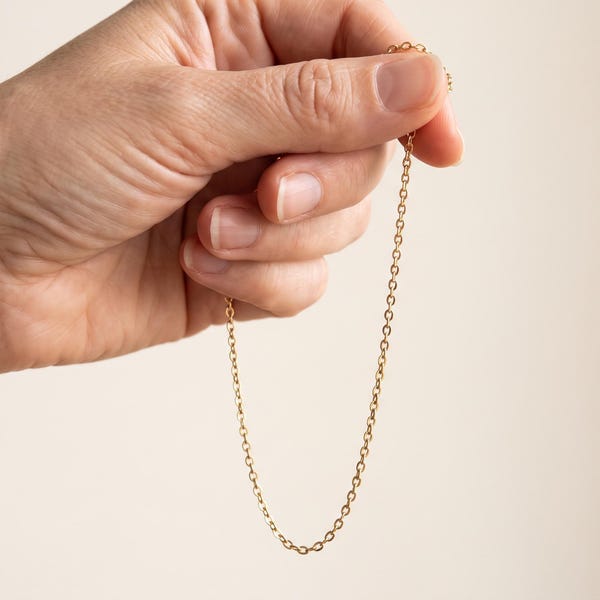 Cable Chain Necklace
View Cable Chain Necklace on Etsy
White gold is often finished with a thin rhodium plating for a brighter white color. As that plating wears, the naturally slightly warmer white gold underneath shows through. This is not tarnish, and a jeweler can re-apply rhodium if you want the bright white back.
Rose gold gets its color from copper. Some people find it slowly warms or deepens with wear. Polishing returns it to its original tone.
Avoid toothpaste, baking soda pastes and abrasive powders, which leave fine scratches. Our step-by-step guide to cleaning gold jewelry at home covers pearls, enamel and stone settings in more detail.
For deeper scratches, a goldsmith can polish solid gold back to a near-new finish. Because the metal is gold throughout, this can be done many times over a lifetime. Polishing does remove a very small amount of metal each time, so there is no need to do it often.
Showering is a common question too. Water itself does not harm 14K gold, though soap film builds up; we cover the details in can you shower with 14K gold.
If you want jewelry you can wear daily without worrying about it changing color, solid gold is the material that delivers that. Every piece from our atelier is solid 14K gold, stamped 585, and never plated or gold filled, so a quick wash is all it should ever need at home. Our lifetime guarantee on craftsmanship covers the work itself, and Şerif answers care questions personally. Browse our solid gold earrings and bracelets, the pieces that take the most daily contact.
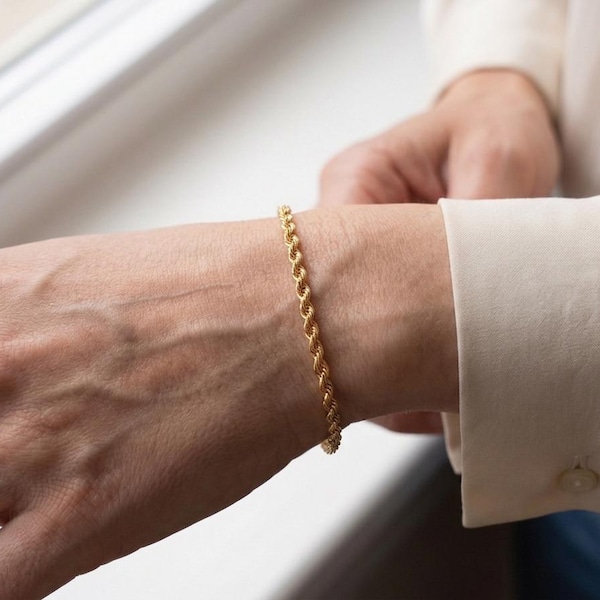 Rope Chain Bracelet
View Rope Chain Bracelet on Etsy
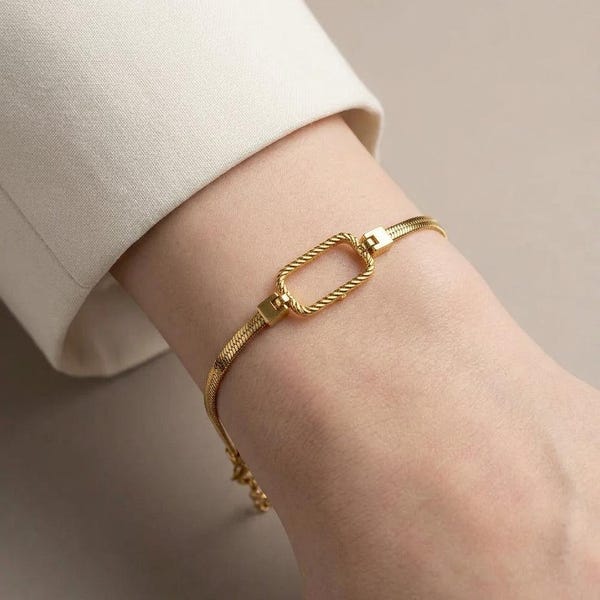 Herringbone Bracelet
View Herringbone Bracelet on Etsy
No. Solid 14K gold does not turn black like silver. At most it develops a light surface film from its alloy metals, oils and products, which washes off with mild soap and water.
Yes. 14K is one of the most practical karats for daily wear because it is harder than 18K or 22K and resists tarnish well. Remove it before pools and harsh cleaning chemicals.
Solid 14K gold does not fade because the color runs through the whole metal. Fading is a sign of plating wearing off, or of rhodium wearing on white gold, which can be re-applied.
Usually because of a film of skin oil, lotion or soap, plus fine scratches from daily wear. A soak in warm soapy water and a soft brush restores most of the shine; a jeweler can polish out scratches.
Yes. Repeated chlorine exposure can attack the alloy metals and weaken solder joints and prongs over time. Take gold off before swimming in chlorinated water or using bleach.
Share:
Yellow, white and rose gold guide: how 14K alloys create each color, what rhodium on white gold really is, choosing by preference, and caring for two…
Gold cross necklace guide: the difference between a cross and a crucifix, what INRI means, choosing size and chain, two-tone styles and sacrament gif…
Gold charm bracelet guide: what heart, clover, star, butterfly and nazar charms traditionally mean, how to choose chain and fit, and how to care for…