Gold Cross Necklace Guide: Cross vs Crucifix, Sizes, Chains and Gifts
Gold cross necklace guide: the difference between a cross and a crucifix, what INRI means, choosing size and chain, two-tone styles and sacrament gif…

Yellow, white and rose 14K gold all contain the same amount of pure gold, 58.5 percent; the color comes from the other metals mixed in. Yellow gold balances gold with silver and copper, rose gold uses more copper for a warm pink tone, and white gold uses white metals for a pale gray color that is usually finished with a thin layer of rhodium for a bright white shine.
So the choice between them is about color and care, not quality or value. This guide explains each alloy in plain terms, what rhodium on white gold actually is, how two-tone and tri-tone pieces work, and how to look after each color.
Pure 24K gold is soft and deep yellow. To make it strong enough for daily wear, goldsmiths mix it with other metals to form an alloy. In 14K gold, 14 of 24 parts are pure gold, which is why it is stamped 585. The remaining 41.5 percent decides both the color and the hardness. Our article what does 585 mean on gold covers the stamp, and the gold karat chart compares karats.
| Yellow gold | White gold | Rose gold | |
|---|---|---|---|
| Pure gold in 14K | 58.5% | 58.5% | 58.5% |
| Main added metals | Silver and copper | White metals such as palladium, nickel or zinc, depending on the alloy | A higher share of copper |
| Natural color | Warm yellow | Pale gray-white | Pink to soft red |
| Usual finish | Polished metal | Polished, typically with a rhodium finish | Polished metal |
| Long-term care | Polish and clean | Rhodium may need refreshing over years | Polish and clean |
If you have a known sensitivity to a particular metal, message us before ordering and Şerif will answer personally about the specific piece.
Yellow gold is what most people picture when they think of gold, and it is the traditional color in the Grand Bazaar where our family has worked for three generations. Its color runs all the way through the metal, so it never needs refinishing; a simple polish brings back the shine after years of wear. It hides small scratches well and pairs naturally with turquoise, emerald, garnet and pearls.
White gold has a natural color that is pale but slightly warm or grayish. To give it a crisp, bright white look, white gold jewelry is typically finished with a very thin layer of rhodium, a hard, white metal from the platinum family.
It is important to separate this from gold plating. A gold-plated piece is a base metal with a thin gold coating; when the coating wears, a different metal shows underneath. A rhodium-finished white gold piece is solid 14K white gold all the way through. If the rhodium wears thin, what you see is the natural color of the white gold itself, a slightly warmer white, not a cheaper metal. A jeweler can renew the rhodium finish when you want the bright white back.
For more on how solid gold compares with coated jewelry, read solid gold vs gold-filled vs gold-plated.
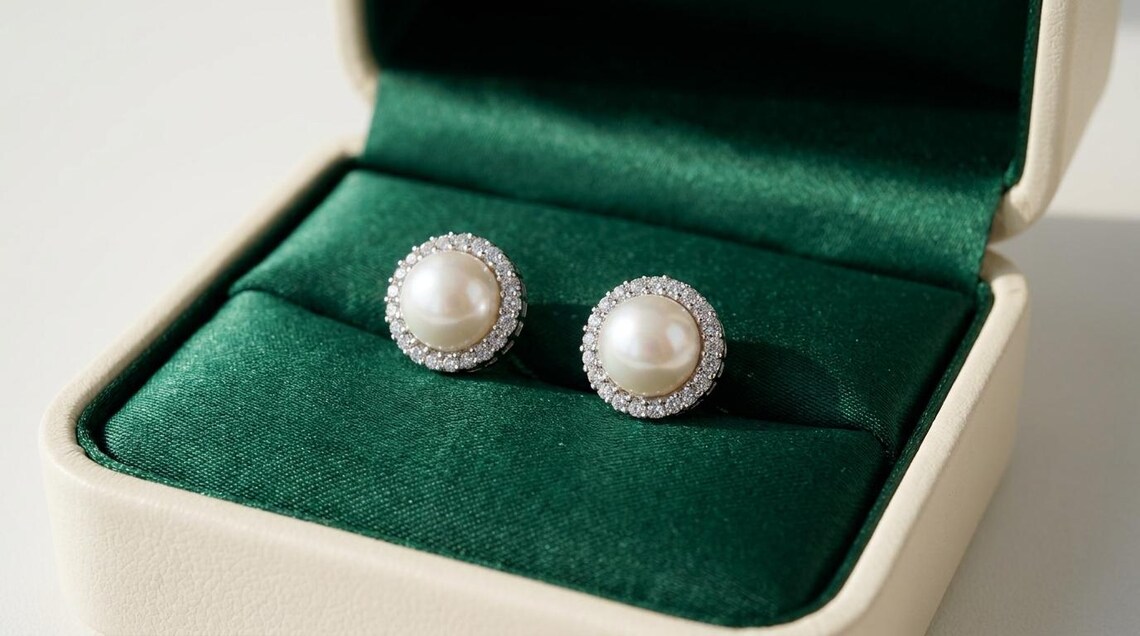
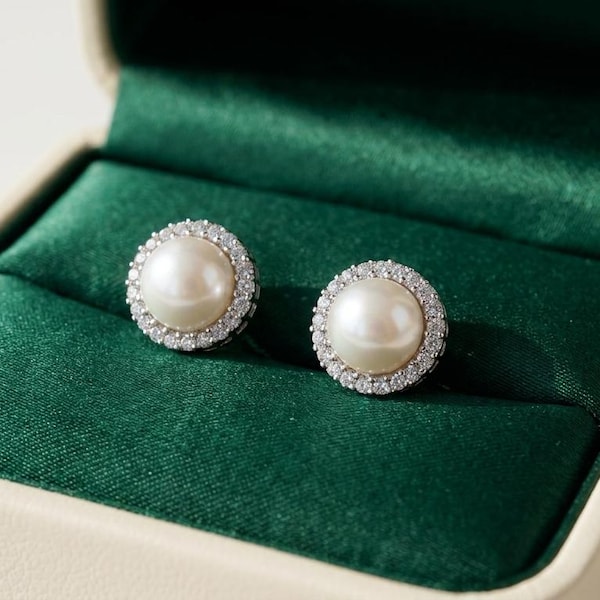 Pearl Halo Stud Earrings
View Pearl Halo Stud Earrings on Etsy
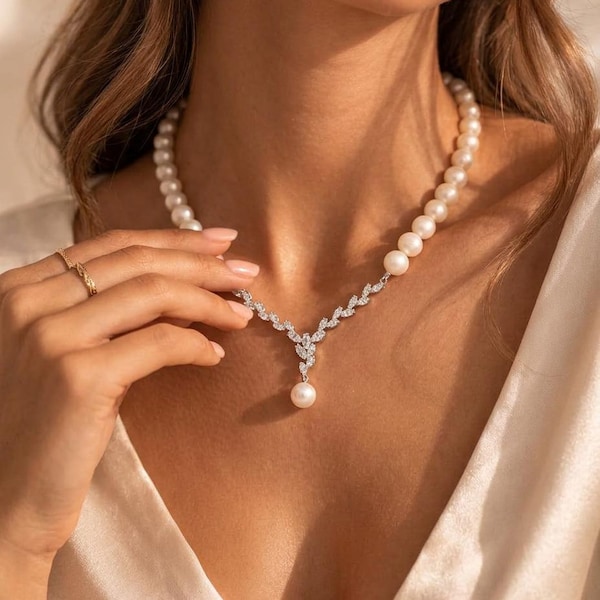 Freshwater Pearl Y-Lariat Necklace
View Freshwater Pearl Y-Lariat Necklace on Etsy
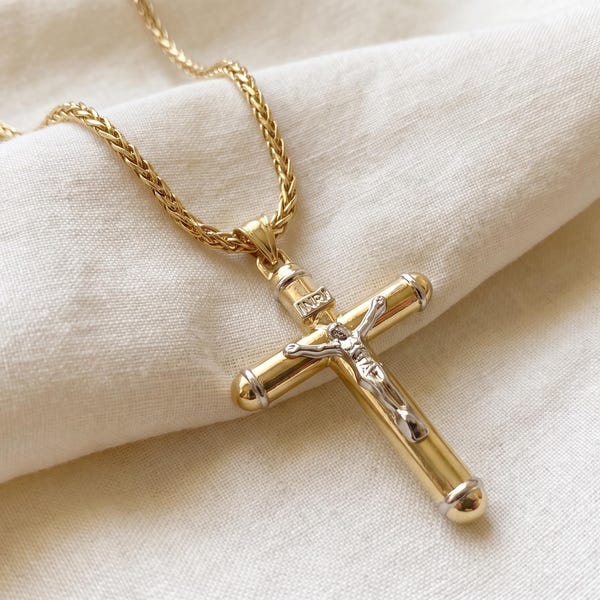
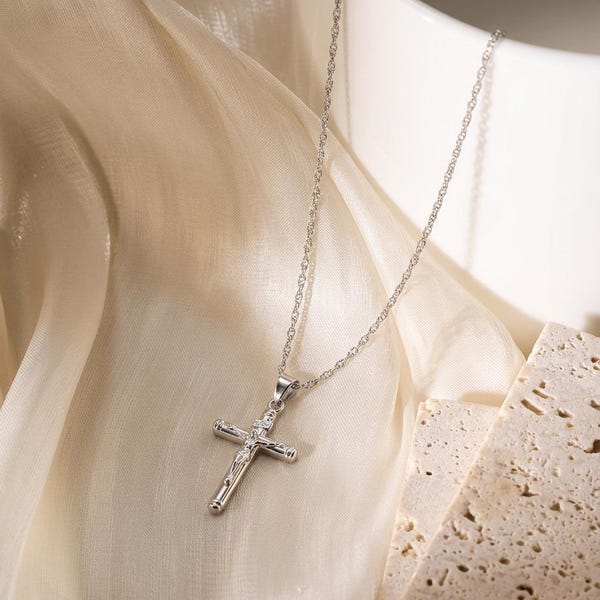 Tubular Crucifix Necklace
View Tubular Crucifix Necklace on Etsy
Rose gold gets its color from a larger share of copper in the alloy. Like yellow gold, the color runs through the metal and needs no plating or refinishing. Copper also makes rose gold slightly harder, which is helpful for bracelets. Over many years, rose gold can deepen very slightly in tone, which many wearers enjoy.
Today we mostly use rose gold alongside other colors. Our rose gold mesh bracelet, for example, is a two-tone design with pave CZ. We do not currently list many all-rose pieces, so if you are looking for one, send us a message.
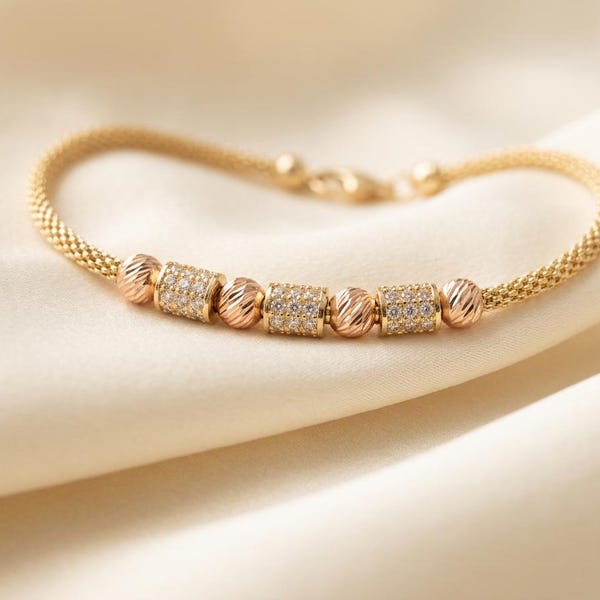 Bracelet
View Bracelet on Etsy
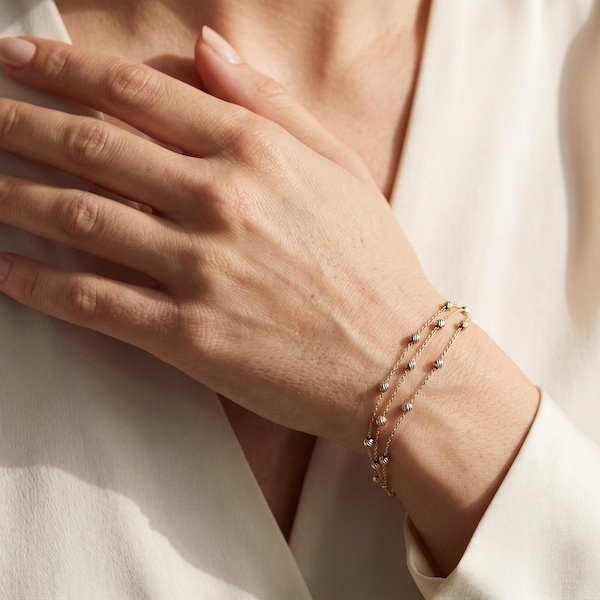 14K Solid Tri-Color Gold Double Strand Diamond Cut Bead…
View 14K Solid Tri-Color Gold Double Strand Diamond Cut Bead… on Etsy
Two-tone pieces combine yellow and white gold in one design, and tri-tone (or tri-color) pieces add rose gold as a third color. They are made by joining solid gold of each color, or by finishing selected parts of a piece in a contrasting tone, so the detail and contrast stand out. Two-tone is especially practical if you wear a mix of metals:
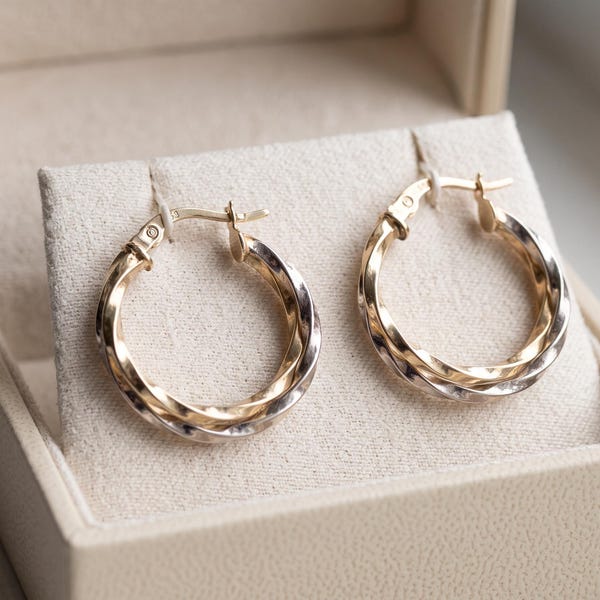 14K Two-Tone Twisted Hoop Earrings
View 14K Two-Tone Twisted Hoop Earrings on Etsy
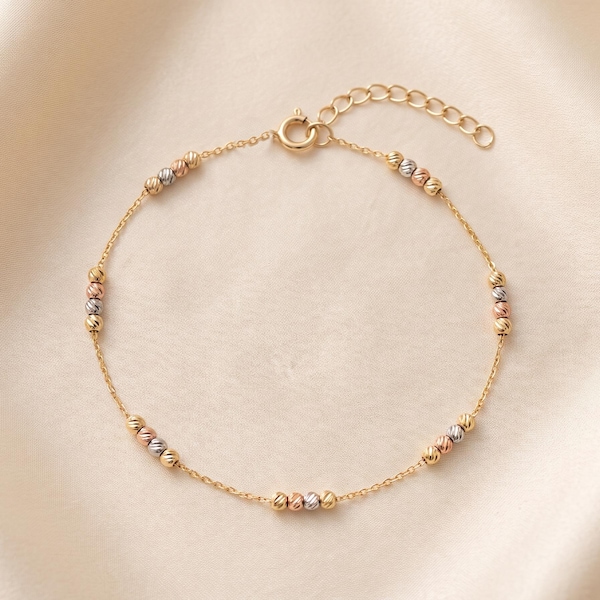 Two Tone Bracelet
View Two Tone Bracelet on Etsy
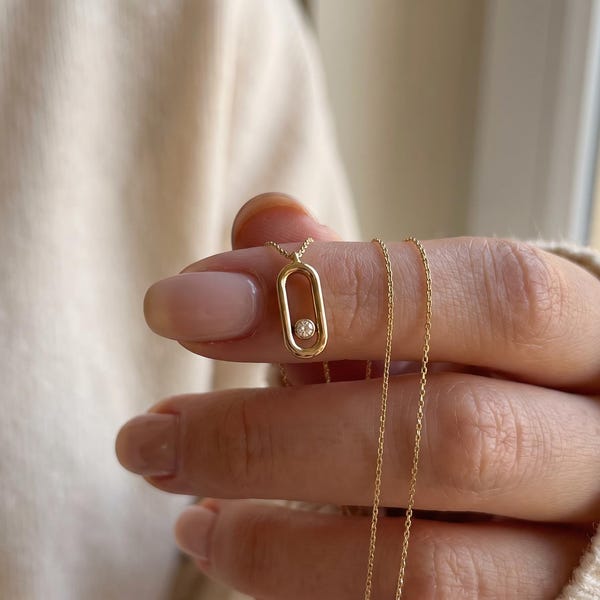 Oval Pendant Necklace with One Moving Stone
View Oval Pendant Necklace with One Moving Stone on Etsy
Two-tone earrings work well in a mixed stack; see our gold hoop earrings guide. Two-tone crosses and crucifixes are covered in our gold cross necklace guide.
You will often read that yellow gold suits warm skin, white gold suits cool skin and rose gold suits everyone. These are loose style suggestions, not rules. The best color is the one you like seeing on yourself and that fits the jewelry you already own. A few honest pointers:
For wedding and bridal choices, our bridal gold jewelry guide goes further. Browse every color in our necklaces and rings.
All three colors of solid 14K gold are durable for daily wear, and none tarnishes the way silver does. Clean them the same way: warm water, a drop of mild dish soap, a soft brush, and a lint-free cloth to dry. Avoid chlorine and harsh cleaners, which can affect gold alloys and stones. Store pieces separately so harder stones do not scratch softer metal. For white gold, avoid abrasive polishing cloths on the rhodium finish. Our guides on cleaning gold jewelry at home and whether 14K gold tarnishes go step by step.
Yes. 14K white gold contains 58.5 percent pure gold, the same as 14K yellow and rose gold. Its color comes from the white metals in the alloy and its usual rhodium finish.
Over time, especially on rings and bracelets, the thin rhodium finish can soften and show the natural, slightly warmer color of the white gold beneath. A jeweler can renew it.
No. The extra copper in rose gold actually makes it slightly harder than yellow gold of the same karat. Both are well suited to daily wear.
Skin tone suggestions are only a starting point. Choose the color you enjoy and that matches the metals you already wear; two-tone pieces let you wear both.
Yes. Every two-tone and tri-tone piece we sell is solid 14K gold stamped 585, never plated over a base metal.
Share:
Gold cross necklace guide: the difference between a cross and a crucifix, what INRI means, choosing size and chain, two-tone styles and sacrament gif…
Gold charm bracelet guide: what heart, clover, star, butterfly and nazar charms traditionally mean, how to choose chain and fit, and how to care for…
Gold initial necklace guide: whose letter to choose, serif vs script styles, chain lengths, layering ideas and thoughtful ways to gift a personalized…