Horseshoe Jewelry Meaning: Luck, Folklore and Which Way to Wear It
Horseshoe jewelry meaning: where the lucky horseshoe tradition comes from, the debate over which way it should point, and how to wear the motif in go…

Snake jewelry most often symbolizes renewal, transformation, wisdom, healing and protection. Because a snake sheds its skin and emerges new, cultures around the world have used it as an image of rebirth, while others link it with eternity, royal power or medicine.
The serpent is one of the oldest motifs in jewelry, from Egyptian crowns to Victorian engagement rings to the Anatolian legend of Şahmeran. This guide walks through what the snake means in different traditions, how it appears in Turkish jewelry, and one common point of confusion: a "snake chain" is a type of chain, not a snake design.
The snake has carried both positive and negative meanings through history. In jewelry, the positive ones dominate:
It is fair to say the snake has a darker side too, most famously the serpent in the Garden of Eden. That duality is part of its appeal: a snake piece can feel bold, a little dangerous and deeply symbolic at the same time.
| Culture or tradition | Snake image | Main meaning |
|---|---|---|
| Ancient Egypt | The uraeus, a rearing cobra on royal headdresses | Royalty, divine protection |
| Ancient Greece | The staff of Asclepius, a single snake on a rod | Healing and medicine |
| Egyptian and Greek alchemy | The ouroboros, a snake eating its tail | Eternity, cycles, renewal |
| Hindu and Buddhist traditions | Nagas, serpent beings | Guardianship, water, fertility |
| Chinese zodiac | The Snake, one of twelve signs | Wisdom, intuition, elegance |
| Mesoamerica | Quetzalcoatl, the feathered serpent | Creation, knowledge, wind |
| Anatolia | Şahmeran, the queen of snakes | Wisdom, healing, protection |
The image of a snake biting its own tail appears in ancient Egyptian texts and later in Greek and medieval alchemy. It represents the cycle of life, death and rebirth, and the idea of something without beginning or end. That makes it a cousin of the infinity sign; see our infinity symbol jewelry meaning for that story.
Snake rings, bracelets and necklaces became very popular in nineteenth-century Britain. The best-known example is the engagement ring Prince Albert gave Queen Victoria, designed as a snake set with an emerald. In Victorian eyes, a snake coiled into a ring stood for eternal love and commitment, and the fashion spread widely.
In Anatolia, the most famous snake figure is Şahmeran, the queen of snakes. In the legend, she is half woman and half snake, wise and kind, and she lives in an underground realm with her serpents. A young man stumbles into her world, and she shares her knowledge of healing with him. In most versions she is later betrayed, and her wisdom passes to the people above.
Şahmeran is especially associated with southeastern Turkey, notably the Mardin region, and with Tarsus. She appears in folk paintings on glass, copper work, embroidery and jewelry, where she is seen as a symbol of wisdom, healing, fertility and protection. Many women in the region wear Şahmeran pieces as a cultural emblem and a keepsake of the story. Our Şahmeran meaning article tells the full legend.
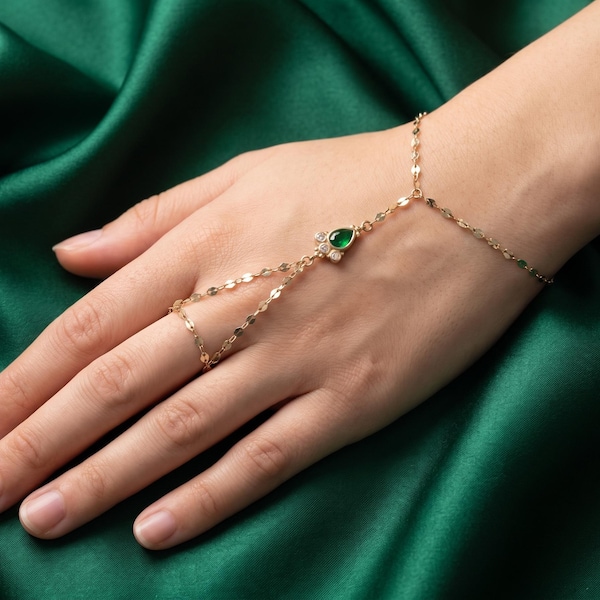 Hand Chain Bracelet with Emerald Pear Stone
View Hand Chain Bracelet with Emerald Pear Stone on Etsy
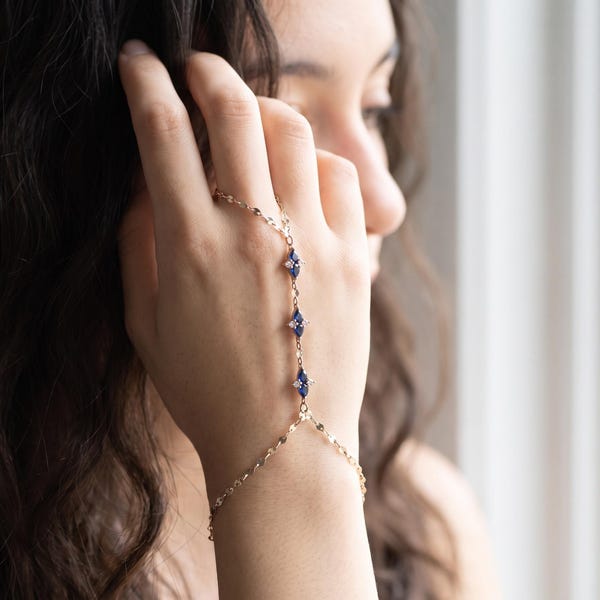 Hand Chain Bracelet with Blue Sapphire
View Hand Chain Bracelet with Blue Sapphire on Etsy
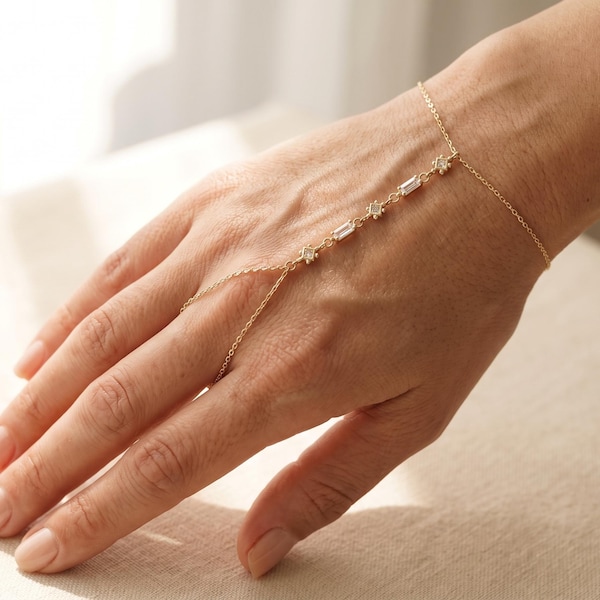 Hand Chain Bracelet with Baguette Stones
View Hand Chain Bracelet with Baguette Stones on Etsy
Our Şahmeran hand chains connect a bracelet to a ring across the back of the hand, a style with a long history in Anatolian adornment. Each is solid 14K gold stamped 585. The stones vary by listing: the titles name an emerald-colored pear stone, a blue sapphire-colored stone or baguette stones, and each listing states the exact stone. For more on wearing this style, see our hand chain bracelet guide, and for other regional symbols, our article on Anatolian jewelry motifs.
This catches many shoppers out. A "snake chain" has nothing to do with snake symbolism. It is a chain made of tightly fitted rings or plates that form a smooth, round, flexible tube. The name comes from how it looks and moves, sleek and scaly, like a snake's body. There is no snake head, eyes or design.
Snake chains are popular for their liquid look and smooth feel against the skin. Some designs mix short sections of snake chain with other links, or add beads along a snake chain for texture.
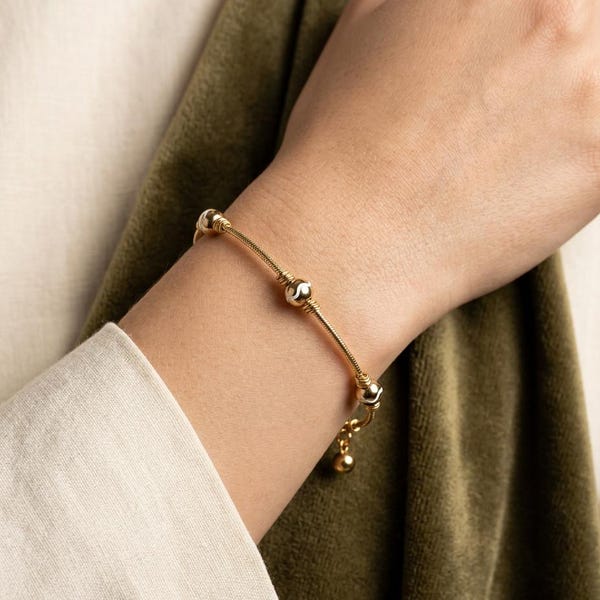 Two-Tone Beaded Snake Chain Bracelet
View Two-Tone Beaded Snake Chain Bracelet on Etsy
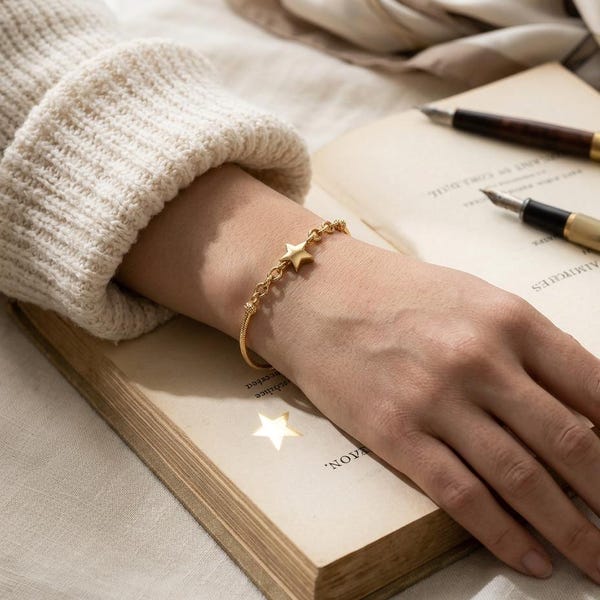 Puffed Star Bracelet
View Puffed Star Bracelet on Etsy
Our Two-Tone Beaded Snake Chain Bracelet and Puffed Star Bracelet with mixed snake and rolo chain use snake chain as a construction, not as a symbol. They are excellent everyday layering pieces, but if you are looking for serpent symbolism, choose a Şahmeran piece or a design with a snake figure. Our gold chain types guide compares snake chain with cable, rope, curb and other styles.
Snake designs range from realistic, scaled serpents to simple, stylized curves. A few points to consider before you buy:
Snake motifs tend to be eye-catching, so let them lead. A Şahmeran hand chain is a statement in itself; keep other rings on that hand simple. A snake figure pendant pairs well with a plain chain and small studs. Snake chain bracelets, on the other hand, are quiet and layer easily with rolo, paperclip and bead chains. Browse our hand chains and bracelets for both.
Snake jewelry usually symbolizes renewal, transformation, wisdom, healing and protection. A snake eating its tail represents eternity.
Not in most traditions. Although the serpent has negative associations in some stories, snake jewelry has been worn for thousands of years as a symbol of protection, love and rebirth.
Şahmeran is the half-woman, half-snake queen of snakes in Anatolian legend. She is associated with wisdom and healing and appears often in Turkish folk art and jewelry.
No. A snake chain is a smooth, flexible chain style named for its scaly look. It does not carry the symbolism of a snake motif.
Prince Albert's snake engagement ring for Queen Victoria represented eternal love. It helped make snake jewelry fashionable in the nineteenth century.
Share:
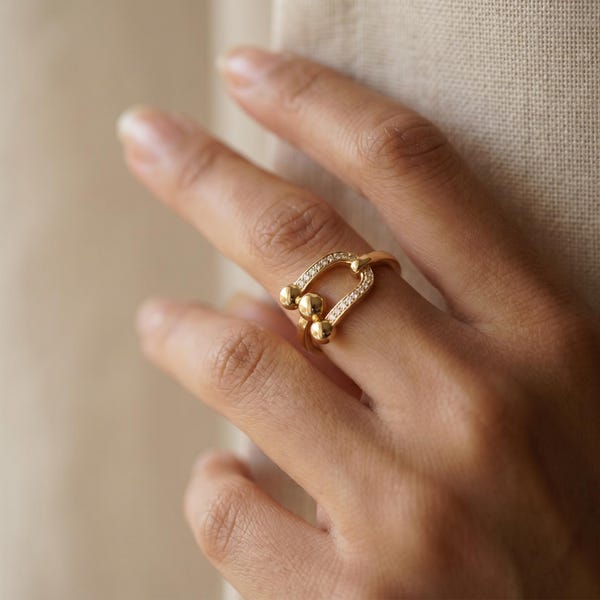
Horseshoe jewelry meaning: where the lucky horseshoe tradition comes from, the debate over which way it should point, and how to wear the motif in go…
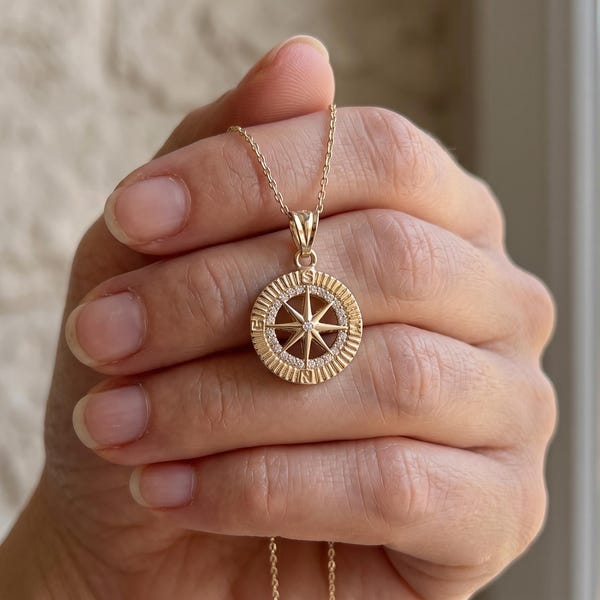
Compass necklace meaning explained: direction, travel and new beginnings, the compass rose design, and why it makes a thoughtful graduation or farewe…
Anchor jewelry meaning: the anchor as an early Christian symbol of hope, its nautical roots, and what an anchor necklace says today, plus gift and st…