Yellow vs White vs Rose Gold Guide: How 14K Colors and Two-Tone Differ
Yellow, white and rose gold guide: how 14K alloys create each color, what rhodium on white gold really is, choosing by preference, and caring for two…

The main gold chain types are cable, rolo, curb, figaro, rope, wheat, paperclip, herringbone, snake, Singapore, bead (ball), omega and mesh. For carrying a pendant every day, cable, rolo and wheat are the most dependable; for wearing a chain on its own, rope, herringbone, paperclip and curb give the most presence.
Each style is simply a different way of shaping and joining links, and that shape decides how the chain catches light, how it drapes, how easily it tangles or kinks and whether a clasp or pendant bail will slide along it. Below, our goldsmiths walk through each type in plain terms, with honest notes on where each one shines and where it struggles.
There are two families of chain. Link chains (cable, rolo, curb, figaro, paperclip, Singapore) are made of separate rings joined together, so they move freely and can be repaired one link at a time. Woven or flat chains (rope, wheat, herringbone, snake, omega, mesh) are built from interlocking or tightly fitted parts, so they feel smoother and look more solid, but a sharp bend can leave a kink.
Weight and thickness matter too. A fine chain is lighter on the neck and layers easily, while a thicker chain holds its shape and stands out on its own. Because all of our pieces are solid 14K gold stamped 585, never plated or hollow, a slimmer chain still has gold all the way through. If you are unsure what the stamp means, see our guide to what 585 means on gold.
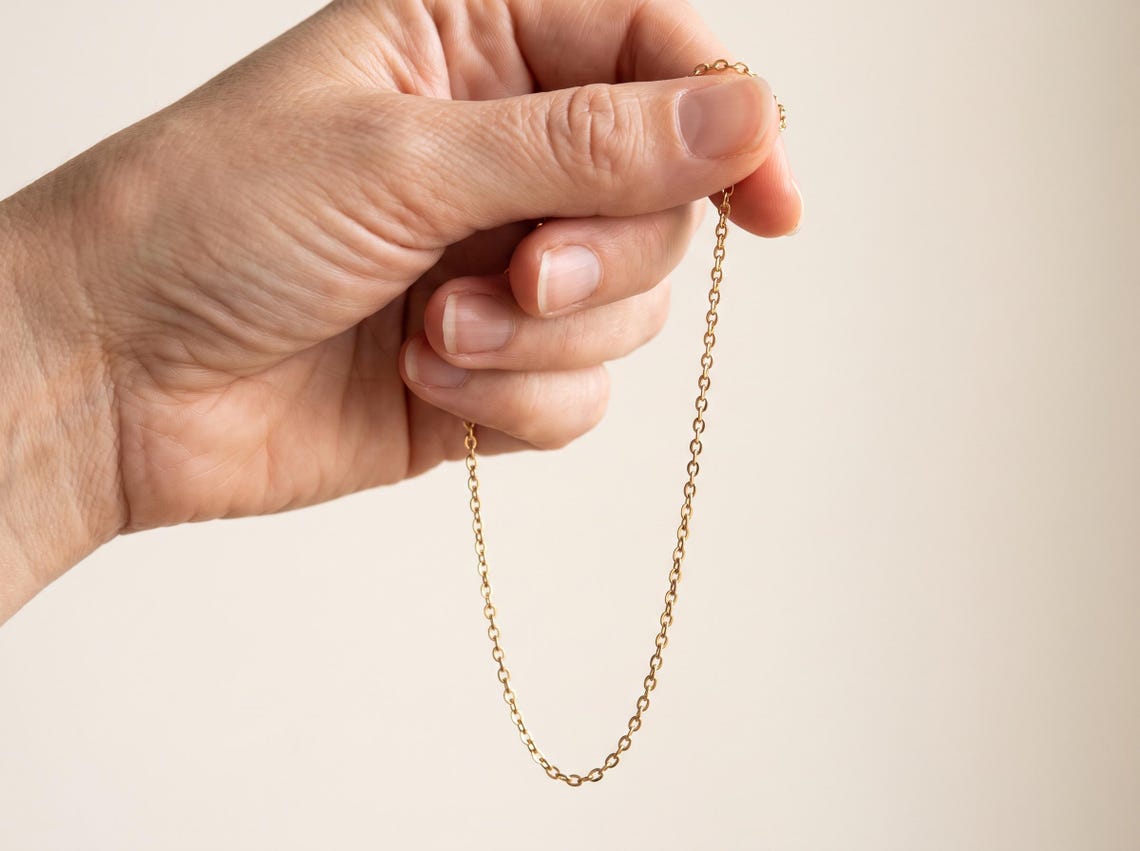
Oval links joined in a simple alternating pattern. It is the most common pendant chain because almost any bail slides on easily and the links are easy to repair. A fine cable chain is the quiet base layer under almost everything.
Like cable, but with round, slightly thicker links that look a little bolder. Rolo is sturdy, rarely kinks and works well with charms that dangle from a link.
Links are twisted so they lie flat against the skin. Curb (including the heavier Cuban style) feels substantial and is a favorite for bracelets and men's chains.
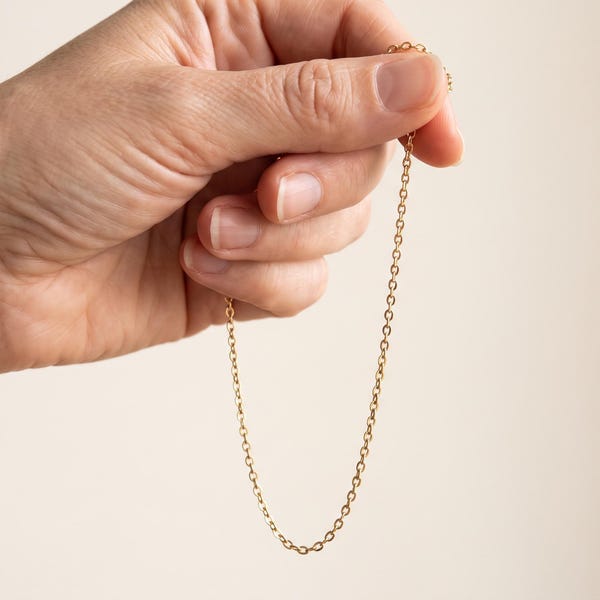 Cable Chain Necklace
View Cable Chain Necklace on Etsy
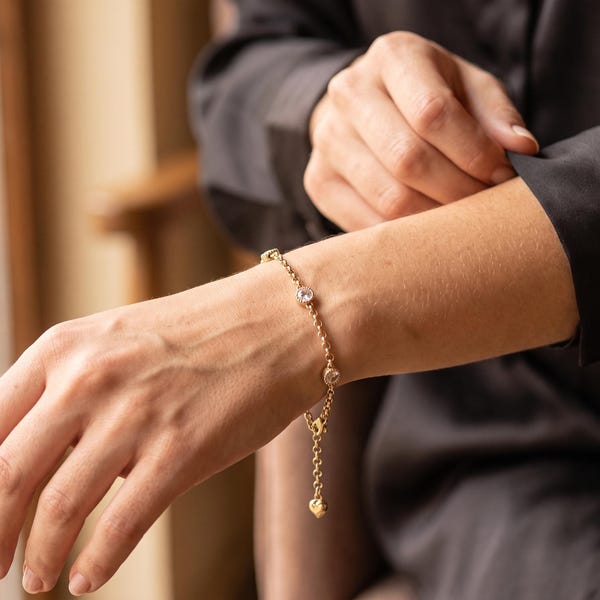 Rolo Chain Bracelet
View Rolo Chain Bracelet on Etsy
 Paperclip Curb Link Bracelet
View Paperclip Curb Link Bracelet on Etsy
An Italian pattern of several short links followed by one long link. It has rhythm without being loud and suits a medium pendant. We use a figaro chain on our phoenix pendant.
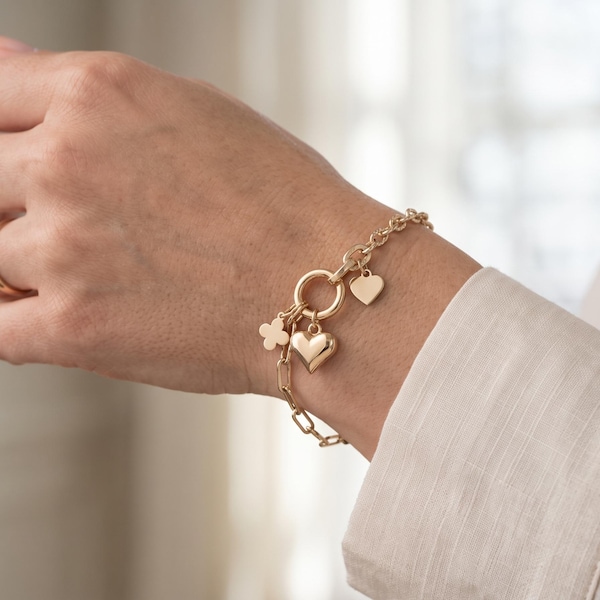
Long, flat, rectangular links that look modern and open. Paperclip is excellent for layering and for clipping on charms, though its large links can catch on knitwear more than a fine cable will.
A twisted, faceted link that flickers as it moves. It is light and fluid, with a lot of sparkle for its size. It can twist on itself, so lay it flat when you store it.
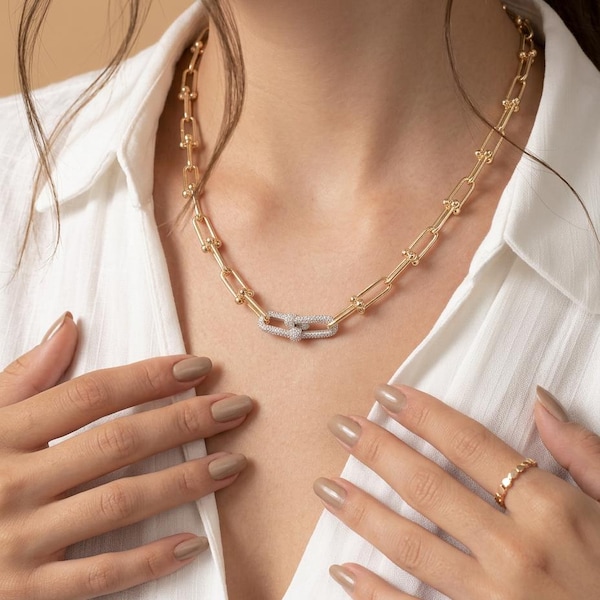 Paperclip Chain Necklace
View Paperclip Chain Necklace on Etsy
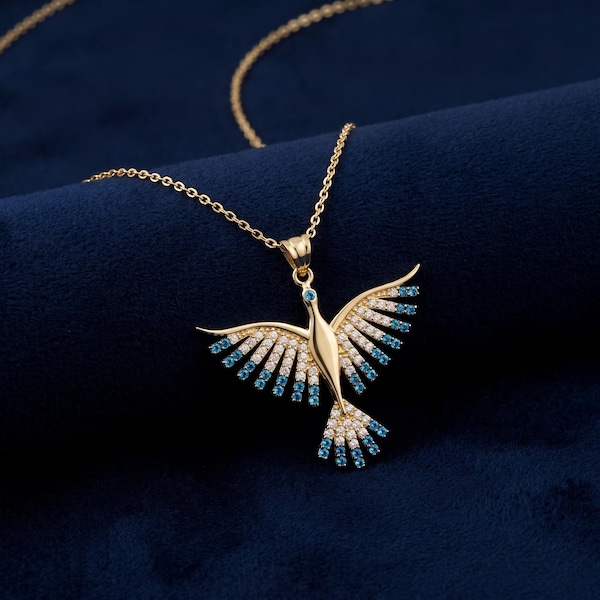 Phoenix Necklace
View Phoenix Necklace on Etsy
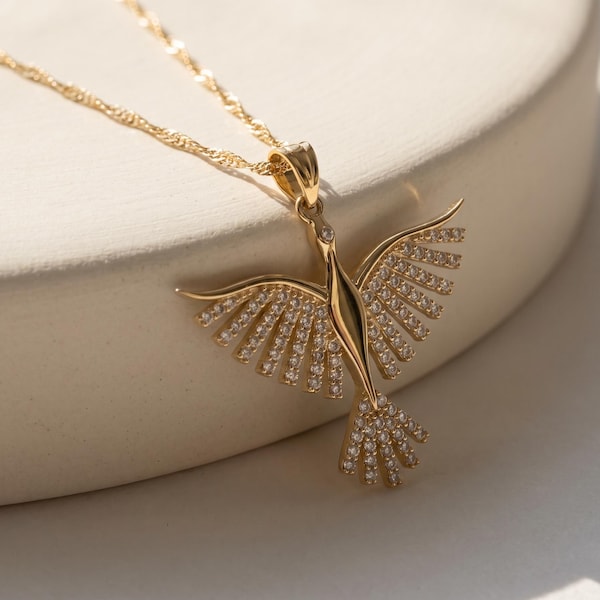 Phoenix Necklace
View Phoenix Necklace on Etsy
Small links twisted into a spiral that looks like rope. It reflects light from every angle and is strong for its weight. We currently list rope as a bracelet rather than a necklace.
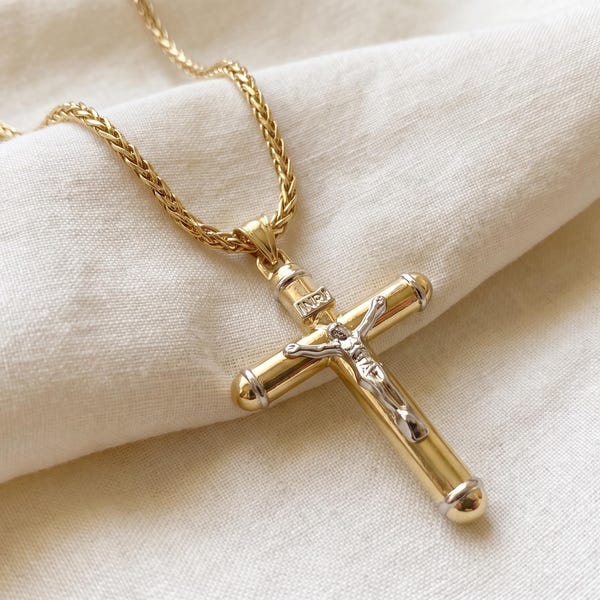
Interlocking oval links that form a braided look, also called spiga. Wheat is supple, very strong and resists tangling, which makes it a smart choice for heavier pendants such as a crucifix.
Flat, slanted links laid side by side so the chain lies like liquid gold. Herringbone looks beautiful but is the chain most prone to kinking. Avoid sleeping in it and never wrap it tightly.
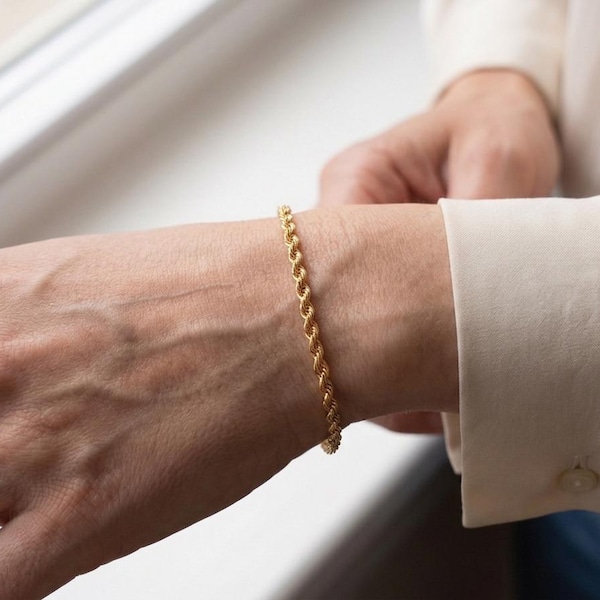 Rope Chain Bracelet
View Rope Chain Bracelet on Etsy
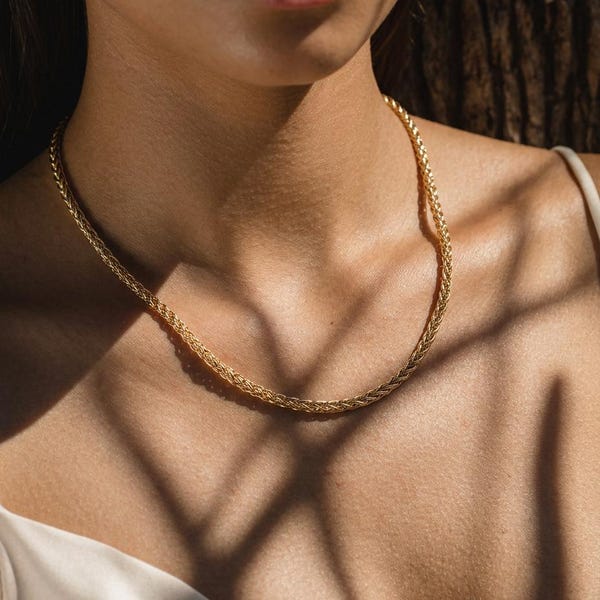 Wheat Chain Necklace
View Wheat Chain Necklace on Etsy
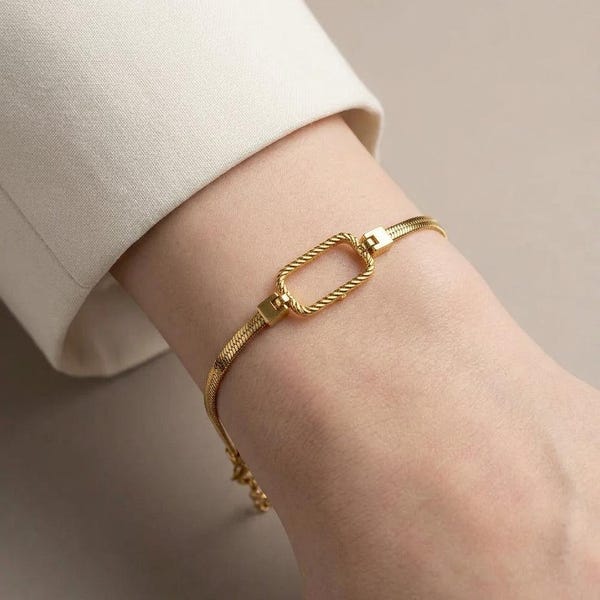 Herringbone Bracelet
View Herringbone Bracelet on Etsy
Tightly fitted rings form a round, smooth tube that looks like scales. It feels sleek and rarely tangles, but like herringbone it can kink if bent sharply.
Flat plates over a flexible core create a collar-like band. Omega is a statement in its own right and is usually worn without a pendant.
Finely woven gold that feels soft and fabric-like. Our mesh pieces are bracelets, including an adjustable style and a two-tone popcorn mesh; we do not currently list a mesh necklace.
Round beads, often faceted with a diamond-cut finish (a faceted metal surface, not diamonds), spaced along a fine chain. It sparkles in a playful way and is lovely for stacking.
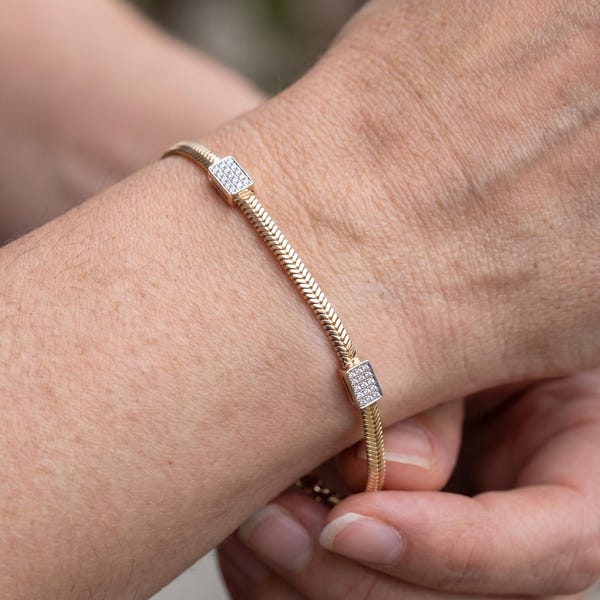 14K Two-Tone Omega Chain Bracelet
View 14K Two-Tone Omega Chain Bracelet on Etsy
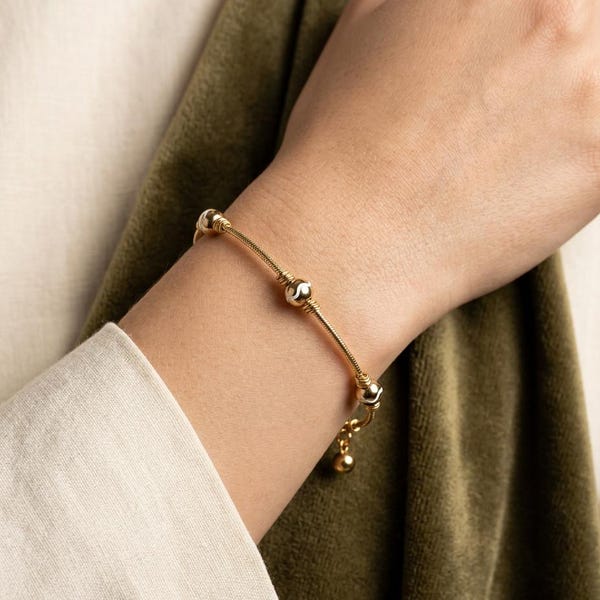 Two-Tone Beaded Snake Chain Bracelet
View Two-Tone Beaded Snake Chain Bracelet on Etsy
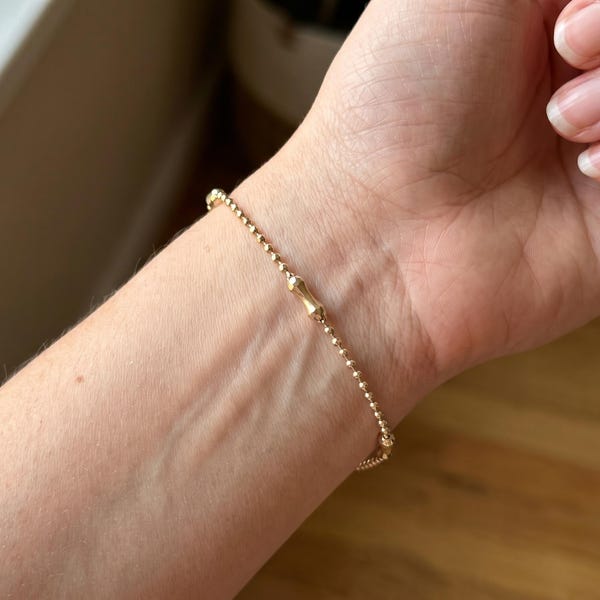 Diamond-Cut Ball Chain Bracelet
View Diamond-Cut Ball Chain Bracelet on Etsy
| Chain | Look | Tangle or kink risk | Best for |
|---|---|---|---|
| Cable | Simple oval links | Low | Pendants, layering base |
| Rolo | Round, slightly bold links | Low | Charms, everyday bracelets |
| Curb | Flat twisted links | Low | Worn alone, bracelets |
| Figaro | Short and long link rhythm | Low | Medium pendants |
| Paperclip | Long rectangular links | Low, can snag fabric | Layering, charms |
| Singapore | Twisted, faceted | Medium, can twist | Light pendants, sparkle |
| Rope | Spiral twist | Low | Worn alone |
| Wheat | Braided | Low | Heavier pendants |
| Herringbone | Flat liquid band | High kink risk | Worn alone, special days |
| Snake | Smooth round tube | Medium kink risk | Sleek, minimal look |
| Bead | Spaced beads | Low | Stacking, playful sparkle |
| Omega | Collar-like plates | Medium kink risk | Statement, no pendant |
| Mesh | Soft woven band | Low | Bracelets |
Length changes everything as well. A 40 to 45 cm chain sits near the collarbone, while longer chains fall toward the chest. Our necklace length guide and bracelet size guide help you measure. Browse all gold necklaces and gold bracelets in the shop.
Solid 14K gold does not flake or wear through, but every chain needs a little care. Fasten chains before storing them so they do not knot, and hang or lay flat herringbone, snake and omega chains so they never bend sharply. Soak in warm water with a drop of mild dish soap, brush gently with a soft brush and dry with a lint-free cloth. Our guides to cleaning gold at home and storing gold jewelry go step by step. If a link ever fails because of our workmanship, our lifetime craftsmanship guarantee covers it.
Among fine and medium chains, wheat, rope, curb and rolo are the most durable for daily wear. Thickness matters as much as style, so a heavier chain of any type will be stronger than a very fine one.
Wheat, rope, snake and curb chains resist tangling well because their links are tightly fitted or lie flat. Fine cable chains tangle more easily, so fasten them before storing.
A light kink can sometimes be eased by a goldsmith, but a sharp crease often leaves a mark. Prevention is best: take herringbone off for sleep and sport and store it flat.
A cable, rolo or wheat chain works for most pendants because the bail slides freely and the links carry the weight well. Check that the chain fits through the pendant's bail.
Yes. Every chain we sell is solid 14K gold stamped 585, never plated, gold-filled or hollow. Free tracked and insured express shipping goes to the USA, UK and Europe.
Share:
Yellow, white and rose gold guide: how 14K alloys create each color, what rhodium on white gold really is, choosing by preference, and caring for two…
Gold cross necklace guide: the difference between a cross and a crucifix, what INRI means, choosing size and chain, two-tone styles and sacrament gif…
Gold charm bracelet guide: what heart, clover, star, butterfly and nazar charms traditionally mean, how to choose chain and fit, and how to care for…