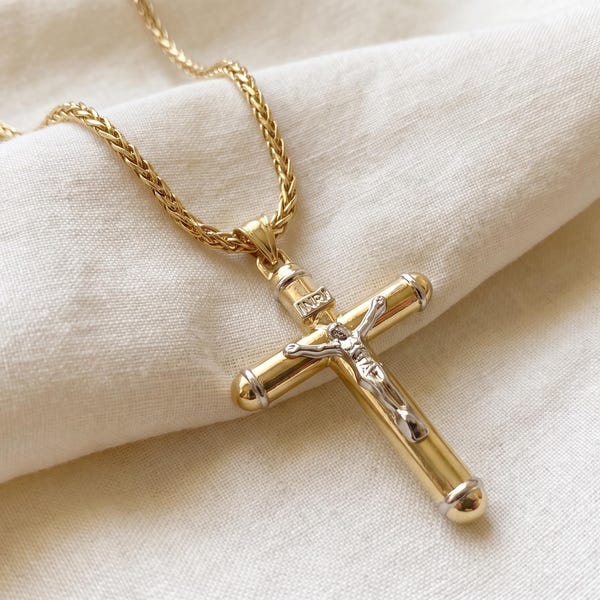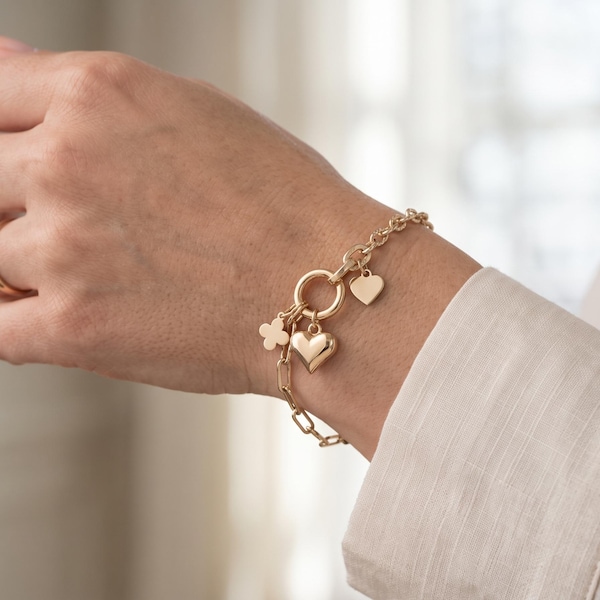
Yellow vs White vs Rose Gold Guide: How 14K Colors and Two-Tone Differ
Yellow, white and rose gold guide: how 14K alloys create each color, what rhodium on white gold really is, choosing by preference, and caring for two…

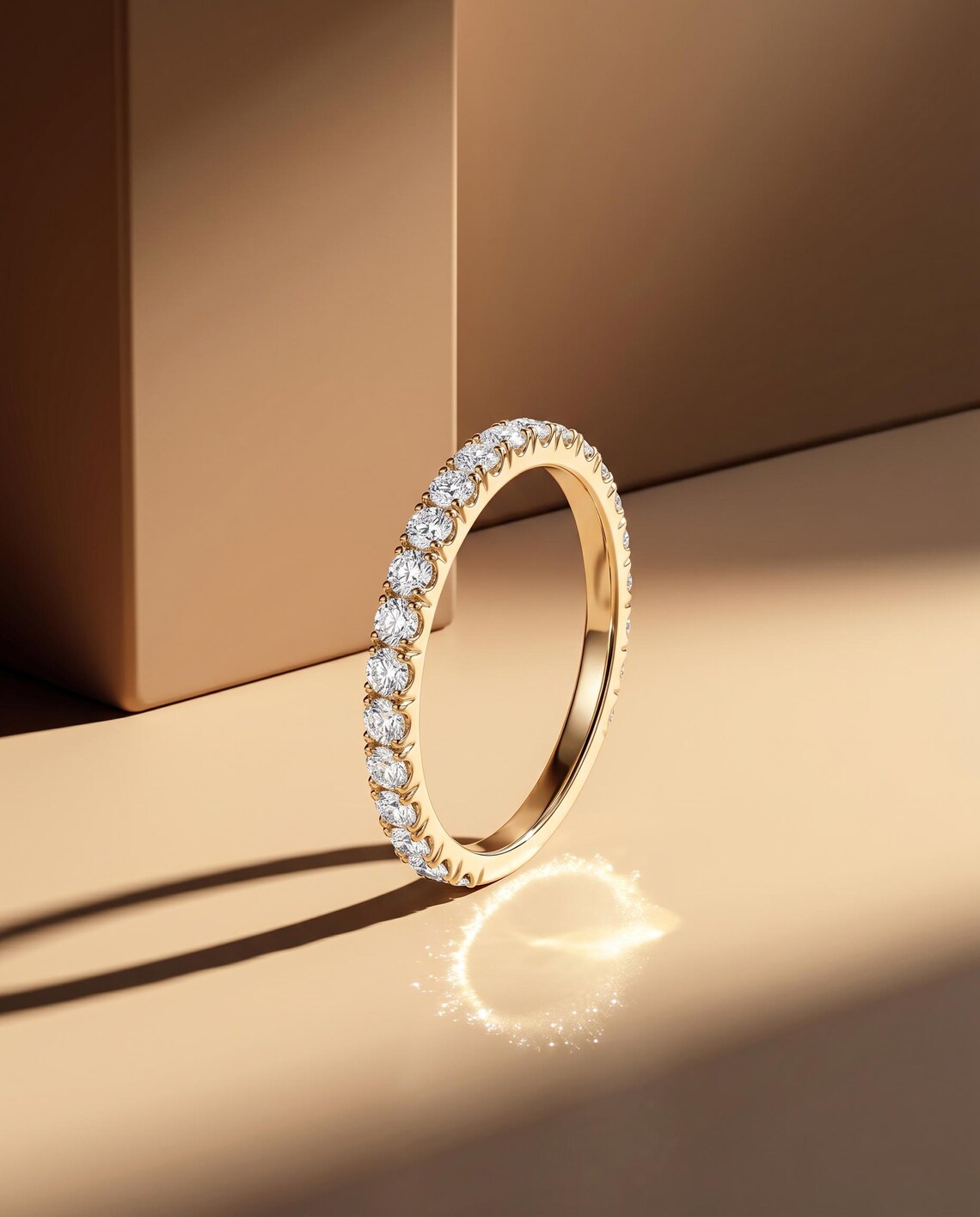
To build a stackable gold ring stack, start with one anchor ring, add a thin plain band on either side, then bring in one texture and one touch of sparkle, keeping the total width comfortable for your finger. Three rings on one finger is a good starting point. Mix widths and finishes rather than repeating the same ring, and stop when bending your finger feels crowded.
That is the short version. Below our goldsmiths explain how to balance widths, textures and stones, how to keep a stack comfortable for daily life, and how to grow it over time. Every ring we sell is solid 14K gold stamped 585, which matters for stacks: rings rub against each other constantly, and plated metal wears through where they touch.
Every good stack has one ring that the others support. It might be a solitaire, a wedding band, a half eternity or a ring with a small motif. Choose the anchor first, because its width and height decide what can sit beside it.
If the anchor has a raised setting, the rings around it should be low and slim so they do not push against the stone. If the anchor is a flat band, you have more freedom to add textured or sparkling rings on either side. Our gold ring styles guide covers the different anchor options if you are starting from scratch.
Width is where most stacks go wrong. Several wide bands on one finger feel stiff and can pinch at the knuckle. A useful rule is to combine one wider ring with two or three thin ones, and to keep the thinnest bands on the outside edges of the stack.
| Band width | Role in a stack | Tip |
|---|---|---|
| Very thin | Spacers and edges | Add several without bulk |
| Thin to medium | Main supporting bands | Mix polished and textured finishes |
| Wide or chunky | Anchor or single statement | One per finger is usually enough |
Remember that a stack behaves like one wide ring. Several bands together often need a slightly larger size than a single thin band on the same finger, especially in warm weather when fingers swell. Our ring size guide explains how to measure, and it is worth measuring the finger where you plan to wear the stack rather than guessing.
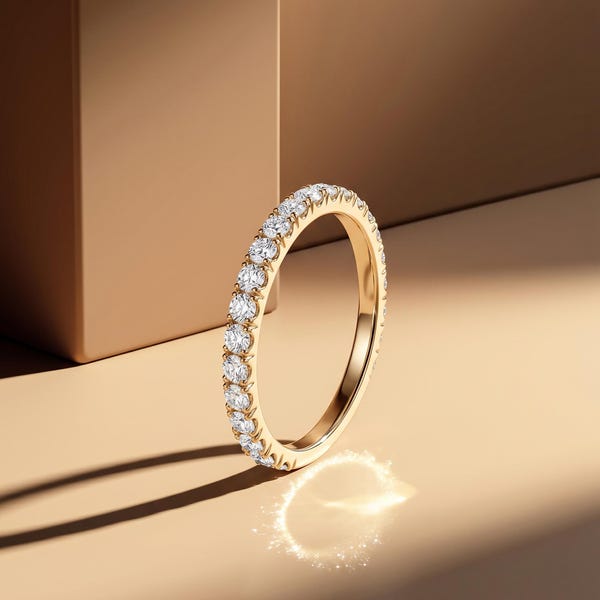 Half Eternity Ring
View Half Eternity Ring on Etsy
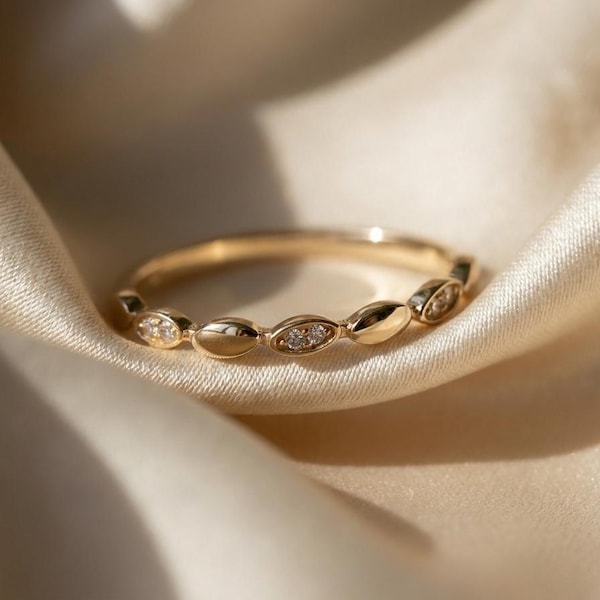 Marquise CZ Station Ring
View Marquise CZ Station Ring on Etsy
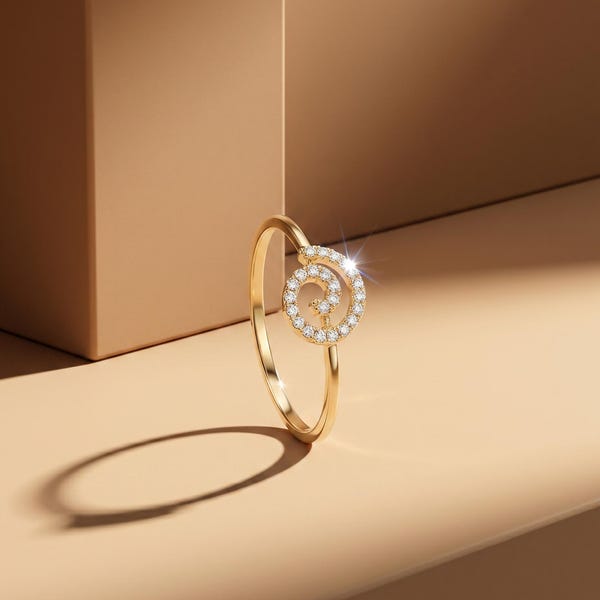 Swirl Ring
View Swirl Ring on Etsy
Texture is what makes a stack look intentional rather than repetitive. Light reflects differently from a polished band, a twisted rope and a diamond-cut surface, so placing them side by side creates depth even in a single color of gold.
A simple formula is one polished band, one textured band and one patterned or stone-set ring. Our twisted rope ring, the love knot ring with its diamond-cut textured band, and the hexagon honeycomb eternity ring each play that textured role well.
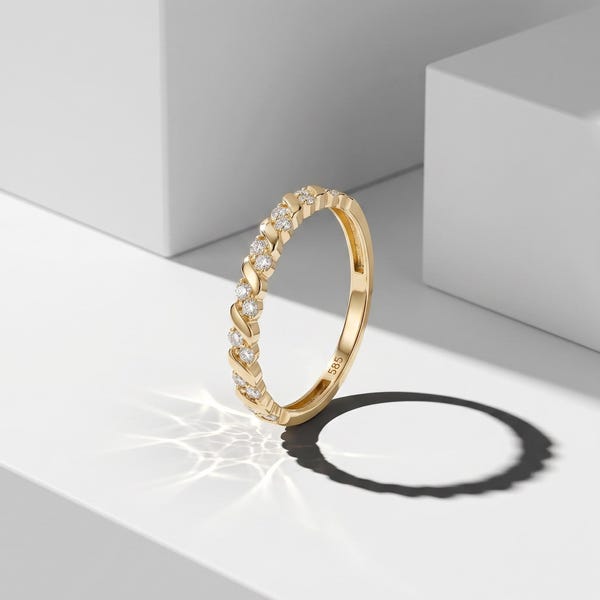 Twisted Rope Ring
View Twisted Rope Ring on Etsy
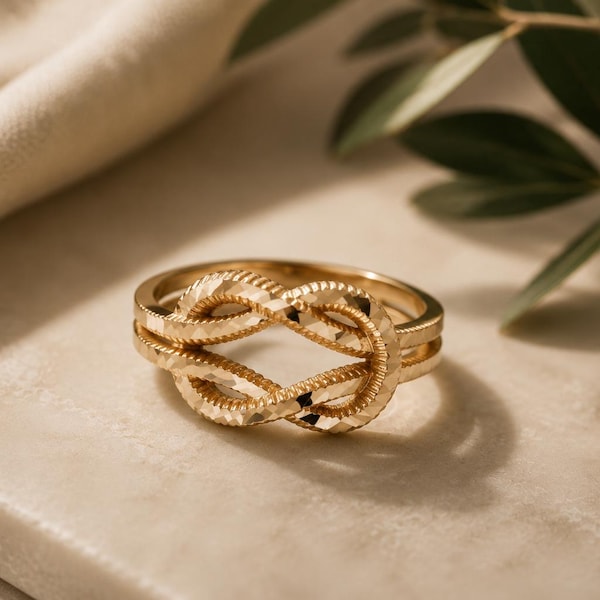 Love Knot Ring
View Love Knot Ring on Etsy
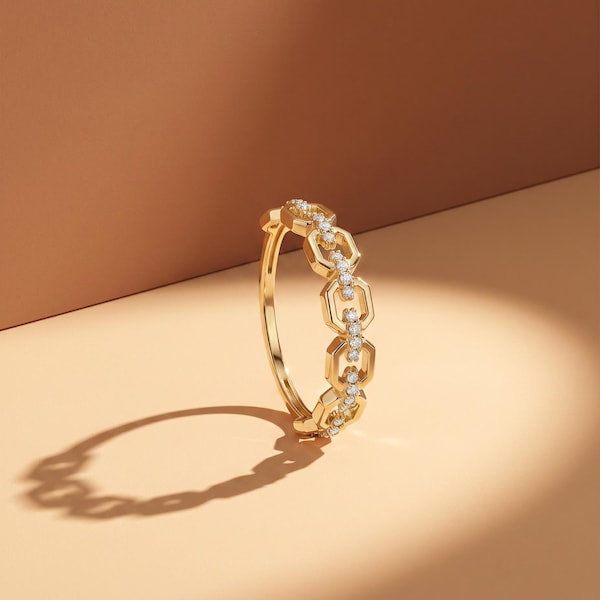 Eternity Ring
View Eternity Ring on Etsy
Stones bring sparkle, but too many stone-set rings together can look busy and can rub against each other. Most of our stacking rings are set with cubic zirconia, and we always say so. CZ is bright and hard-wearing, though not as hard as diamond, so it is sensible to place plain bands between stone-set rings as buffers.
Good combinations include:
Our cubic zirconia jewelry guide explains how to care for CZ so it stays bright in a stack.
A stack you love but cannot wear while typing will end up in a drawer. Keep these comfort points in mind:
Rings in a stack also touch each other all day, so they collect fine scratches faster than a single ring. Solid gold handles this well because the color goes all the way through. A gentle wash and soft cloth bring the shine back, and our guide on cleaning gold jewelry at home walks you through it.
Yellow, white and rose gold can absolutely share a finger. The trick is repetition: if you add one white gold ring to a yellow stack, echo it with a two-tone piece elsewhere on the hand or wrist so it looks chosen rather than accidental. Our yellow, white and rose gold guide covers how each color sits on different skin tones.
It also helps to think about the other hand. A stack on one hand can be balanced by a single band or a bracelet on the other, so the look feels spread out rather than concentrated in one place. If you wear a watch, consider keeping the busiest stack on the opposite hand so the two do not compete.
Many of the best stacks are collected slowly: a band for a wedding, a half eternity for an anniversary, a small motif ring for a birthday. Each ring carries its own memory. If you are buying a ring to add to someone's existing stack, ask them which finger it is for and look at the widths they already wear.
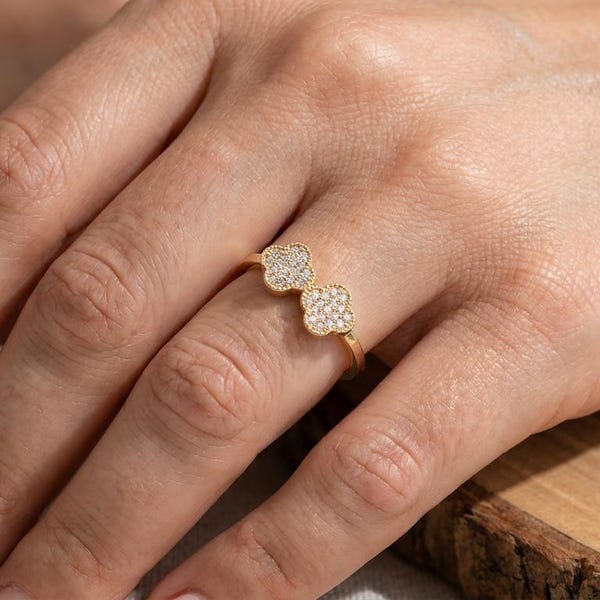 Double Clover Ring
View Double Clover Ring on Etsy
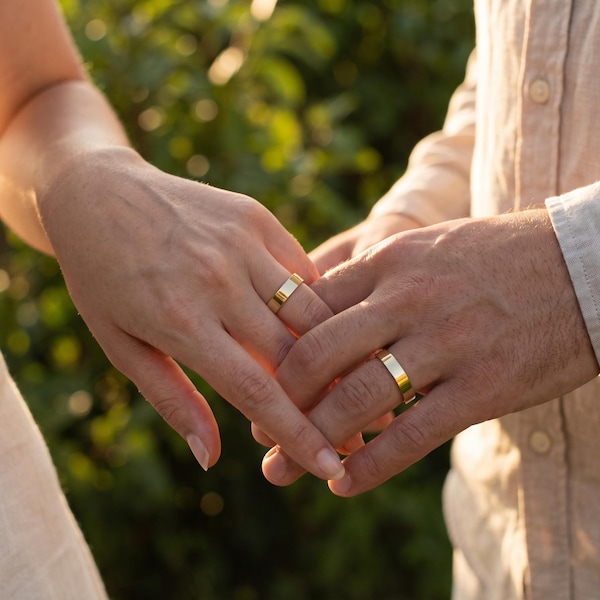 Flat Wedding Band Polished Ring for Him and Her
View Flat Wedding Band Polished Ring for Him and Her on Etsy
You can compare all our stacking rings and bands in one place. If you send us a photo of your current stack, we are happy to suggest what would sit well beside it.
Three rings on one finger is a comfortable starting point. You can go higher with very thin bands, but stop when bending your finger feels crowded.
Often, yes. Several bands together act like one wide ring, which can feel tighter than a single thin band. Measure the finger you plan to stack on before ordering.
Yes, rings that touch will collect fine surface scratches over time. On solid gold these are cosmetic and can be polished, and textured bands hide them well.
Yes, and it usually looks best that way. Plain bands between stone-set rings give the stones space and reduce rubbing.
Yes. Mixing yellow, white and rose gold works well when the colors repeat somewhere else, such as a two-tone bracelet or earrings.
Share:
Yellow, white and rose gold guide: how 14K alloys create each color, what rhodium on white gold really is, choosing by preference, and caring for two…
Gold cross necklace guide: the difference between a cross and a crucifix, what INRI means, choosing size and chain, two-tone styles and sacrament gif…
Gold charm bracelet guide: what heart, clover, star, butterfly and nazar charms traditionally mean, how to choose chain and fit, and how to care for…