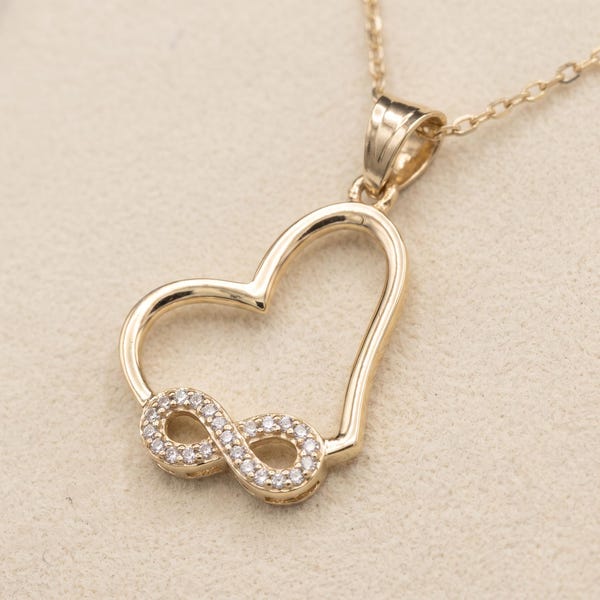
Heart Necklace Meaning: History, Open vs Closed Hearts and Heart Keys
Heart necklace meaning: how the heart became a love symbol, open vs closed vs puffed hearts, heart key pendants, and gift ideas for partners and daug…

Amethyst jewelry is traditionally linked with calm, clear thinking and sobriety. The name comes from the ancient Greek word amethystos, meaning "not intoxicated," and today amethyst is best known as the February birthstone.
It is also one of the most popular purple gems because it combines good hardness with rich color. Here is the history behind the stone, what it has meant to different cultures, how to look after it, and the natural amethyst pieces we make in solid 14K gold.
Amethyst is a purple variety of quartz. Its color comes from traces of iron in the crystal combined with natural radiation in the earth. Shades run from pale lilac to deep violet, sometimes with a reddish or bluish flash.
On the Mohs scale it sits at 7, which makes it hard enough for necklaces and earrings and reasonable for rings worn with some care. Larger amethysts are more widely available than many other gems, which is why big, eye-catching cuts are possible.
The Greek name tells the oldest story. People believed amethyst helped the wearer keep a clear head, and some drank from amethyst cups or wore the stone at feasts. A later poetic legend tells of a maiden turned to clear stone and Bacchus, god of wine, pouring wine over her and staining her purple. It is a myth, but it explains why the stone became tied to moderation.
Purple dye was once rare and costly, so purple became a royal color. Amethyst appears in royal collections across Europe, and it has a long association with bishops' rings in the Christian tradition, where it was seen as a symbol of piety and calm judgment.
In modern gem folklore, amethyst is often given as a stone of peace, balance and sincere love. Some couples choose it for a sixth wedding anniversary. These meanings are traditions people enjoy, not guaranteed effects, but they give an amethyst gift a thoughtful story.
Amethyst has been the February birthstone in most modern lists for well over a century. That makes it a natural choice for February birthdays, Valentine's gifts with a personal twist, and Aquarius or Pisces birthdays for people who like zodiac associations.
If you are buying birthstones for several family members, our birthstone jewelry gift guide lists every month and suggests pairings. For a broader look at what different gems are said to mean, see gemstone meanings in gold jewelry.
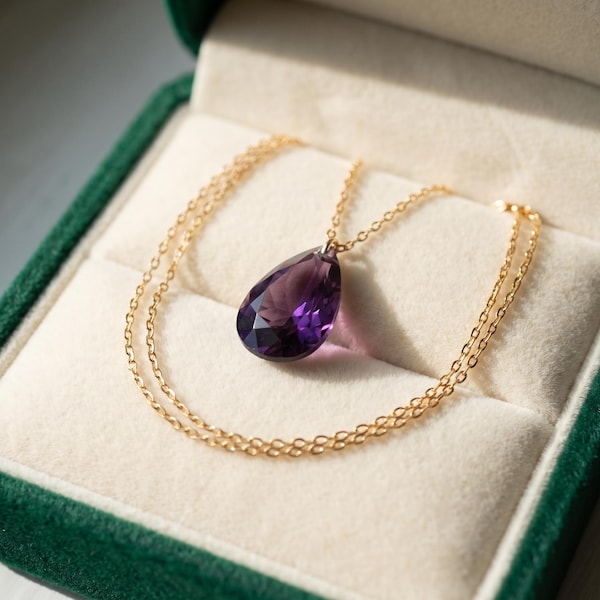
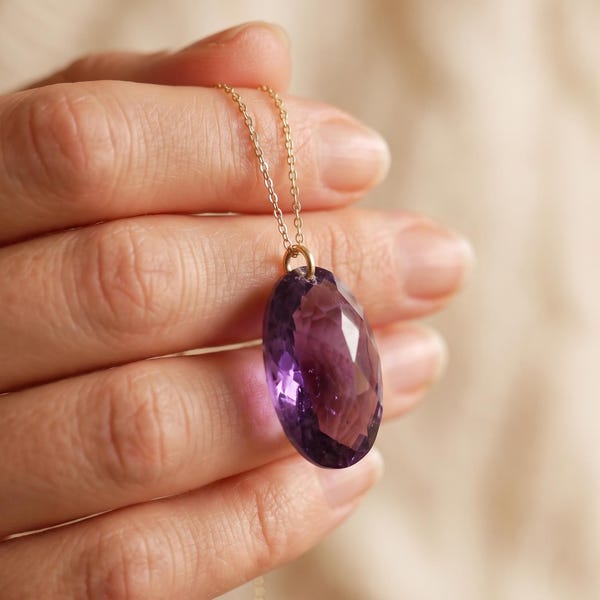
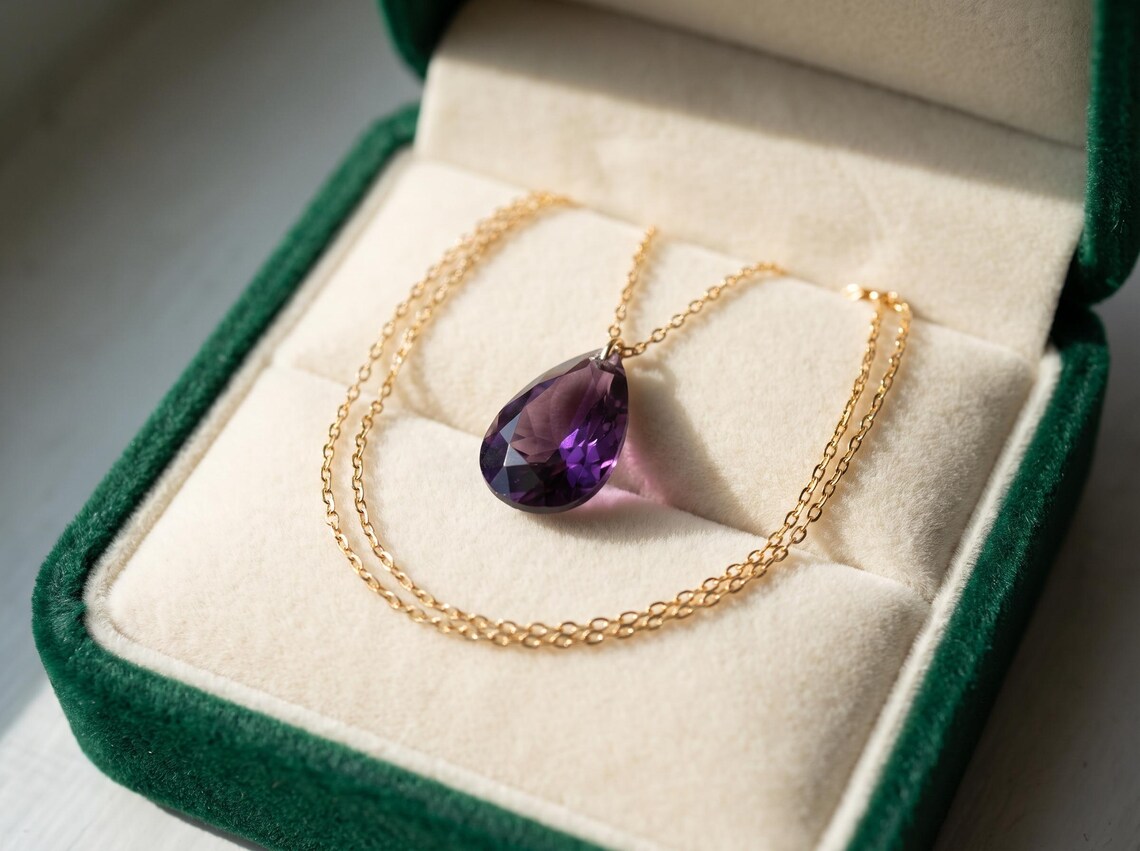
Our amethyst pendant uses a 10ct natural amethyst in a teardrop shape, set in solid 14K gold stamped 585. The teardrop is a classic amethyst cut because it lets the color deepen toward the point and catch light along the facets. It appears in two listings, so you can pick whichever suits your chain preference and timing.
A 10ct stone has presence, so it works well as a single focal pendant on its own or as the anchor of a layered look. If you plan to layer, our guide on how to layer necklaces helps with lengths, including which lengths sit well together.
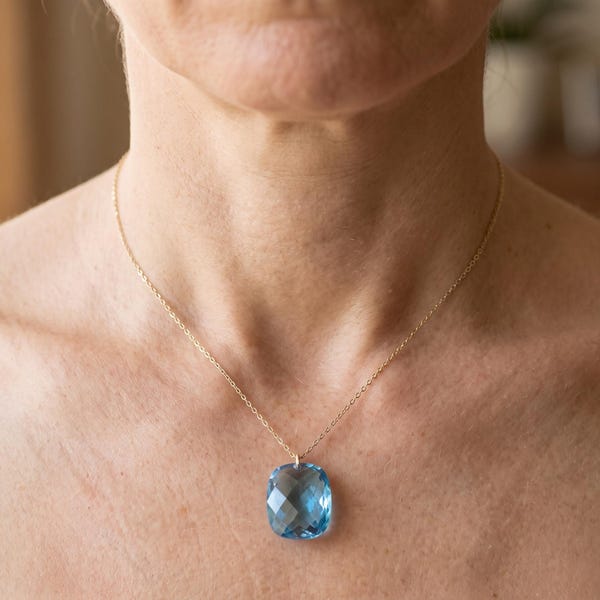
Prefer cooler tones? Our natural blue topaz pendant pairs well with amethyst for anyone who likes jewel colors. Read about it in our blue topaz jewelry meaning guide.
You can see all of our natural gem pieces in the natural stone collection.
| Option | What it is | Things to know |
|---|---|---|
| Natural amethyst | Purple quartz formed in the earth | Each stone unique; can fade in long, strong sun |
| Purple CZ | Lab-grown cubic zirconia | Uniform color, very bright; not a birthstone in the traditional sense |
| Synthetic amethyst | Lab-grown quartz | Same material as natural, made in a lab |
When you look at amethyst, color matters most. Many people prefer a medium to deep purple that stays even across the stone, without patches of pale or brownish tone. Faceting helps here: a well-cut teardrop spreads the color and returns light from the base of the stone, so it looks lively rather than dark. Small natural inclusions are normal in amethyst and are part of what makes each stone its own.
Lighting also changes how amethyst looks. In warm indoor light it can show reddish hints; in daylight it often looks cooler and bluer. That shifting character is one reason people enjoy wearing it, and why photos never quite match the stone in hand.
We describe our amethyst as natural because the listing states it. If you ever want to know more about a specific stone, Şerif answers messages personally.
Amethyst is durable, but two things can affect it over time: heat and long exposure to strong light.
Amethyst suits February birthdays, sixth anniversaries, and anyone who simply loves purple. A large natural pendant also makes a strong milestone gift because it feels substantial without being flashy. Every order ships free by tracked, insured express to the USA, UK and Europe, and US import duty is prepaid. The delivery estimate is shown on each listing.
Traditionally, amethyst symbolizes clear thinking, calm and sobriety, from the Greek word for "not intoxicated." It is also linked with royalty, peace and sincere love in folklore.
Yes. Amethyst is the February birthstone in most modern birthstone lists.
It can lighten after long periods in strong direct sun or high heat. Everyday wear is fine; just store it out of the sun.
Yes. Our amethyst teardrop pendant is listed as a 10ct natural amethyst, set in solid 14K gold stamped 585.
Yes, amethyst is hard enough for daily pendant wear. Take it off for swimming, the gym and cleaning.
Share:
Heart necklace meaning: how the heart became a love symbol, open vs closed vs puffed hearts, heart key pendants, and gift ideas for partners and daug…
Infinity symbol jewelry meaning: where the lemniscate came from, why it means endless love, infinity heart designs in solid 14K gold and gift ideas.
North star necklace meaning: why Polaris stands for guidance, how it differs from the Star of Bethlehem, and why it makes a fitting graduation or tra…