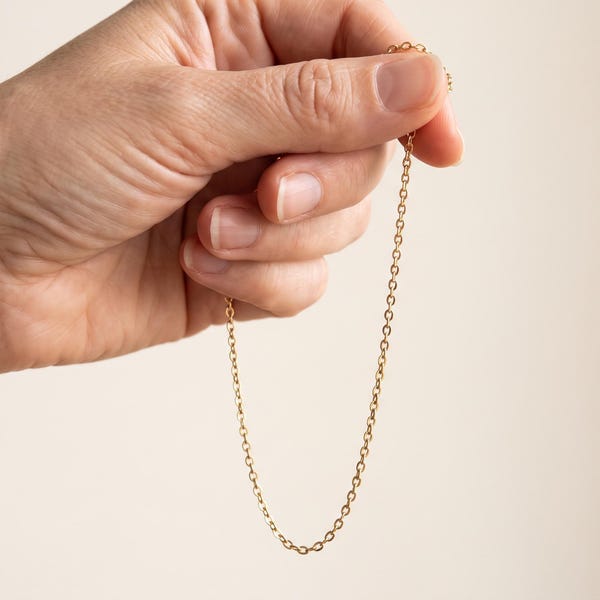
How to Fix a Broken Gold Chain: Jump Rings, Clasps and Links
How to fix a broken gold chain: spot a jump ring, clasp or link break, learn what is safe at home, why glue fails, and when a jeweler is the right ca…

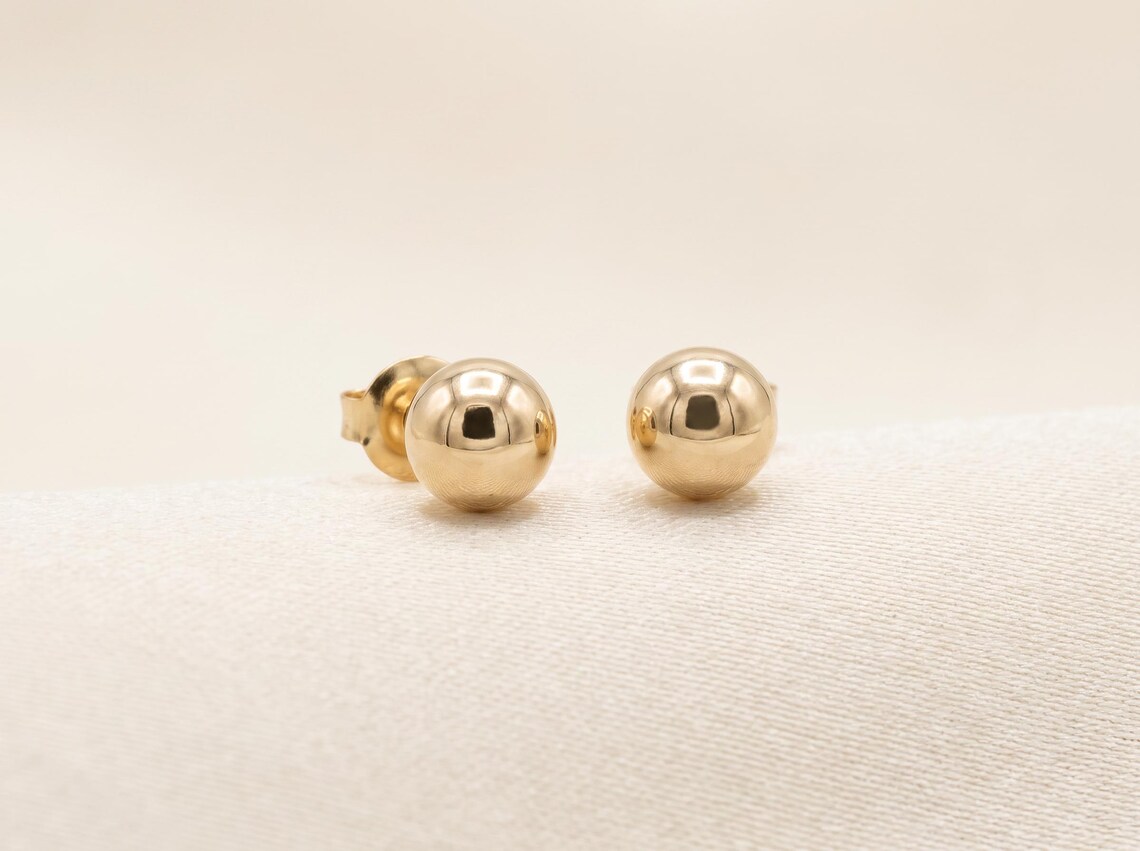
You can swim with solid gold jewelry without the gold dissolving or rusting, but it is better to take it off first. Chlorine can weaken the other metals in 14K gold over time, salt water and sand dull the finish, sunscreen leaves a film, and cold water makes fingers shrink so rings slip off and are lost.
In short: water itself is not the problem for real gold. The chemicals, the abrasives and the risk of losing a piece are. Below we explain each risk, what to do if you forget to take your jewelry off, and how to clean it afterward.
Many people wear solid gold in the shower every day without issue, and we explain why in can you shower with 14K gold. A swimming pool or the sea is a different environment. Pool water is treated with chlorine, sea water is salty and full of sand, and you spend longer in the water while moving vigorously. Each of those factors affects jewelry in its own way.
14K gold is 58.5 percent pure gold, which is why it is stamped 585. The rest is a mix of metals such as silver, copper and zinc that give the alloy its strength and color. Pure gold is very resistant to chlorine, but those alloy metals are not as resistant.
With repeated exposure, chlorine can:
A single swim will not ruin a piece. The concern is habit: wearing the same ring or chain in a chlorinated pool several times a week for years. Hot tubs are harsher still, as the water is warm and often more heavily treated. If you want to understand the alloy in more detail, our article on what 585 means on gold explains it.
Sea water is less aggressive to gold than chlorine, but it brings its own problems.
Sunscreen is the hidden reason many people find their gold looks dull after a holiday. Lotions and oils leave a film on the metal that traps dirt and hides the shine. It does not damage solid gold itself, but it builds up behind stones, clouds CZ and natural stones, and collects in textured or diamond-cut finishes. The fix is simple: put sunscreen on first, let it dry, then put jewelry on, and clean pieces after a beach day.
| Situation | Main risk | Our advice |
|---|---|---|
| Chlorinated pool | Dulling, weakened joints over time | Take it off |
| Hot tub or spa | Stronger chemical exposure plus heat | Always take it off |
| Sea or ocean | Loss in waves, sand scratches, salt film | Take it off, especially rings and bracelets |
| Lake or river | Loss, cold water shrinking fingers | Take off rings at least |
| Beach without swimming | Sunscreen film, sand in clasps | Fine to wear; clean afterward |
| Pieces with pearls | Chlorine, salt and sunscreen all harm pearls | Never wear in the water |
The most common swimming story we hear is not about damaged gold. It is about a lost ring. Cold water makes fingers shrink, and sunscreen makes skin slippery, so a ring that fits perfectly on land can slide off with one stroke. Earrings with loose backs and bracelets with worn clasps are close behind.
If you do want to wear something small to the beach, choose pieces that sit close and fasten securely, such as small studs or snug huggie earrings, and keep rings and long necklaces in your bag. Check that your ring fits properly in the first place; our ring size guide explains how to measure accurately.
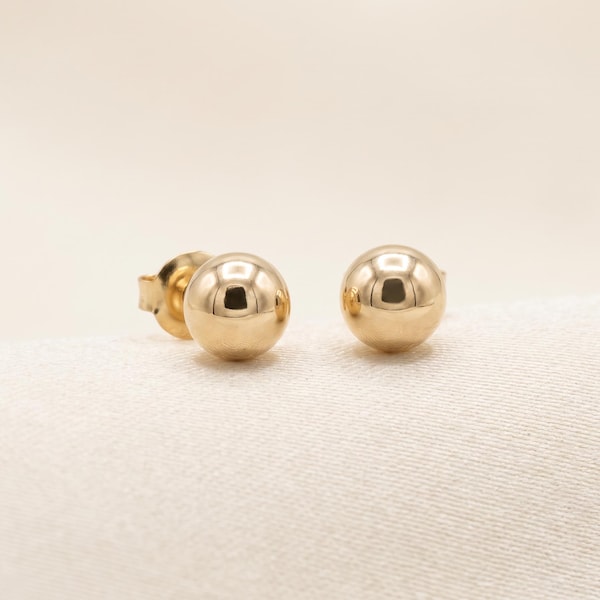 Ball Stud Earrings
View Ball Stud Earrings on Etsy
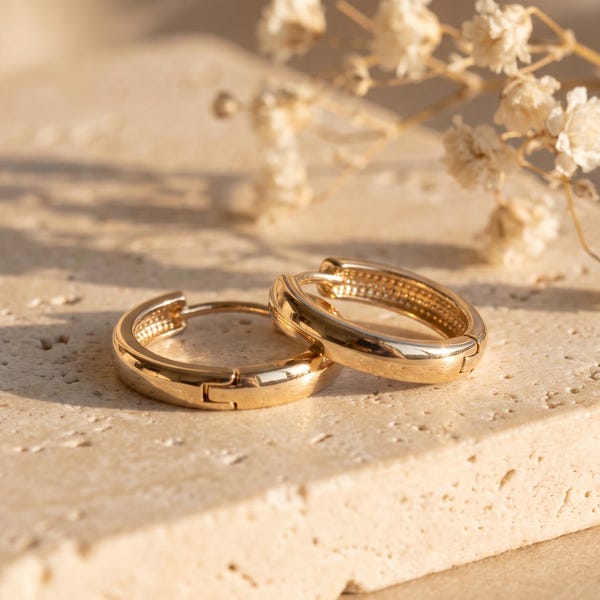 Huggie Hoop Earrings Thick Domed Band
View Huggie Hoop Earrings Thick Domed Band on Etsy
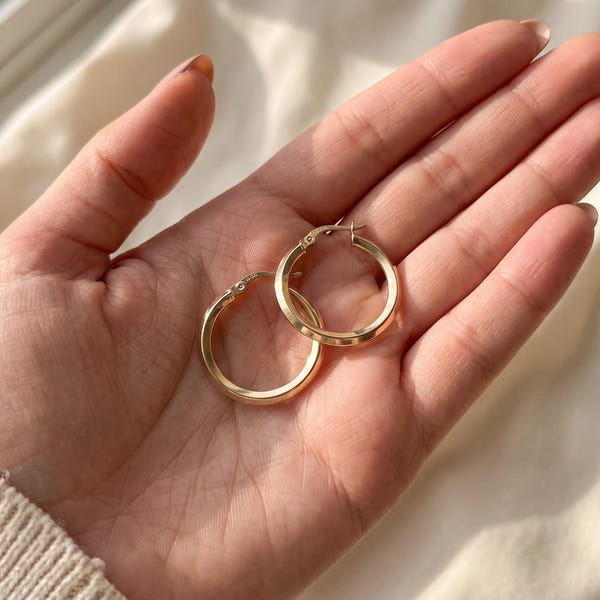 Sleeper Earrings Square Edge Hoops
View Sleeper Earrings Square Edge Hoops on Etsy
Browse more secure everyday styles in our earrings collection.
Our guide on how to store gold jewelry has ideas for travel cases that keep chains from tangling. If a chain does knot in a beach bag, see how to untangle a gold chain.
If you forgot to take something off, do not worry. Clean it the same day.
Avoid toothpaste, baking soda and bleach-based cleaners. For more detail, see how to clean gold jewelry at home. And if you are worried about discoloration, our article on whether 14K gold tarnishes explains what is normal.
Once you are dry and back on land, ocean-inspired pieces are a natural fit for summer. Our starfish, dolphin and seashell designs are popular for holidays. Note that the seashell necklace includes a freshwater pearl, so it should stay well away from the water.
 Starfish Pendant Necklace
View Starfish Pendant Necklace on Etsy
 Solid Dolphin Necklace
View Solid Dolphin Necklace on Etsy
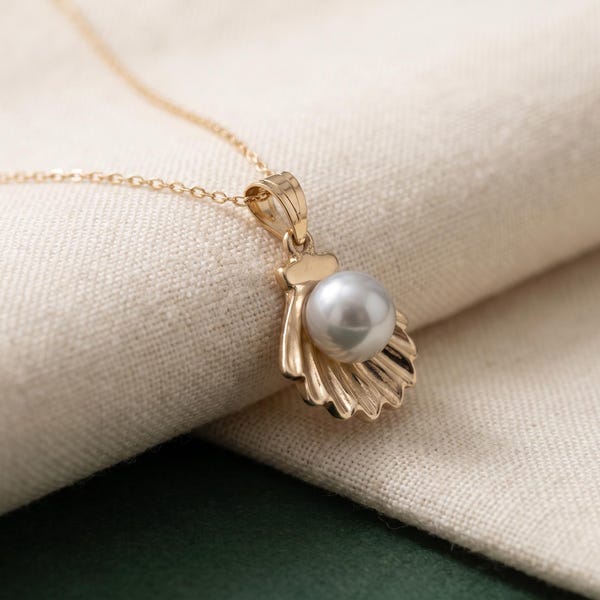 Seashell Necklace with Freshwater Pearl
View Seashell Necklace with Freshwater Pearl on Etsy
Our new article on starfish jewelry meaning explains the folklore behind the design. Every piece we make is solid 14K gold stamped 585, never plated, so occasional contact with water will not wear a layer away. Taking it off before you swim simply keeps it looking its best and keeps it with you.
You can, but it is better not to. Chlorine can dull the finish and weaken solder joints over time, so take jewelry off before swimming.
Salt water does not corrode solid gold quickly, but salt and sand can dull and scratch it. The bigger risk in the sea is losing a piece in the waves.
We advise against it. Warm, chemically treated water is harder on the alloy metals in 14K gold and on any stones.
Rinse it in fresh water, wash it gently in warm soapy water, and dry it thoroughly. Occasional exposure is not a cause for alarm.
No. Chlorine, salt and sunscreen can all damage the surface of pearls, so remove pearl jewelry before swimming or applying lotions.
Share:
How to fix a broken gold chain: spot a jump ring, clasp or link break, learn what is safe at home, why glue fails, and when a jeweler is the right ca…
How to untangle a gold chain without breaking it: the two-pin method, when to use oil or cornstarch, which chains knot most, and how to stop tangles…
Gold jewelry for sensitive skin: why some people react to alloys, nickel and worn plating, why solid 14K gold suits most people, and honest caveats.