Can You Swim with Gold Jewelry? Chlorine, Salt Water and Sunscreen
Can you swim with gold jewelry? What chlorine, salt water and sunscreen do to 14K gold, why rings get lost, and how to clean pieces after a swim.

Most broken gold chains can be fixed, and the repair is usually simple: a jeweler replaces an opened jump ring, swaps a worn clasp, or solders or laser-welds a single broken link. Keep every piece of the chain, do not use glue, and take it to a jeweler if a link itself has snapped, because a proper repair restores the chain's strength.
A clean break at the clasp or jump ring is often something a jeweler can fix quickly. Below we explain the three most common types of break, what you can safely do at home, when professional repair is the better choice, and how our lifetime guarantee on craftsmanship works for chains bought from us.
Before anything else, find every part: both ends of the chain, the clasp, any small rings and the pendant if there is one. Put them together in a small bag or envelope. A missing jump ring is easy to replace, but a missing section of chain is much harder to match, especially with patterned chains such as wheat, rope or figaro.
Then look closely, ideally with a magnifier or your phone camera zoom, to see where the chain failed. That tells you which repair it needs.
| Type of break | What it looks like | Typical fix | DIY possible? |
|---|---|---|---|
| Jump ring | The small ring joining the clasp to the chain has opened or is missing | Close or replace the jump ring, ideally solder it shut | Sometimes, with care |
| Clasp | Spring ring or lobster clasp no longer closes, or the lever is broken | Replace the clasp with a matching gold one | Rarely; needs matching parts |
| Link | A link in the chain itself has snapped or stretched open | Solder or laser-weld the link, or replace a short section | No; see a jeweler |
The jump ring is the small circular ring that connects the clasp or the end tag to the chain. It is the most common weak point because it takes the strain every time the clasp is opened and closed. If the ring has simply pulled open, the chain may slip off it.
If you have two pairs of flat-nose pliers, you can sometimes close an opened ring by twisting the ends back together sideways (never by pulling them apart into an oval). This is a temporary fix. An unsoldered ring can open again, so a jeweler soldering it closed is the reliable solution for a chain you wear often.
Spring ring clasps and lobster clasps have tiny internal springs that wear out over years of use. When a clasp no longer snaps shut, it should be replaced, not forced. A jeweler will fit a new clasp in the same karat so the chain stays solid gold throughout. Wearing a chain with a faulty clasp is the fastest way to lose it.
When a link in the chain itself breaks, it is usually because the chain caught on something and was pulled hard, or because a link was already thin from wear. A jeweler can join the link by soldering or laser welding. On fine chains, laser welding is often preferred because the heat is very local and does not disturb nearby links. If several links are damaged, the jeweler may remove a short section, which shortens the chain slightly.
Very fine chains and hollow chains are harder to repair because there is less metal to work with. Our new article on hollow vs solid gold jewelry explains why solid construction is easier to mend.
Superglue and jewelry glue look like an easy fix, but they cause more problems than they solve.
Similarly, avoid knotting a broken chain together or using a safety pin as a clasp. Both strain the remaining links and increase the risk of losing the piece.
Go to a professional when:
A good jeweler will tell you whether the chain can be repaired invisibly, whether it will be slightly shorter, and whether any other links show wear. Ask whether they solder or laser weld, and ask them to use solder of the same karat so the repair matches the rest of the chain. If you are curious about these techniques, our new article on how gold jewelry is made explains soldering and chain making in general terms.
Every piece we make is solid 14K gold stamped 585, and every piece is covered by our lifetime guarantee on craftsmanship. If a chain bought from us fails because of how it was made, for example a jump ring or a soldered joint that gives way in normal wear, message us through Etsy. Şerif Temizkan answers messages personally and will explain the next steps.
The guarantee covers the work itself. Damage from accidents, such as a chain caught and pulled hard, is a different situation, but we are still happy to advise. Include clear photos of the break when you write, as they help us understand what happened.
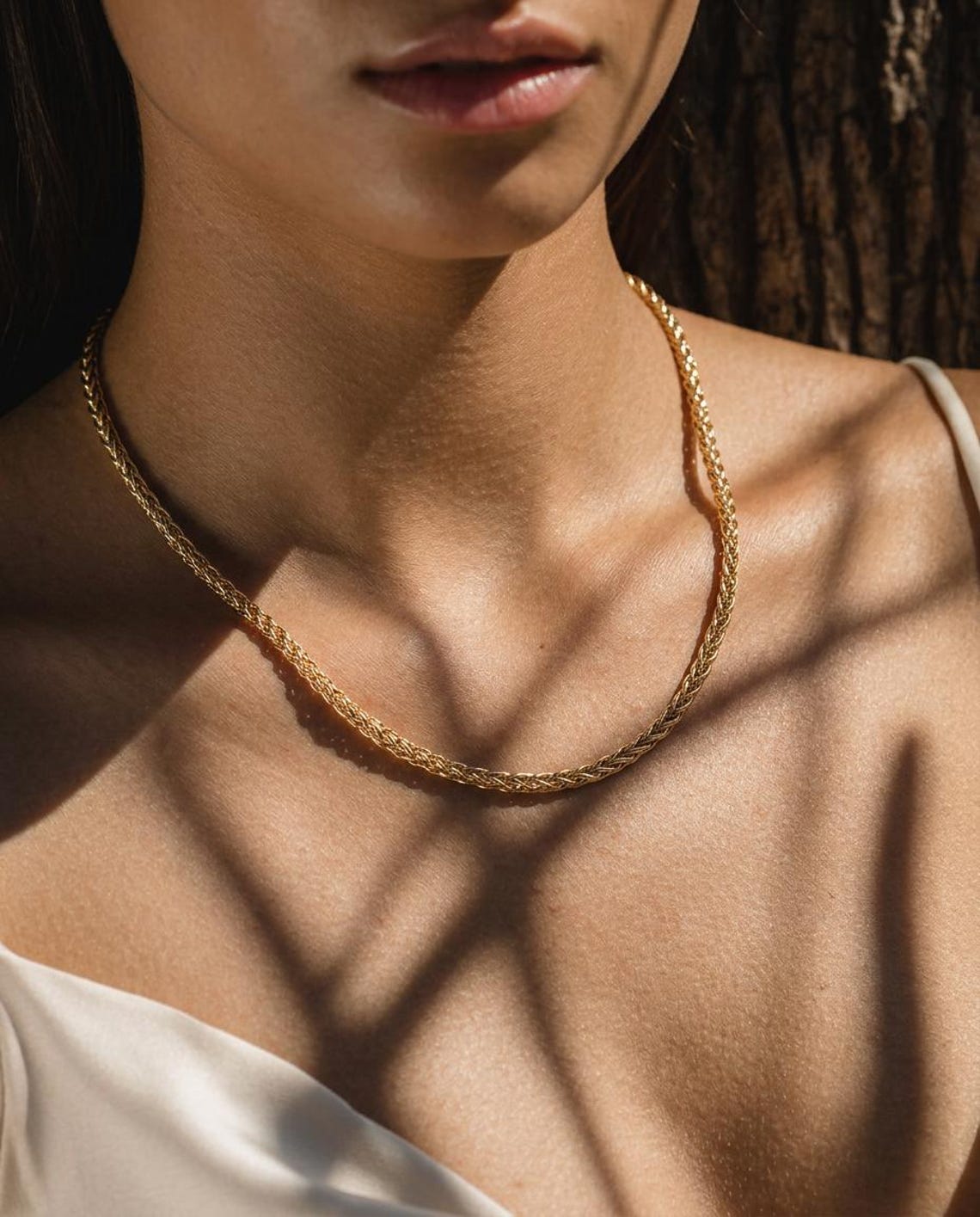
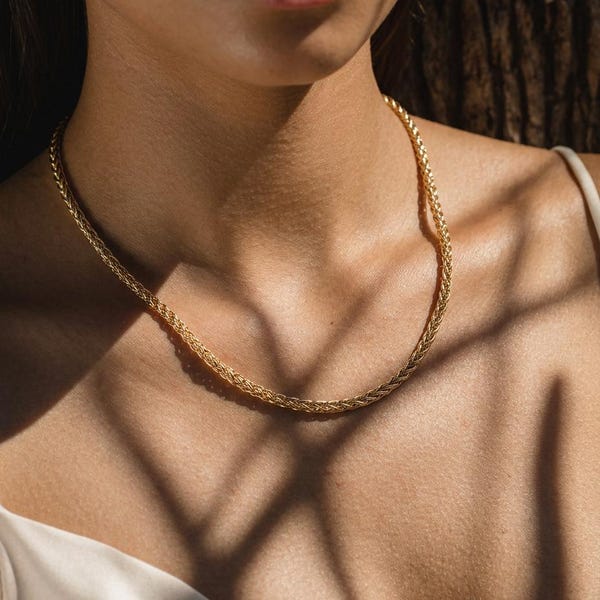 Wheat Chain Necklace
View Wheat Chain Necklace on Etsy
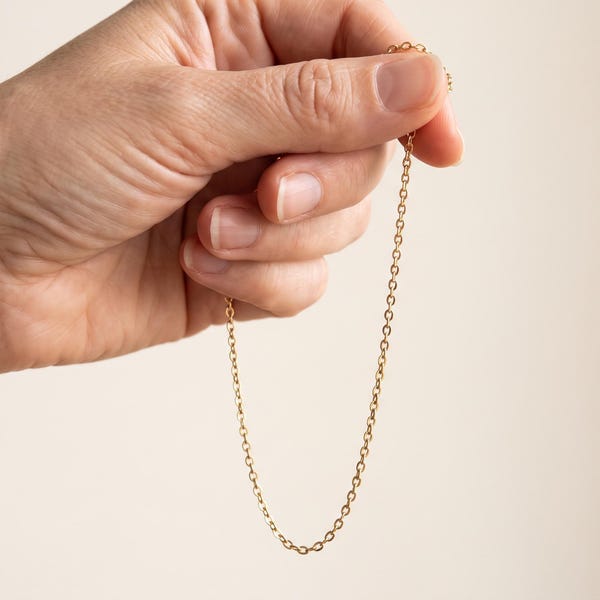 Cable Chain Necklace
View Cable Chain Necklace on Etsy
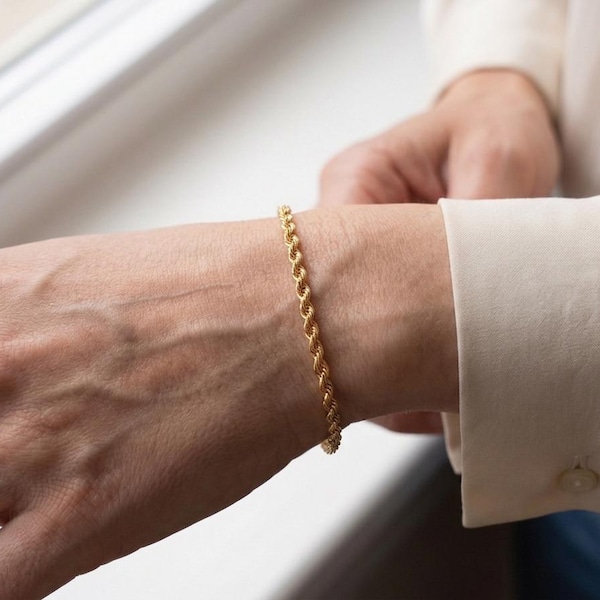 Rope Chain Bracelet
View Rope Chain Bracelet on Etsy
Most breaks come from a sudden pull or from slow wear at the same spot. A few habits help a great deal.
Bracelets break more often than necklaces because wrists move constantly and knock against surfaces. Sturdy links such as mariner or rope designs hold up well to daily wear.
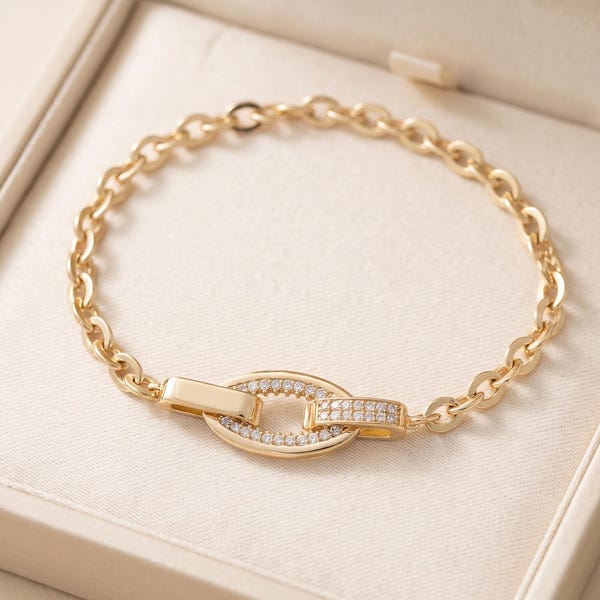 Mariner Link Bracelet
View Mariner Link Bracelet on Etsy
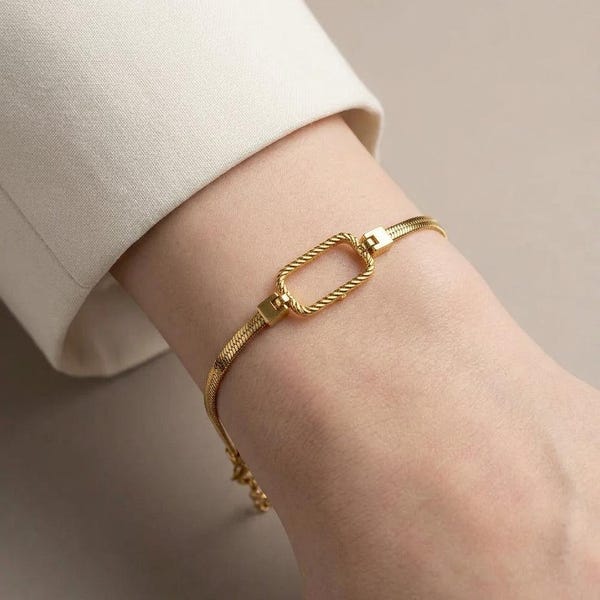 Herringbone Bracelet
View Herringbone Bracelet on Etsy
Browse our current chains in the necklaces and bracelets collections.
In most cases, yes. Jump rings and clasps can be replaced and broken links can be soldered or laser-welded by a jeweler.
No. Glue does not hold in a flexible chain, it stiffens the links, and it makes a proper solder repair harder later.
Not usually for a jump ring or clasp repair. If damaged links have to be removed, the chain can lose a small amount of length.
Our lifetime guarantee covers craftsmanship. If a chain you bought from us fails because of how it was made, message us on Etsy with photos and we will explain the next steps.
Clasps contain small springs that wear out with years of opening and closing. Replacing a weak clasp early is far better than losing the chain.
Share:
Can you swim with gold jewelry? What chlorine, salt water and sunscreen do to 14K gold, why rings get lost, and how to clean pieces after a swim.
How to untangle a gold chain without breaking it: the two-pin method, when to use oil or cornstarch, which chains knot most, and how to stop tangles…
Gold jewelry for sensitive skin: why some people react to alloys, nickel and worn plating, why solid 14K gold suits most people, and honest caveats.
