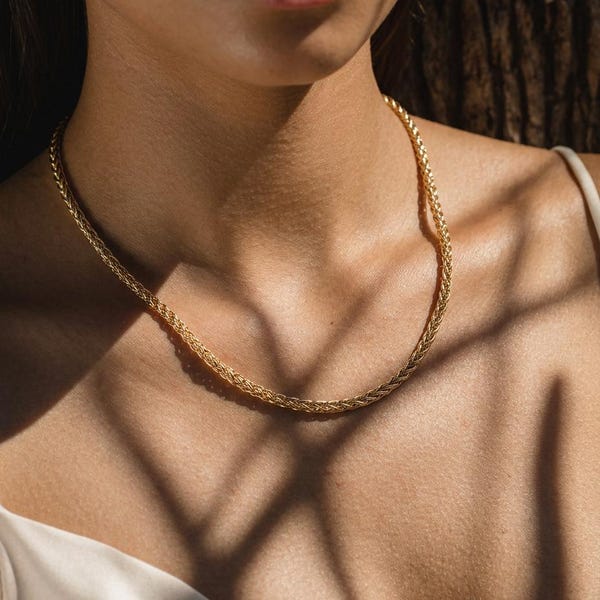
Can You Swim with Gold Jewelry? Chlorine, Salt Water and Sunscreen
Can you swim with gold jewelry? What chlorine, salt water and sunscreen do to 14K gold, why rings get lost, and how to clean pieces after a swim.

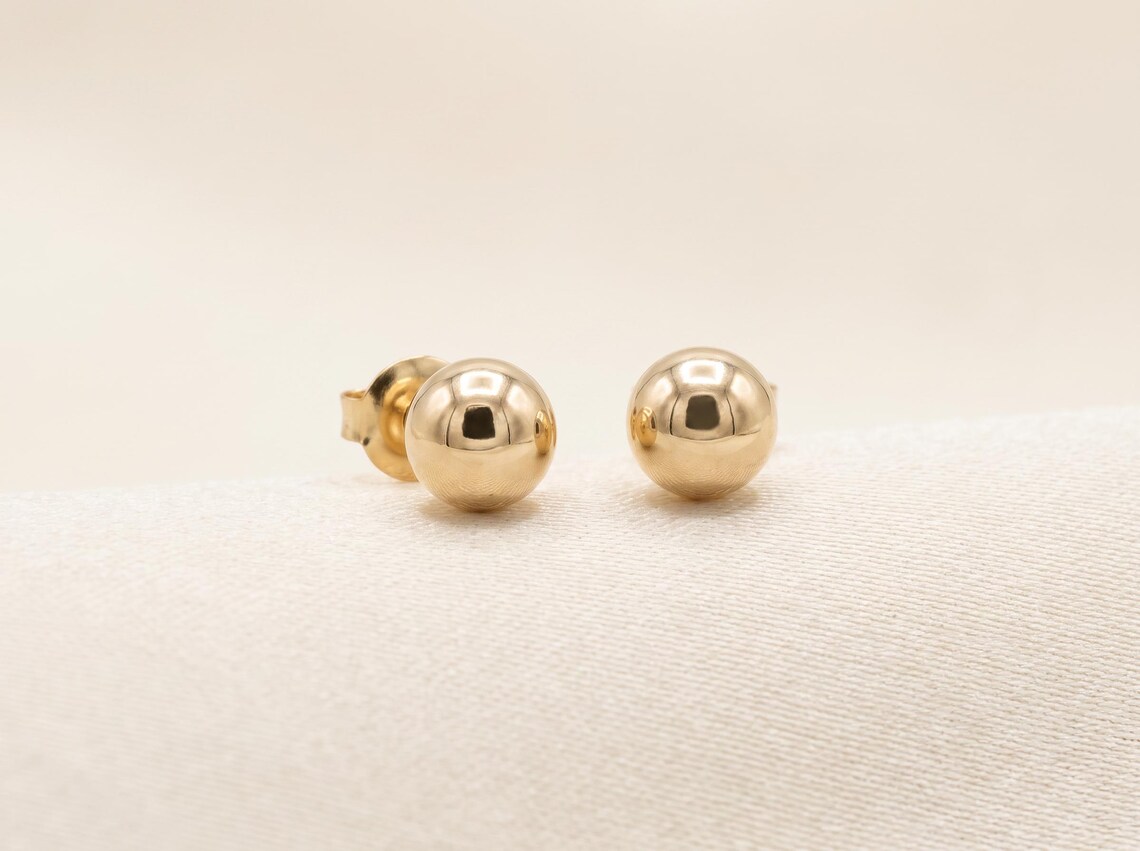
Most people with sensitive skin can wear solid 14K gold comfortably, because gold itself very rarely causes reactions. When jewelry does irritate, the cause is usually another metal in the alloy, such as nickel in some white gold, or a cheap base metal showing through worn plating.
This guide explains why reactions happen, why solid gold is usually the easier choice, and where the honest limits are. It is general information from goldsmiths, not medical advice. If you have a known metal allergy or a rash that does not clear up, please see a doctor or dermatologist.
Pure gold (24K) is soft and does not react much with skin or sweat. Jewelry is almost never pure gold, though. It is an alloy: gold mixed with other metals such as silver, copper, zinc and sometimes nickel or palladium to make it harder and to change its color. Our gold karat chart shows how much gold each karat contains.
Irritation usually comes from one of three sources:
Other causes are less about metal: soap or lotion trapped under a ring, a tight band on a warm day, or simple friction. These can look like an allergy but are often irritation that settles once the piece is cleaned, dried and given a rest.
Solid 14K gold is 58.5% pure gold all the way through, which is why it is stamped 585. There is no plating to wear away and no different metal hiding underneath. What touches your skin on day one is what touches it after years of wear.
That consistency is the main advantage over plated or gold-filled pieces. If you have reacted to cheap earrings in the past, there is a good chance the base metal under worn plating was the cause rather than gold itself. Our article on solid gold vs gold-filled vs gold-plated explains the construction differences.
| Type | What touches your skin | Changes over time? |
|---|---|---|
| Gold-plated | Thin gold layer, then base metal once it wears | Yes, often within months of daily wear |
| Gold-filled | Thicker gold layer bonded to base metal | Slowly, with heavy wear |
| Solid 14K gold | The same 14K alloy throughout | No plating to wear through |
| Solid 18K gold | A higher-gold alloy throughout | No plating to wear through |
Higher karats contain less alloy metal, so some very sensitive people prefer 18K. The trade-off is that 18K is softer and scratches and bends more easily. Our 14K vs 18K gold comparison covers that balance.
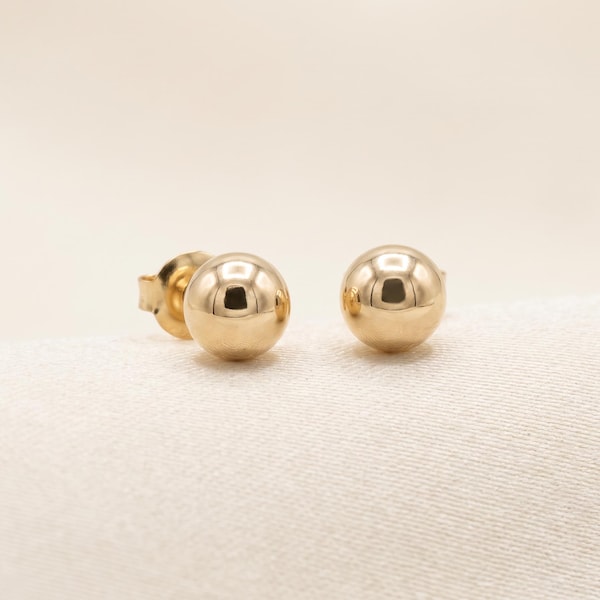 Ball Stud Earrings
View Ball Stud Earrings on Etsy
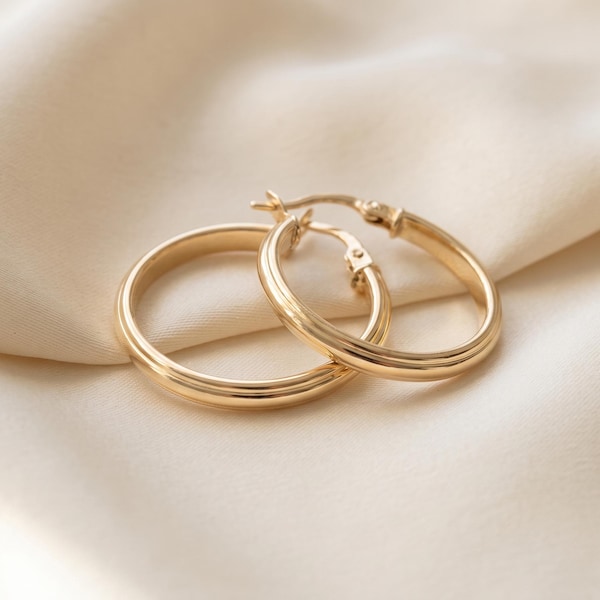 Tube Hoop Earrings
View Tube Hoop Earrings on Etsy
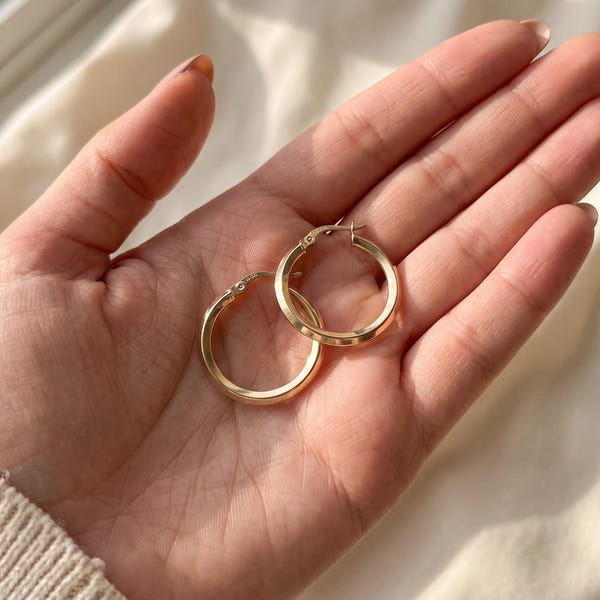 Sleeper Earrings Square Edge Hoops
View Sleeper Earrings Square Edge Hoops on Etsy
We want to be clear about what solid gold can and cannot promise.
Ear piercings are the most common place for reactions, because the post sits inside the skin. Plain solid gold studs and sleeper hoops are a sensible first choice. Smooth, simple shapes are also easier to keep clean. Browse our solid gold earrings or read our stud and huggie earrings guide.
Rings trap soap and moisture against the skin. A smooth band with a comfortable inner edge is easier to rinse and dry than a ring with lots of crevices. If a ring leaves a red mark, check the fit too: a band that is slightly tight holds moisture in.
Chains touch less skin than you might think, but a clasp at the back of the neck can rub. Make sure the length is right so the clasp does not sit on irritated skin. A plain chain is also one of the easiest everyday gold essentials to live in.
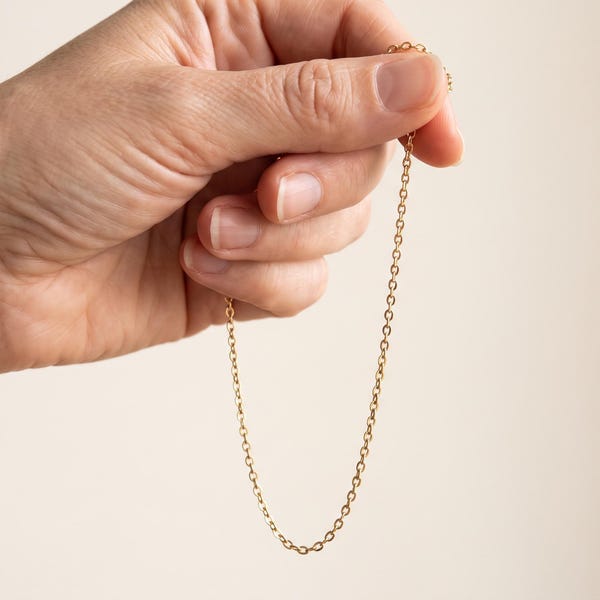 Cable Chain Necklace
View Cable Chain Necklace on Etsy
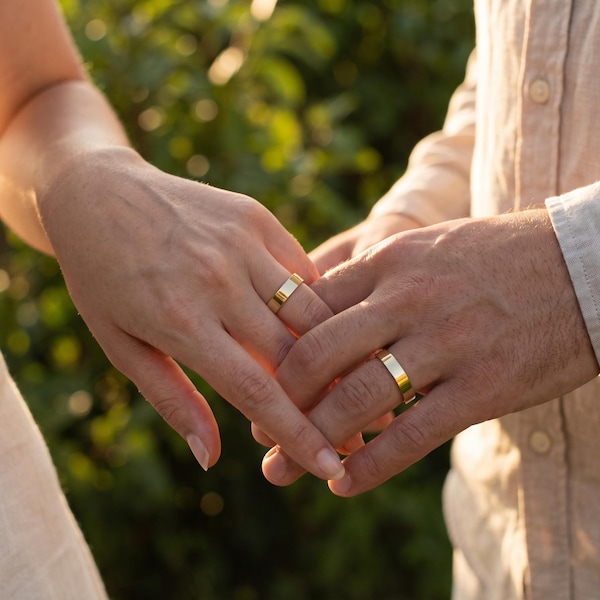 Flat Wedding Band Polished Ring for Him and Her
View Flat Wedding Band Polished Ring for Him and Her on Etsy
Good habits help with any metal, and they help a lot with friction and trapped-soap irritation.
See a doctor or dermatologist if you notice a rash that spreads, blisters, weeps, lasts more than a few days after removing the jewelry, or keeps coming back. These can be signs of contact allergy or infection. A dermatologist can patch test you to identify the specific metals you react to, which is far more useful than guessing piece by piece.
Every piece we make is solid 14K gold stamped 585, never plated, gold-filled or hollow. If you have questions about a particular piece, especially white gold, message us before ordering. Şerif answers personally. Many pieces can also be returned within 45 days, with the exact window shown on each listing, so you are not stuck with something your skin does not like.
For most people, yes. Solid 14K gold has no plating to wear off, but it is still an alloy, so a small number of people with specific metal allergies may react to it.
Some white gold alloys do and some do not. If you are allergic to nickel, ask the seller about the specific alloy of the piece before you buy.
Plating is very thin and wears away, exposing the base metal underneath, which often contains metals that irritate skin. Solid gold does not have that layer to wear through.
Follow your piercer's advice for the healing period. Once healed, many people find plain solid gold studs or sleepers comfortable for daily wear.
Yes, if the rash spreads, blisters or does not clear after you stop wearing the piece. A dermatologist can patch test to find which metals cause it.
Share:
Can you swim with gold jewelry? What chlorine, salt water and sunscreen do to 14K gold, why rings get lost, and how to clean pieces after a swim.
How to fix a broken gold chain: spot a jump ring, clasp or link break, learn what is safe at home, why glue fails, and when a jeweler is the right ca…
How to untangle a gold chain without breaking it: the two-pin method, when to use oil or cornstarch, which chains knot most, and how to stop tangles…