Can You Swim with Gold Jewelry? Chlorine, Salt Water and Sunscreen
Can you swim with gold jewelry? What chlorine, salt water and sunscreen do to 14K gold, why rings get lost, and how to clean pieces after a swim.

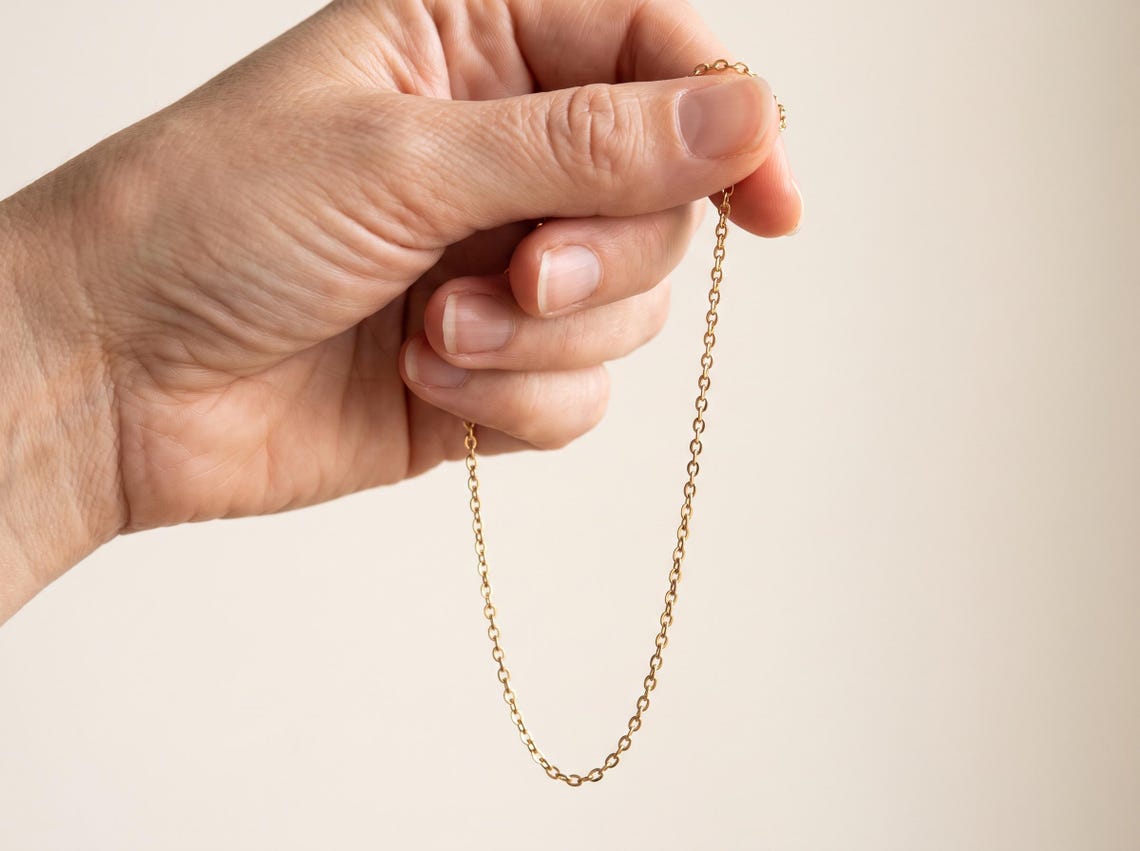
To untangle a gold chain, lay it flat on a soft surface, loosen the knot with two fine needles or pins rather than pulling the ends, and add a drop of baby oil or a pinch of cornstarch if the links are stuck. Work slowly from the center of the knot outward, then wash the chain in warm soapy water once it is free.
Patience is the main tool. Pulling on the two ends tightens a knot and can stretch or snap fine links. Below is a step-by-step method, the tools that help, which chain types tangle most, and how to stop it happening again.
You probably have everything at home already.
Avoid using sharp knife tips or metal tools with force. Gold is a soft metal and a slip can scratch the links or bend a clasp.
Work on the loosest knot first. Freeing it often relaxes the tighter ones. Take breaks: tired eyes and impatient fingers cause most broken chains.
| Method | Best for | Watch out for |
|---|---|---|
| Two needles or pins | Most knots in fine chains | Do not lever hard against a single link |
| Baby oil or mineral oil | Tight knots where links are stuck | Use one drop and wash it off afterward |
| Cornstarch or baby powder | Oil-free option, chains with pearls | Can be messy; brush and rinse after |
| Rolling between glass surfaces | Small loose knots | Too much pressure can flatten delicate links |
| Professional jeweler | Very tight knots, kinked or damaged links | Takes time; but safest for valuable chains |
If your chain has pearls or a natural stone, skip the oil. Oil can be absorbed by pearls and dull their surface. Use cornstarch instead and keep the stone dry.
Some chain types knot far more easily than others. Fine, flexible chains with small round links move freely in every direction, which is exactly what makes them tangle. Flat or structured chains hold their shape and rarely knot.
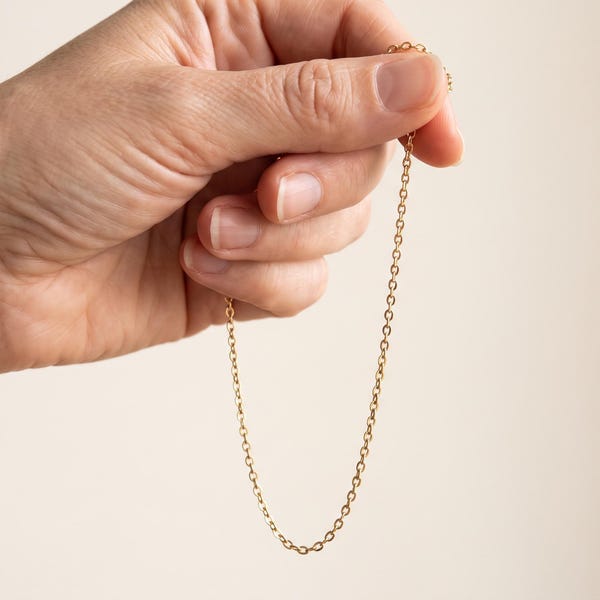 Cable Chain Necklace
View Cable Chain Necklace on Etsy
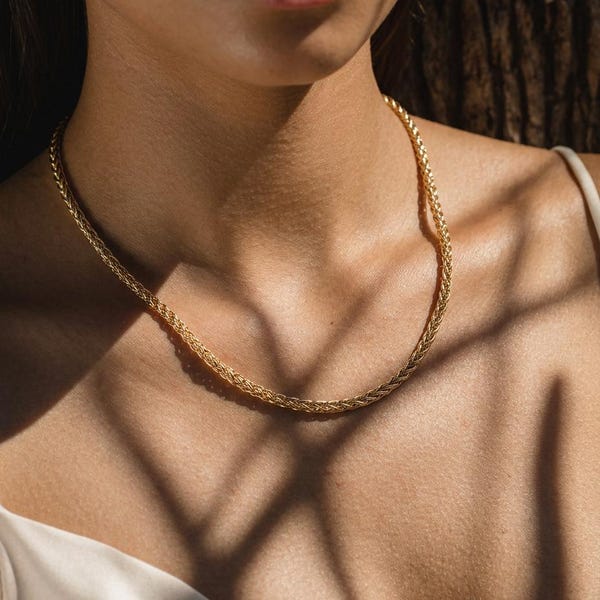 Wheat Chain Necklace
View Wheat Chain Necklace on Etsy
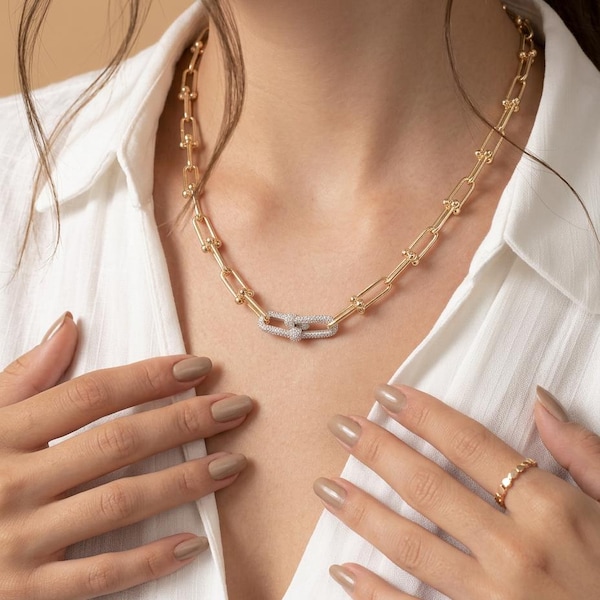 Paperclip Chain Necklace
View Paperclip Chain Necklace on Etsy
For a full overview of styles and how each behaves, see our gold chain types guide. Browse current chains and pendants in our necklaces collection.
Sometimes a knot hides damage. Stop and look closely if you notice:
Do not keep working a damaged section, because you can turn a small repair into a break. Our new guide on how to fix a broken gold chain explains which repairs are simple and when to see a jeweler. If the piece is one of ours, message us: we offer a lifetime guarantee on craftsmanship, and Şerif Temizkan answers messages personally.
Prevention is much easier than untangling. The habits below cover almost every case we see.
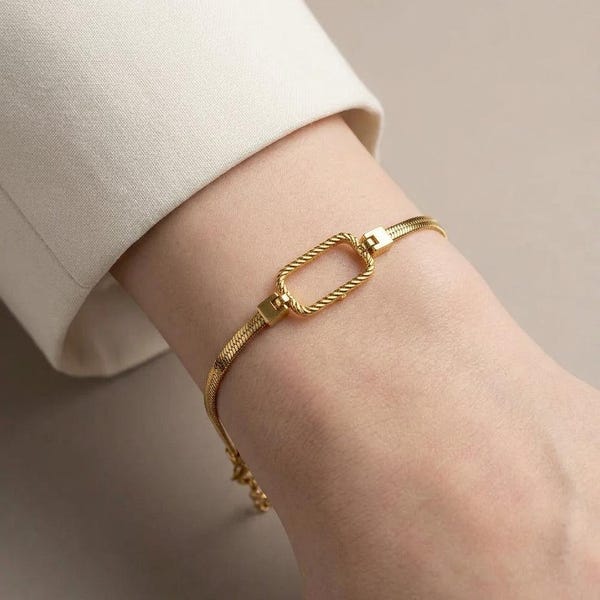 Herringbone Bracelet
View Herringbone Bracelet on Etsy
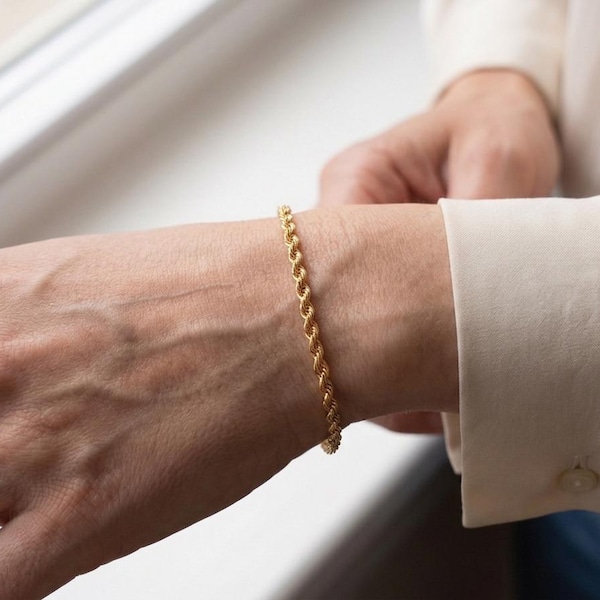 Rope Chain Bracelet
View Rope Chain Bracelet on Etsy
Every order arrives in an illuminated jewelry box that lights up when opened. It is also a good permanent home for the piece, which helps keep chains apart.
It helps. Plated chains have a thin gold surface over another metal, and the friction of untangling, plus the washing afterward, can wear that layer through at the links that rub most. Solid 14K gold chains, like all of ours stamped 585, are gold all the way through, so there is no surface layer to rub away and you can wash off oil and powder without worry. If you are unsure what your chain is made of, our article on solid gold vs gold-filled vs gold-plated explains the difference.
Lay it flat, open the clasp, and use two pins to loosen the knot from its center outward. A drop of baby oil helps stuck links slide apart.
A drop of baby oil or mineral oil is safe on solid gold. Wash it off afterward with warm soapy water, and avoid oil on pearls.
Fine, flexible chains such as cable and rolo knot easily, especially when stored loose or worn while sleeping. Store each chain separately with the clasp closed.
Yes, if the knot is extremely tight or you see stretched, open or kinked links. A jeweler can free it without breaking the chain.
Small kinks can sometimes be eased gently, but snake and herringbone chains often stay marked once bent. A jeweler can advise whether the section needs repair.
Share:
Can you swim with gold jewelry? What chlorine, salt water and sunscreen do to 14K gold, why rings get lost, and how to clean pieces after a swim.
How to fix a broken gold chain: spot a jump ring, clasp or link break, learn what is safe at home, why glue fails, and when a jeweler is the right ca…
Gold jewelry for sensitive skin: why some people react to alloys, nickel and worn plating, why solid 14K gold suits most people, and honest caveats.
