History of Grand Bazaar Goldsmiths: The Bedesten and Jewelers' Street
The history of Grand Bazaar goldsmiths, from Mehmed II's Old Bedesten after 1453 to the jewelers' streets of Kuyumcular Çarşısı, told by bazaar golds…

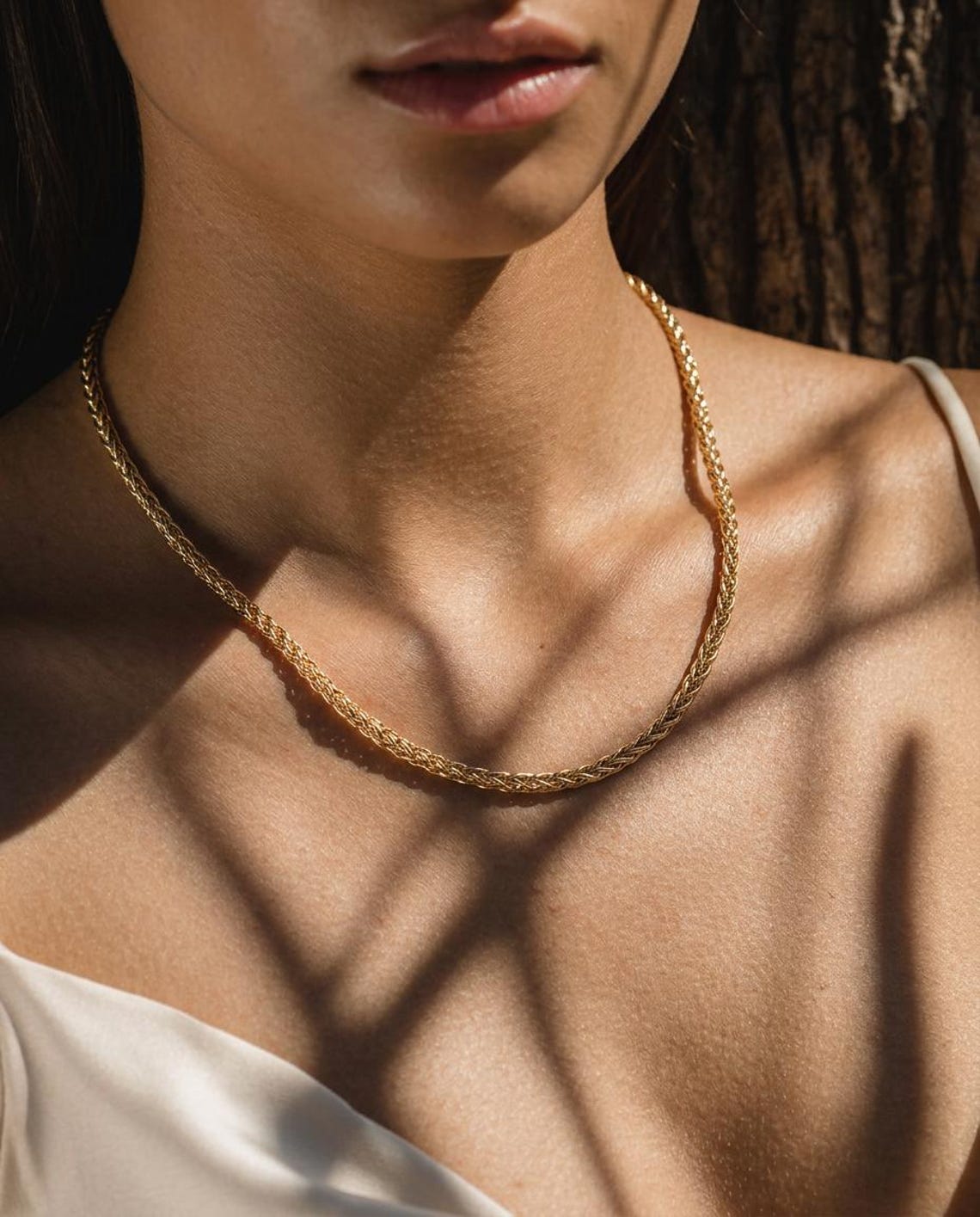
Gold jewelry is made in a sequence of steps: pure gold is alloyed with other metals to the right karat, then shaped by casting, by hand fabrication or by chain making, joined by soldering, set with stones, polished, and finally stamped with a hallmark such as 585 for 14K gold. Each step affects how strong, comfortable and long-lasting the finished piece will be.
This guide walks through that process in general terms, the way goldsmiths typically work in workshops like ours in Istanbul's Grand Bazaar. Methods vary from one atelier to another, but the core craft has been recognizable for centuries.
Pure gold (24K) is beautiful but too soft for most jewelry. A ring in pure gold would bend and scratch quickly. So goldsmiths mix it with other metals to make an alloy. For 14K gold, 14 parts out of 24 are pure gold, which is 58.5 percent. That is why 14K jewelry is stamped 585.
The other metals, usually silver, copper and zinc in varying proportions, add hardness and set the color:
| Gold color | Typical alloy partners | Effect |
|---|---|---|
| Yellow gold | Silver and copper in balance | Warm, classic gold tone |
| Rose gold | A higher share of copper | Pink to reddish warmth |
| White gold | White metals such as palladium or nickel, plus silver or zinc | Pale, silvery tone |
The metals are weighed carefully, melted together in a crucible and poured into ingots or grain. Getting the proportions right matters: an alloy that falls short of the stated gold content cannot honestly carry the stamp. Our gold karat chart compares the common karats, and yellow, white and rose gold explains the color choices in depth.
Once alloyed, gold can be shaped in three broad ways. Most workshops use a mix depending on the design.
Casting is used for pendants, rings and detailed shapes. The most common method is lost-wax casting, a technique used in some form for thousands of years:
A freshly cast piece is rough and dull. All the shine comes later.
Here the goldsmith starts with sheet and wire. Gold is rolled through a rolling mill to make sheet of a set thickness, or pulled through a draw plate to make wire. The pieces are then sawn, bent, hammered and filed into shape. Simple bands, bezels and many classic designs are made this way.
Chains are made from wire formed into links. Many chain styles today are produced on specialized machines, which make links of very even size, while some decorative chains and repairs are still done by hand. The pattern of the links decides whether you get a cable, rope, wheat, figaro or paperclip chain. Our gold chain types guide explains how each one looks and wears.
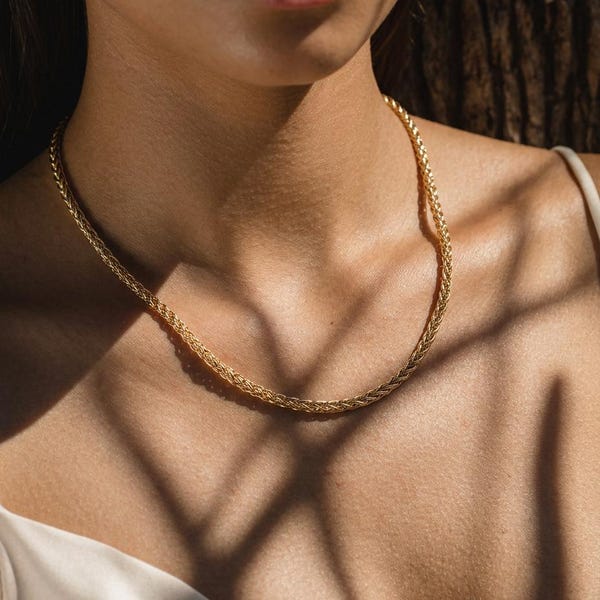 Wheat Chain Necklace
View Wheat Chain Necklace on Etsy
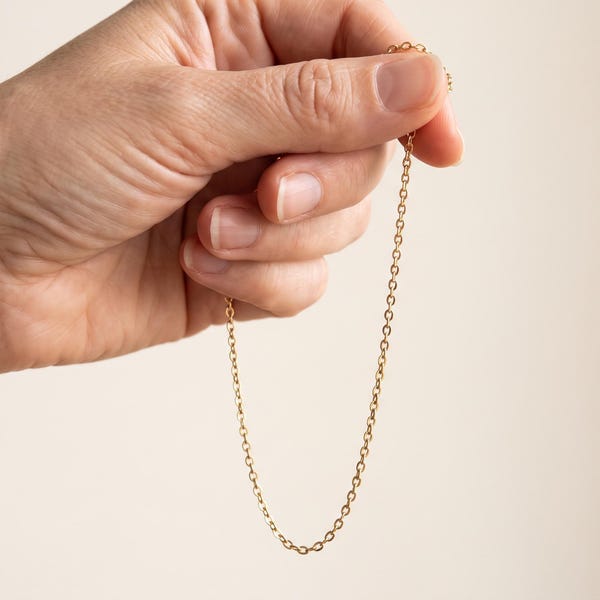 Cable Chain Necklace
View Cable Chain Necklace on Etsy
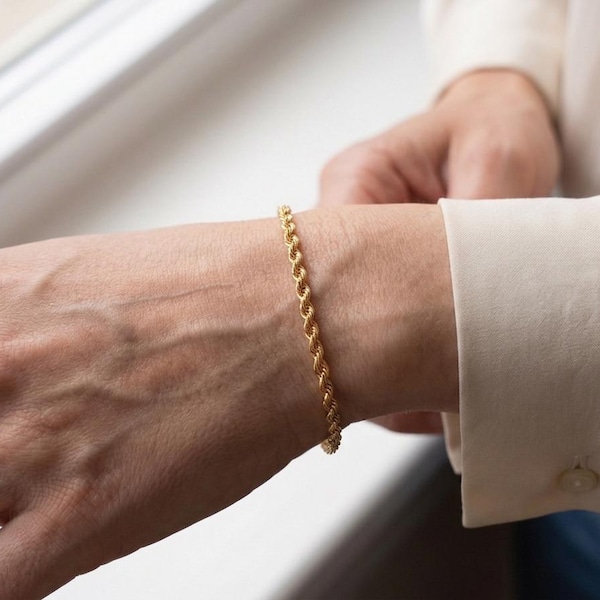 Rope Chain Bracelet
View Rope Chain Bracelet on Etsy
Whether a chain is solid or hollow is decided at this stage. Hollow chains are made from tube rather than solid wire, which saves gold but makes them more prone to dents. All of our pieces are solid. Our new article on hollow vs solid gold jewelry compares the two.
Most pieces are made of several parts: a pendant and its bail, a ring shank and its head, a chain and its clasp. Goldsmiths join them by soldering. Solder is a gold alloy made to melt at a slightly lower temperature than the parts it joins. With a fine torch flame, the goldsmith heats the joint until the solder flows into it.
Good practice is to use solder of the same karat, so the joint is the same gold content and color as the piece. Many workshops also use laser welders for delicate work, because the heat stays in a tiny area. Joints are a common weak point in poorly made jewelry, which is why they get close attention during finishing. This is also how most chain repairs are done, as we explain in how to fix a broken gold chain.
If a design has stones, a stone setter secures them in the metal. The main methods are:
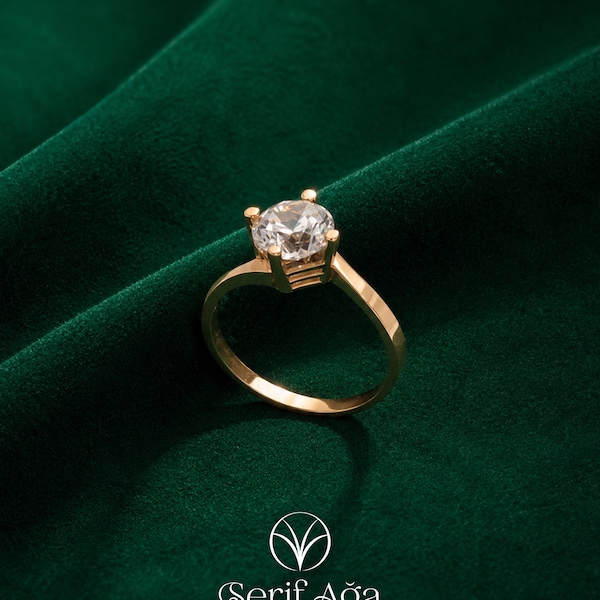 Solitaire Ring
View Solitaire Ring on Etsy
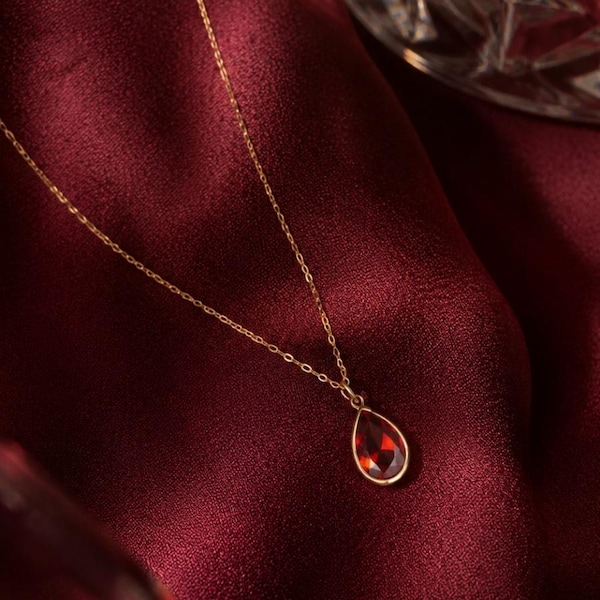 Garnet Teardrop Necklace
View Garnet Teardrop Necklace on Etsy
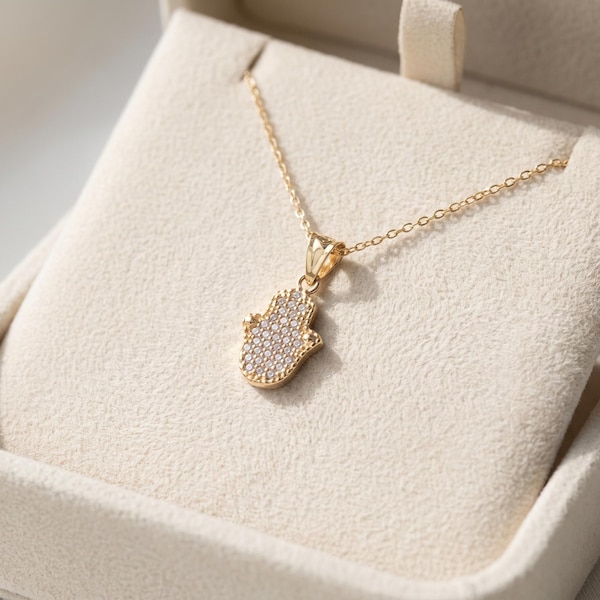 Pave Hamsa Necklace
View Pave Hamsa Necklace on Etsy
Most of our pieces use cubic zirconia (CZ), and some use natural stones such as amethyst or blue topaz. Each listing says which. Our cubic zirconia jewelry guide explains the stone honestly.
Finishing takes more time than many people expect. Goldsmiths typically file away casting marks and excess solder, then sand with progressively finer abrasives, then polish on a wheel with polishing compounds until the surface reflects cleanly. Some pieces get texture instead: hammered, brushed or matte finishes.
Diamond-cut finishes are made by cutting tiny facets into the metal with a hard cutting tool, so the surface sparkles. The name describes the cutting tool, not the presence of diamonds. Our new guide to diamond-cut gold jewelry explains it in detail.
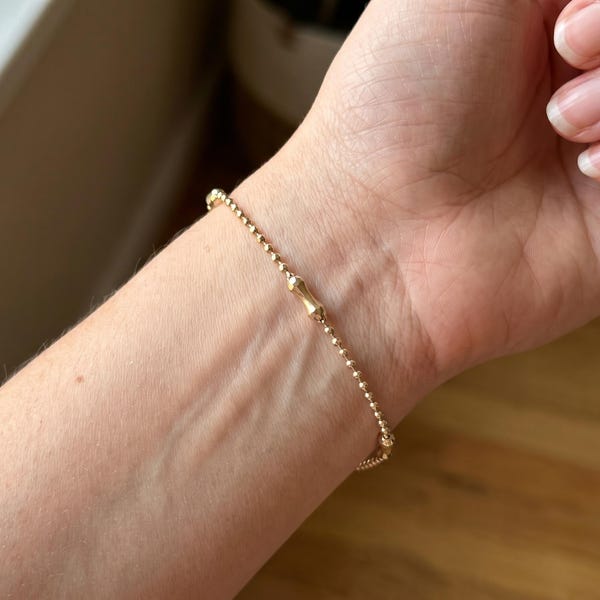 Diamond-Cut Ball Chain Bracelet
View Diamond-Cut Ball Chain Bracelet on Etsy
 Initial Necklace
View Initial Necklace on Etsy
Finally, the piece is stamped with its fineness mark. For 14K gold, that is 585. In many countries, including Turkey, hallmarking of precious metals is regulated. The stamp is the maker's statement of gold content, and it is the first thing to look for when checking a piece. Our articles on what 585 means on gold and how to tell if gold is real cover this.
Before a piece leaves the bench, a goldsmith checks clasps, settings and joints, and cleans away polishing residue. Every piece we make is solid 14K gold stamped 585, and every piece carries our lifetime guarantee on craftsmanship.
Goldsmithing in the Grand Bazaar area has a long history, which we describe in our new article on the history of Grand Bazaar goldsmiths. Today, the pieces we make are sold only on Etsy, with free tracked and insured express shipping to the USA, UK and Europe. Browse finished work in our rings and necklaces collections.
Gold is alloyed to the right karat, shaped by casting, hand fabrication or chain making, assembled by soldering, set with stones, polished, and stamped with a fineness mark such as 585.
It is a method where a wax model is encased in a mold material, the wax is melted out, and molten gold is poured into the hollow it leaves behind.
Pure 24K gold is too soft for everyday jewelry. Alloying with metals such as silver, copper and zinc adds strength and sets the color.
It means the metal is 58.5 percent pure gold, which is 14K. The stamp is applied after the piece is finished.
No. Diamond-cut describes small facets cut into the metal surface to make it sparkle. It does not mean the piece contains diamonds.
Share:
The history of Grand Bazaar goldsmiths, from Mehmed II's Old Bedesten after 1453 to the jewelers' streets of Kuyumcular Çarşısı, told by bazaar golds…
A short guide to Istanbul's Grand Bazaar from a goldsmith's workshop inside it: its history, the jewelers' street, opening days and how to buy gold w…
Christmas gold jewelry gift ideas for 2026, sorted by recipient and style, plus practical notes on ordering early, gift boxes and free tracked shippi…

