Yellow vs White vs Rose Gold Guide: How 14K Colors and Two-Tone Differ
Yellow, white and rose gold guide: how 14K alloys create each color, what rhodium on white gold really is, choosing by preference, and caring for two…

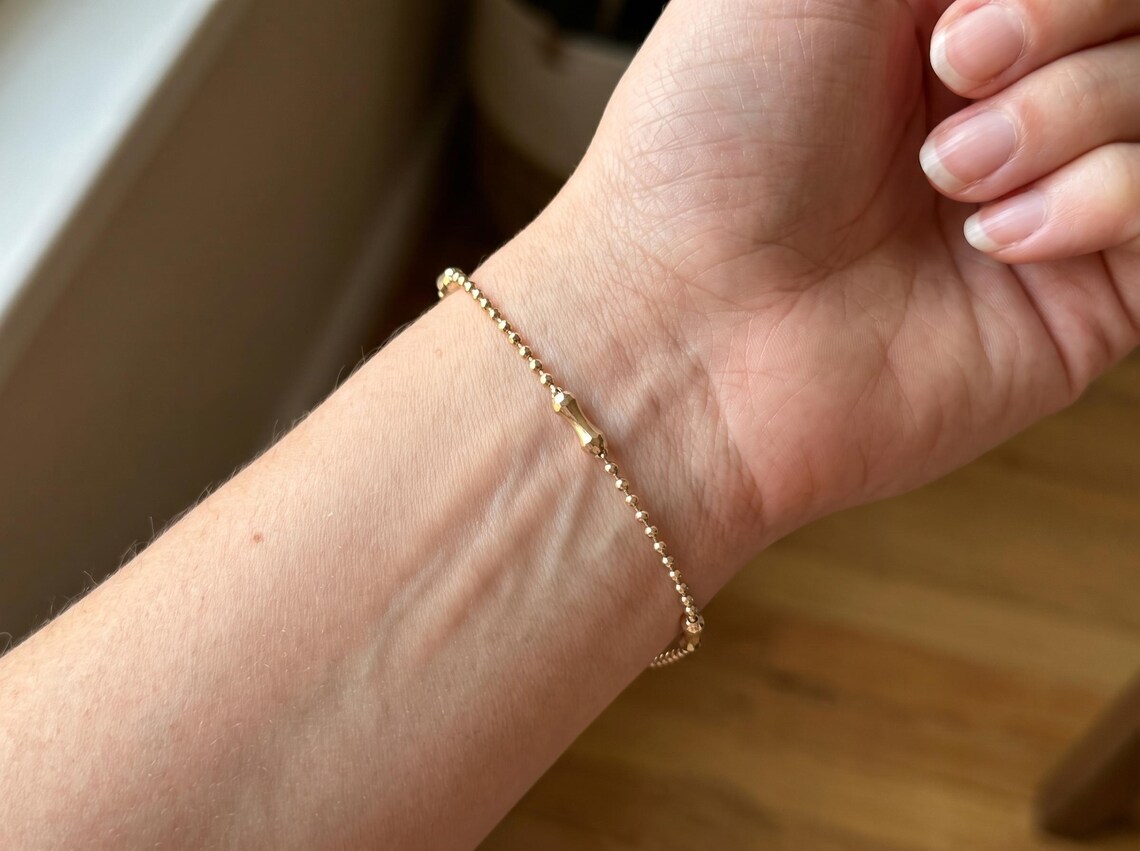
Diamond-cut gold jewelry is gold whose surface has been cut into tiny flat facets that catch and reflect light. It does not contain diamonds: the name comes from the cutting tools, traditionally diamond-tipped, and from the way the facets sparkle like a cut stone.
Because the sparkle comes from the metal itself, diamond-cut pieces shine without any stones at all. Here is how the finish is made, where it works best, how it compares with other finishes, and how to look after it.
When a listing says "diamond-cut", it is describing a finish, not a material. Small flat planes are cut into the gold surface. Each plane works like a tiny mirror, and when the piece moves, the facets flash one after another.
This is a common source of confusion online. A "diamond-cut bead bracelet" is a gold bracelet with faceted gold beads. A piece with diamonds would say diamonds, and a piece with cubic zirconia should say CZ. If you want to understand the stone side of that question, read diamond vs cubic zirconia and our cubic zirconia jewelry guide. All of our diamond-cut pieces are solid 14K gold, and where a piece also has stones, the listing names them.
In general terms, goldsmiths and chain makers create diamond-cut surfaces in a few ways:
Because cutting removes a thin layer of metal, the piece needs enough gold to begin with. That is one reason diamond-cutting works best on solid gold rather than thin plated or hollow pieces, where cutting could expose base metal or weaken the wall. Our article on how gold jewelry is made explains the wider process in workshops like ours.
| Finish | Look | Best for | Shows scratches |
|---|---|---|---|
| High polish | Smooth, mirror-like | Plain bands, domes, classic studs | Yes, fine scratches show over time |
| Diamond-cut | Sparkling, faceted, flashes in movement | Bead chains, bracelets, engraved pendants | Less, facets break up the surface |
| Textured or hammered | Soft glow, organic | Statement rings, leaf and botanical motifs | Least, texture hides marks |
| Ribbed or twisted | Lines that catch light | Hoops, rope chains | Moderate |
Many people like diamond-cut gold because it gives sparkle without stones, which suits anyone who prefers an all-metal look or wants something hard-wearing for every day. It also photographs well, since the facets throw small points of light.
Bracelets move constantly, so faceted beads are always catching light. Diamond-cut bead chains are also a good way to add sparkle to a stack without adding stones. You can see more in our gold bracelet styles guide or browse gold bracelets.
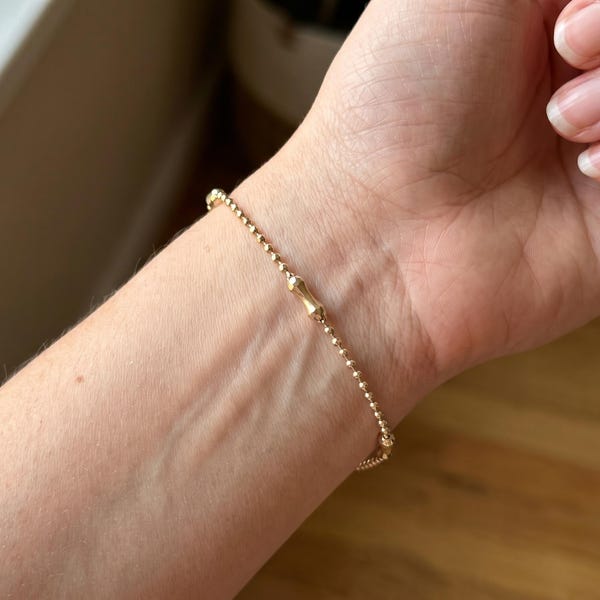 Diamond-Cut Ball Chain Bracelet
View Diamond-Cut Ball Chain Bracelet on Etsy
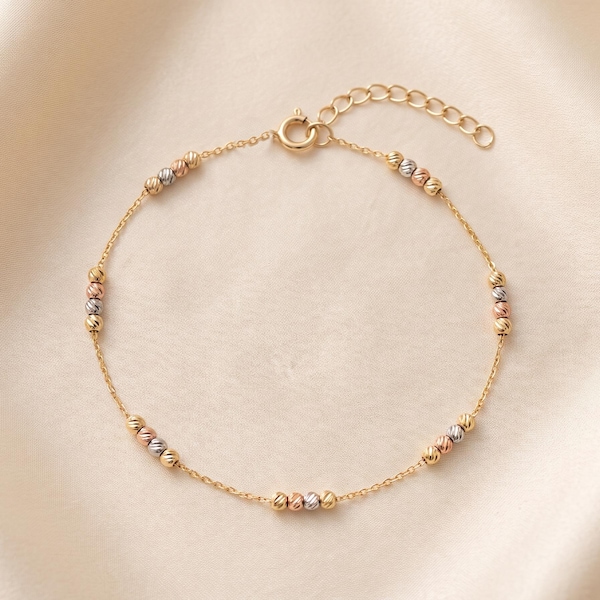 Two Tone Bracelet
View Two Tone Bracelet on Etsy
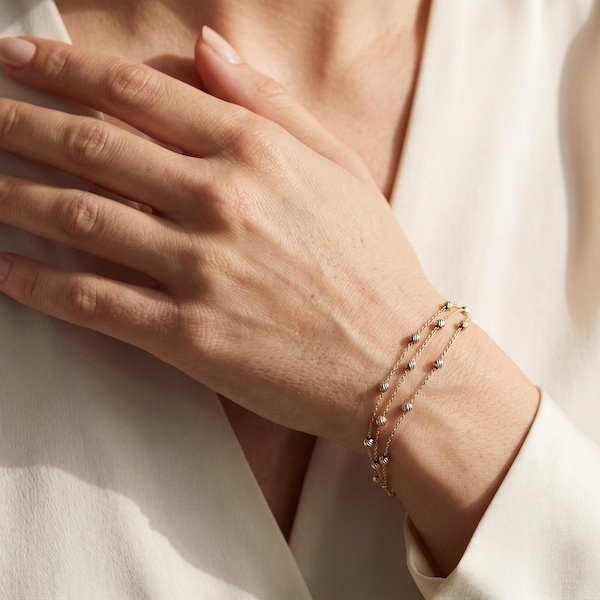 14K Solid Tri-Color Gold Double Strand Diamond Cut Bead…
View 14K Solid Tri-Color Gold Double Strand Diamond Cut Bead… on Etsy
A diamond-cut band gives a ring texture and life without making it fussy. It is a good choice if you work with your hands, because the facets hide small marks better than a high polish. Diamond-cut sphere bands also add sparkle to a chunkier ring.
On pendants, diamond-cutting is often used as a pattern, like a starburst behind a letter or a cut edge around a cross. It adds detail that reads well from a distance and keeps a plain shape from looking flat.
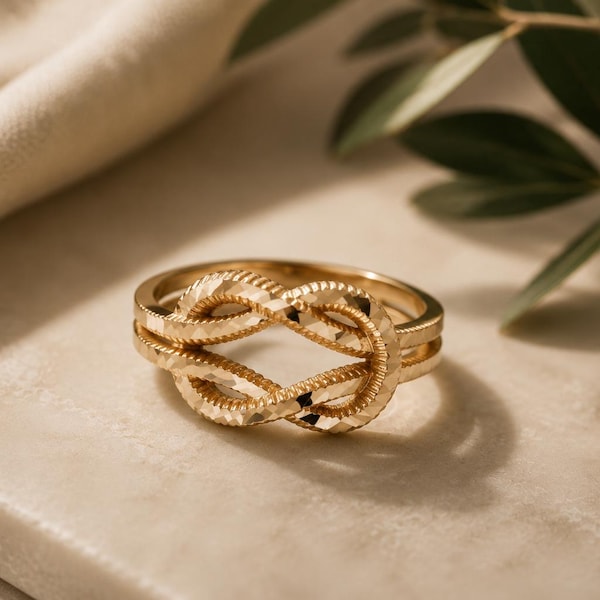 Love Knot Ring
View Love Knot Ring on Etsy
 Initial Necklace
View Initial Necklace on Etsy
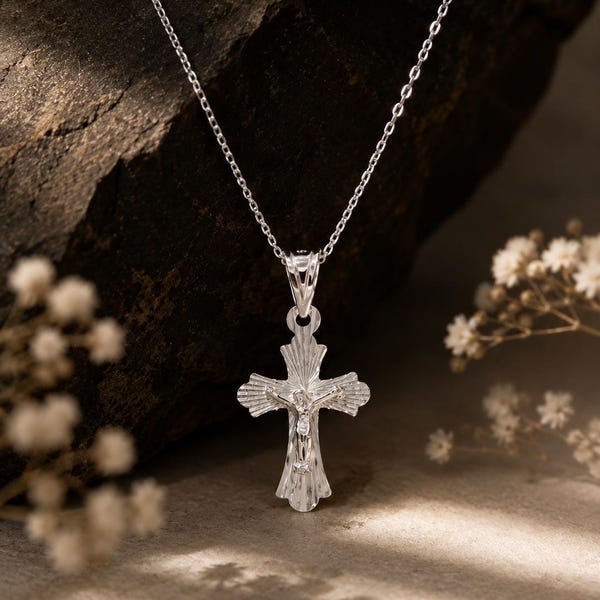 Diamond-Cut Crucifix Pendant
View Diamond-Cut Crucifix Pendant on Etsy
When you look at a diamond-cut piece in photos or in person, check that the facets are even and crisp, with clean lines rather than ragged edges. On bead chains, the beads should be consistent in size and cut. On engraved pendants, the pattern should be symmetrical and sharp. Movement videos on a listing are helpful, because diamond-cut gold is meant to be seen moving.
Yes, when it is solid gold. The facets are part of the metal, so they do not peel or flake the way plating can. Over many years of daily wear, the sharp edges of facets can soften slightly, especially on rings and bracelets that knock against desks and doors. That is normal wear, and the piece will still have a lively surface.
One honest trade-off: once facets wear smooth, restoring them is a job for a goldsmith, not a polishing cloth. Ordinary polishing will brighten the piece but can round the edges further if overdone. Our lifetime guarantee covers craftsmanship, and you can always message us about a piece you bought from us.
Solid 14K gold does not tarnish in normal wear, so dullness is usually just lotion or skin oil sitting in the facets. A quick wash brings the sparkle back.
No. Diamond-cut describes faceted metal that sparkles. A piece with diamonds or other stones should name them separately in the listing.
It depends on the piece, since the finish can be applied to many metals. All of our diamond-cut jewelry is solid 14K gold stamped 585.
The facets are part of the metal, so they do not peel off. Over years of daily wear, edges can soften slightly, and a goldsmith can refresh them if needed.
Soak it in warm soapy water, brush gently with a soft toothbrush, rinse and dry with a soft cloth. Avoid abrasive polishes, which wear down the facet edges.
Share:
Yellow, white and rose gold guide: how 14K alloys create each color, what rhodium on white gold really is, choosing by preference, and caring for two…
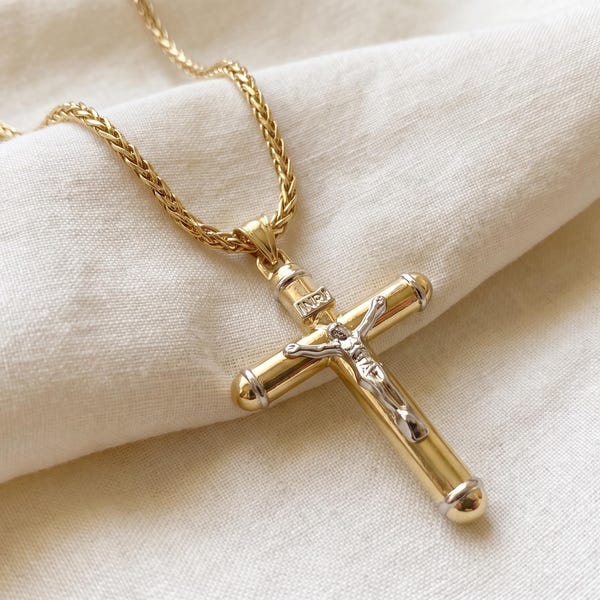
Gold cross necklace guide: the difference between a cross and a crucifix, what INRI means, choosing size and chain, two-tone styles and sacrament gif…
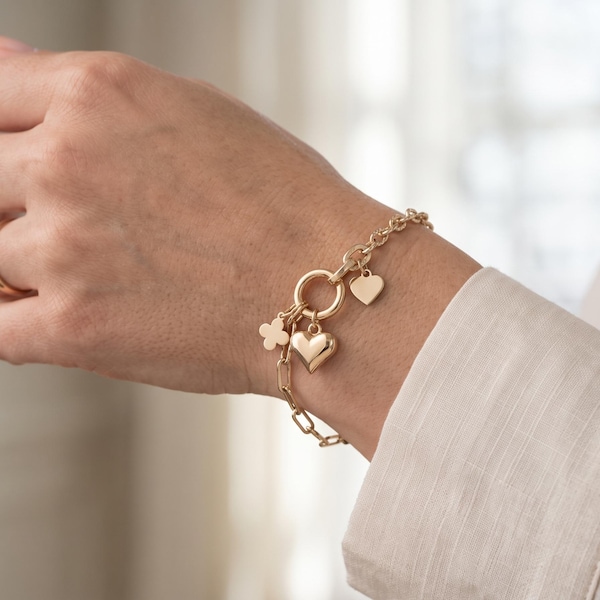
Gold charm bracelet guide: what heart, clover, star, butterfly and nazar charms traditionally mean, how to choose chain and fit, and how to care for…