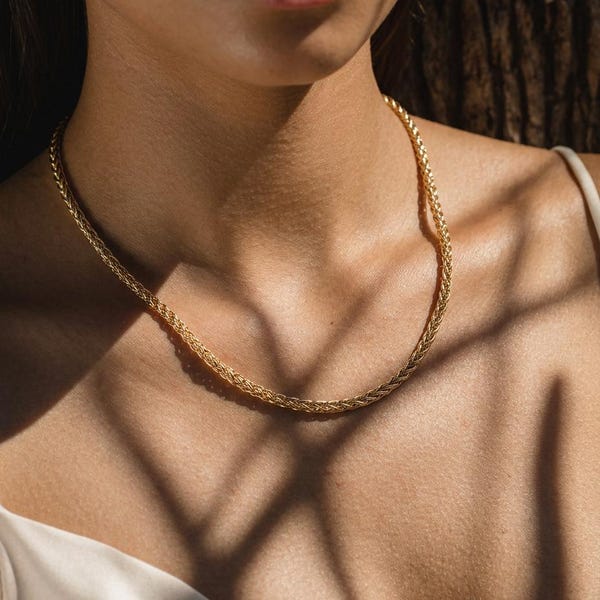
How Gold Jewelry Is Made: From Alloying to Hallmarking, Step by Step
How gold jewelry is made, explained by Grand Bazaar goldsmiths: alloying, casting, chain making, soldering, stone setting, polishing and the 585 hall…


The history of Grand Bazaar goldsmiths begins soon after the Ottoman conquest of Constantinople in 1453, when Sultan Mehmed II ordered a domed stone market hall, the bedesten, to be built for trading valuable goods. Jewelers, gold traders and craftsmen gathered in and around it, and over the following centuries the market grew into the covered bazaar of streets and shops, with whole streets of jewelers, that still trades gold today.
We work as goldsmiths inside the Grand Bazaar, so this history is close to home. In this article we keep to well-established facts and say plainly where details are uncertain or debated by historians.
After taking Constantinople in 1453, Mehmed II set about rebuilding the city as the Ottoman capital. Part of that plan was commercial. In the years that followed, a bedesten was built near the center of the old city: a solid stone hall covered by domes, with heavy doors that could be locked at night.
This building, today known as the Cevahir Bedesteni (the Jewel Bedesten) or the Old Bedesten, was designed for goods that needed security: jewelry, precious metals, fine weapons and valuable textiles. Merchants could store goods there and, according to many historical accounts, wealthy residents also left valuables in its care, which gave it a role somewhat like a strongroom.
Rents from the shops were traditionally assigned to a charitable foundation (vakıf), and sources commonly link the bazaar's income to the foundation of Hagia Sophia, which Mehmed II had converted into a mosque. This kind of arrangement, where markets financed religious and public buildings, was common in Ottoman cities.
The bazaar did not appear all at once. A second bedesten, the Sandal Bedesteni, was added later, and around the two halls shops, streets and inns (hans) grew up. Over time, many of these streets were roofed over, joining the separate markets into the single covered complex visitors know today.
| Period | What happened |
|---|---|
| 1453 | Ottoman conquest of Constantinople under Mehmed II |
| Years soon after 1453 | The Old Bedesten (Cevahir Bedesteni) is built for valuable goods |
| Later Ottoman period | A second bedesten is added; surrounding streets and hans fill with shops and are gradually roofed |
| Over the centuries | Repeated fires and earthquakes damage the bazaar, followed by repairs and rebuilding |
| 1894 | A major earthquake damages the bazaar; it is restored afterward |
| Today | A working market where jewelry and gold remain among the main trades |
Exact dates for many later additions are debated, and much of what visitors see today reflects centuries of repair and rebuilding rather than the original fifteenth century fabric.
For most of its history, the bazaar was organized by trade. Craftsmen and merchants belonged to guilds, known in Turkish as esnaf or lonca. Guilds generally regulated who could practice a craft, how apprentices were trained, and the quality of goods. Members of the same trade tended to cluster on the same street, which is why many street names in the bazaar still describe a trade: hat makers, slipper makers, quilt makers and, of course, jewelers.
The apprentice system is part of why goldsmithing in the bazaar has so often been a family craft. Skills passed from master to apprentice and from parent to child. Our own atelier is run by third-generation goldsmiths, and the same pattern of learning at the bench is still common in the bazaar today.
Kuyumcu is the Turkish word for jeweler or goldsmith, and Kuyumcular Çarşısı means the Jewelers' Market. Within the Grand Bazaar, jewelry shops are concentrated along certain streets, the best known being Kuyumcular Caddesi and the broad Kalpakçılar Caddesi. The name Kalpakçılar comes from kalpak, a type of fur hat, a reminder that streets changed trades over time. Today it is lined with gold and jewelry windows.
Behind the shop windows is a wider ecosystem. Historically and today, workshops in the bazaar and in the old hans nearby handle different stages of the craft: casting, chain making, stone setting, engraving and polishing. A piece may pass through several specialist hands before it reaches a shop counter. If you are curious about those stages, our new article on how gold jewelry is made explains them in general terms.
The bazaar's gold trade served real customs, many of which continue. Gold was, and still is, a common gift at weddings and births, and a way for families to keep savings in a portable form. Designs drew on Ottoman ornament, floral motifs and symbols that are still popular, such as the crescent and star, the nazar and the Şahmeran, a figure from Anatolian folklore.
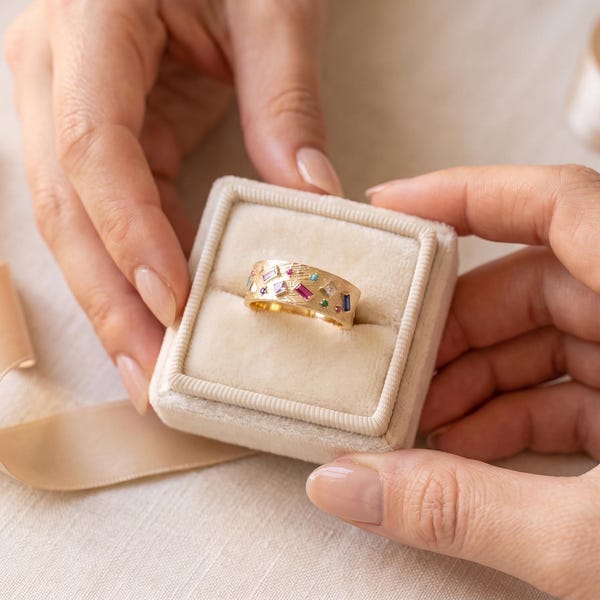 Chunky Ring Wide Textured Band
View Chunky Ring Wide Textured Band on Etsy
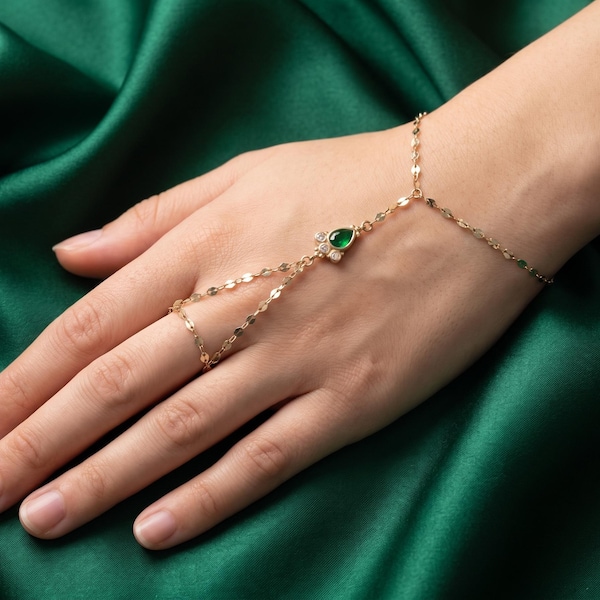 Hand Chain Bracelet with Emerald Pear Stone
View Hand Chain Bracelet with Emerald Pear Stone on Etsy
 Crescent Moon Star Necklace
View Crescent Moon Star Necklace on Etsy
You can read more about these customs in our article on Turkish jewelry traditions, and about the folklore figure in our new guide to Şahmeran meaning.
The bazaar is now both a working market and one of Istanbul's most visited sights. For buyers, that brings choice and some confusion. Shops range from small family ateliers to large retailers, and quality varies. Turkey regulates the hallmarking of precious metals, and the stamp on a piece is the first thing to check. For 14K gold, look for 585, which our article on what 585 means on gold explains.
If you plan to visit in person, our Istanbul Grand Bazaar jewelry guide has practical advice on finding your way, asking the right questions and checking gold. Our article on how to tell if gold is real is useful for any purchase, at home or abroad.
Şerif Ağa Jewelry is a small goldsmith's atelier inside the Grand Bazaar, run by third-generation goldsmiths. In spring 2026 we opened an Etsy shop so customers far from Istanbul could buy directly from the bench. Every piece is solid 14K gold stamped 585, never plated, and is covered by our lifetime guarantee on craftsmanship.
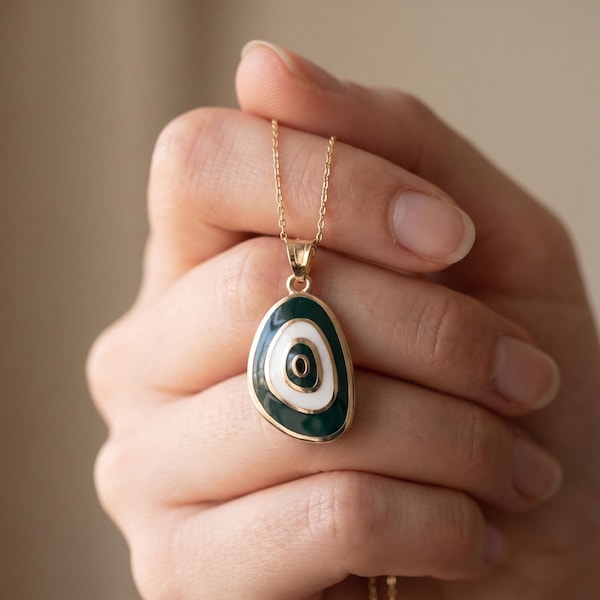 Evil Eye Necklace
View Evil Eye Necklace on Etsy
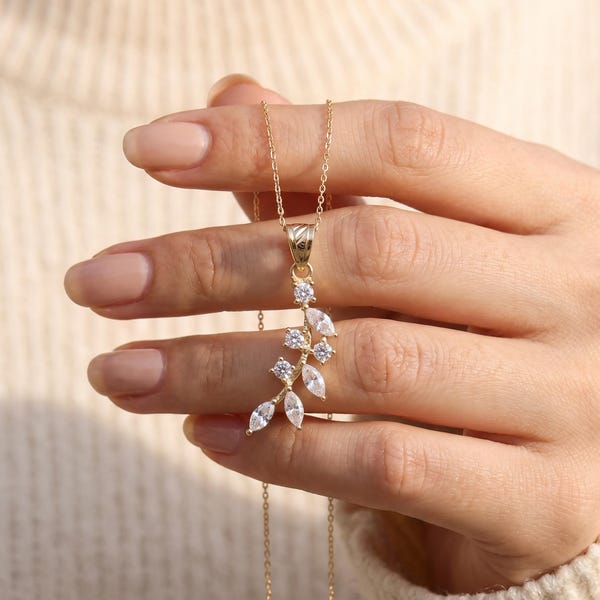 Olive Leaf Necklace Branch Pendant with Marquise Stones
View Olive Leaf Necklace Branch Pendant with Marquise Stones on Etsy
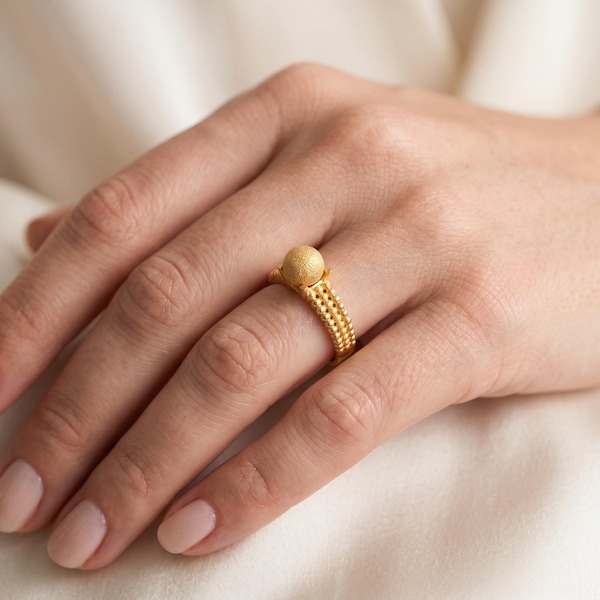 Chunky Gold Ring
View Chunky Gold Ring on Etsy
Browse our work in the rings and hand chains collections. Orders ship free by tracked, insured express to the USA, UK and Europe, and the delivery estimate is shown on each listing.
Its core, the Old Bedesten, was built in the years soon after the Ottoman conquest of Constantinople in 1453, under Sultan Mehmed II. The bazaar then grew around it over the following centuries.
A bedesten is a secure, domed stone market hall used in Ottoman cities for valuable goods such as jewelry, precious metals and fine textiles.
It means the Jewelers' Market. Kuyumcu is the Turkish word for a jeweler or goldsmith.
Yes. Jewelry and gold remain among its main trades, with shops and workshops of many sizes. Always check for a fineness stamp such as 585 when buying.
Yes. We sell only through our Etsy shop, with free tracked and insured express shipping to the USA, UK and Europe.
Share:
How gold jewelry is made, explained by Grand Bazaar goldsmiths: alloying, casting, chain making, soldering, stone setting, polishing and the 585 hall…
A short guide to Istanbul's Grand Bazaar from a goldsmith's workshop inside it: its history, the jewelers' street, opening days and how to buy gold w…
Christmas gold jewelry gift ideas for 2026, sorted by recipient and style, plus practical notes on ordering early, gift boxes and free tracked shippi…

