Yellow vs White vs Rose Gold Guide: How 14K Colors and Two-Tone Differ
Yellow, white and rose gold guide: how 14K alloys create each color, what rhodium on white gold really is, choosing by preference, and caring for two…

Hollow gold jewelry is made from gold tubes or shells with an empty center, semi-hollow pieces are partly hollow, and solid gold is gold all the way through. Hollow pieces look large for less gold but dent easily and are hard to repair, while solid gold is heavier, more durable and holds more gold value. You can usually tell them apart by weight, tiny vent holes and the wording in the listing.
The difference matters because two pieces can look identical in a photo and behave very differently after a year of wear. Every piece we make at our Grand Bazaar atelier is solid 14K gold stamped 585, never hollow or semi-hollow, so this guide explains why we work that way and how to check what you are buying anywhere.
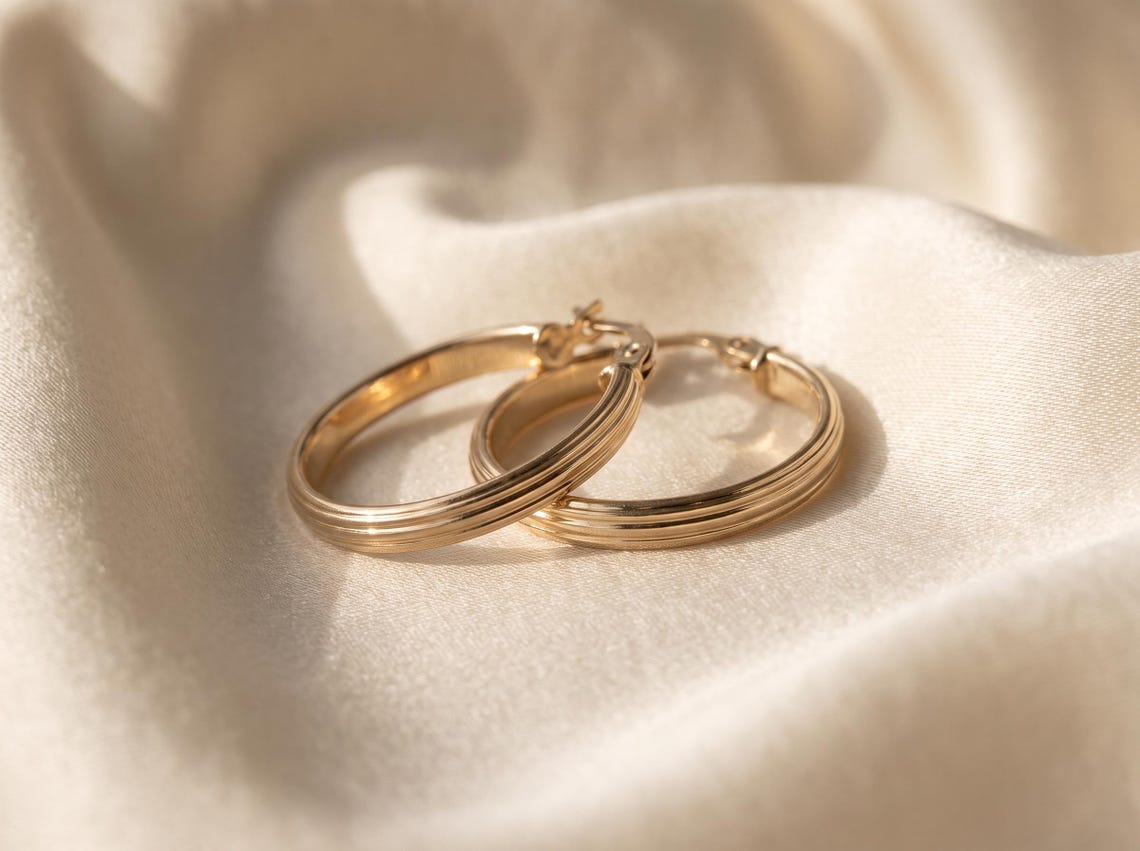
Hollow gold is made by forming thin sheets or tubes of gold around a core that is later removed, leaving a shell. Hollow hoops, hollow rope chains and puffed charms are common examples. They can look large and bold while using only a small amount of gold.
Semi-hollow (sometimes called semi-solid) describes pieces that combine solid and hollow parts, or that use thicker walls than fully hollow pieces. The term is not used consistently by every seller, so always read the description carefully.
Solid gold means the metal is gold alloy all the way through, with no empty space inside. A solid 14K piece is 58.5% pure gold throughout, which is what the 585 stamp means. Our article on what 585 means on gold explains the marking.
Note that "solid" describes construction, not purity. A hollow chain can still be 14K gold, and solid gold is very different from gold-filled or gold-plated jewelry, which have a base metal inside. Our guide to solid gold vs gold-filled vs gold-plated covers that separate question.
| Hollow | Semi-hollow | Solid | |
|---|---|---|---|
| Construction | Thin shell, empty center | Mix of hollow and solid parts | Gold all the way through |
| Weight in hand | Light for its size | Moderate | Noticeably heavier |
| Dent risk | High | Moderate | Low |
| Repairs | Difficult, sometimes impossible | Varies | Usually straightforward |
| Gold content | Low for its size | Medium | Highest for its size |
The biggest practical difference is denting. A hollow hoop can dent if it is squeezed when you take it off, caught in a hairbrush or stepped on. A hollow chain can crush if it is pinched in a drawer or trapped in a car door. Once a thin wall is dented, it is very hard to push back without leaving a mark, and the dent becomes a weak spot that may crack.
Solid gold behaves differently. It can scratch and, with enough force, bend, but it does not collapse inward. A goldsmith can reshape, polish and solder solid gold with a clean result. That is why chunky styles in particular, such as bold hoops, dome rings and rope chains, are worth buying solid: they are the shapes most often made hollow to save gold, and the ones most exposed to knocks.
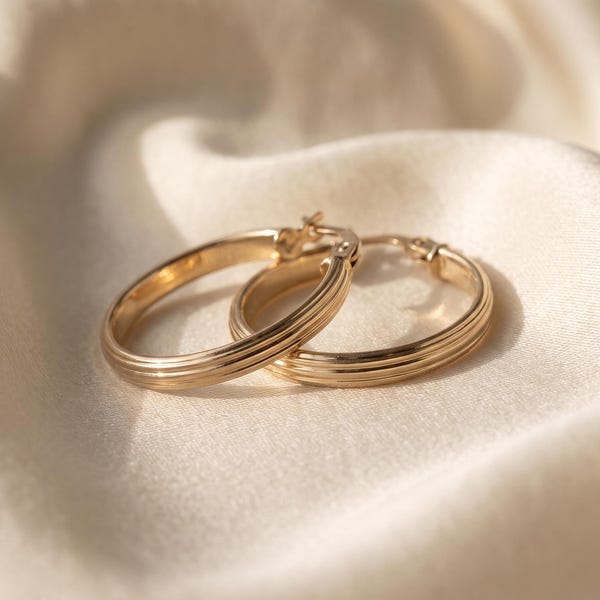 Hoop Earrings Thick Ribbed Tube Hoops
View Hoop Earrings Thick Ribbed Tube Hoops on Etsy
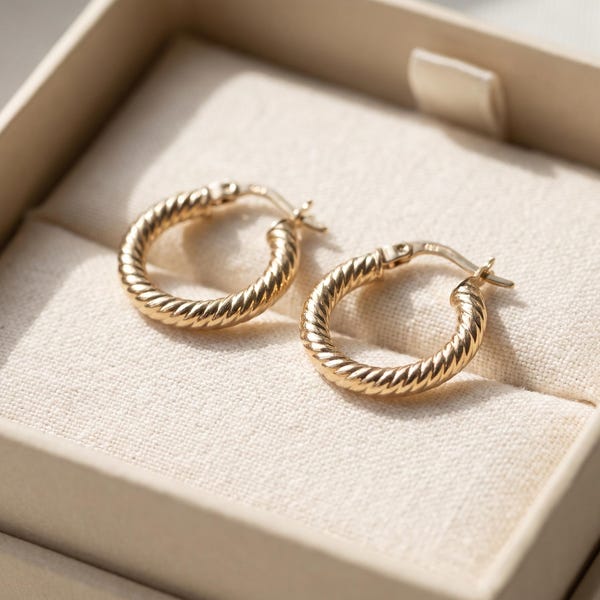 Croissant Hoop Earrings
View Croissant Hoop Earrings on Etsy
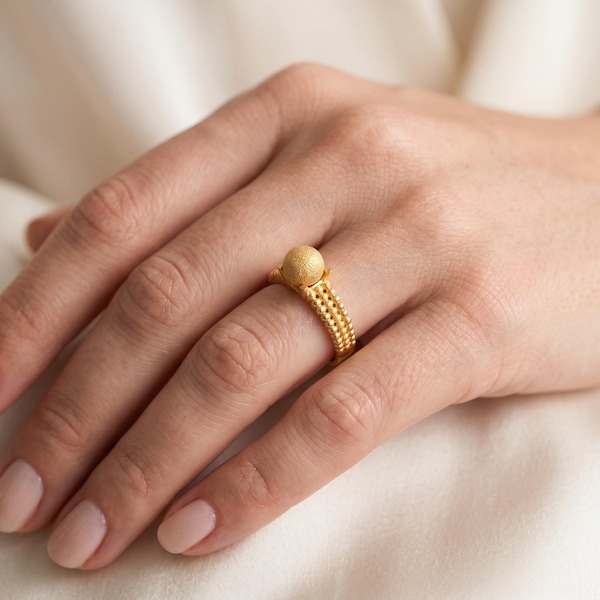 Chunky Gold Ring
View Chunky Gold Ring on Etsy
Weight is where hollow gold has a real advantage. Large hollow earrings are light on the earlobe, and some people choose them for that reason. If you love very large earrings and find heavy ones uncomfortable, it is a fair trade-off to consider.
For most everyday pieces, though, the weight of solid gold is part of its appeal. A solid ring or chain feels substantial, sits well and does not flip or twist as easily. Solid pieces in lightweight designs, such as our flat ribbon hoops or slim sleeper hoops, give comfort without the fragility of a hollow shell. For more on wearing bold pieces comfortably, see our chunky gold jewelry guide.
The gold value of a piece is tied to how much gold it contains. Hollow jewelry uses less gold to create the same look, which is why it is cheaper to buy. It also means there is less gold in it if you ever sell, trade or remodel the piece. Solid gold carries more metal, can be repaired rather than replaced, and is the form that tends to be passed down through families.
Whether solid gold is worth it for you depends on how you plan to wear the piece. Our article is 14K solid gold worth it weighs the arguments honestly.
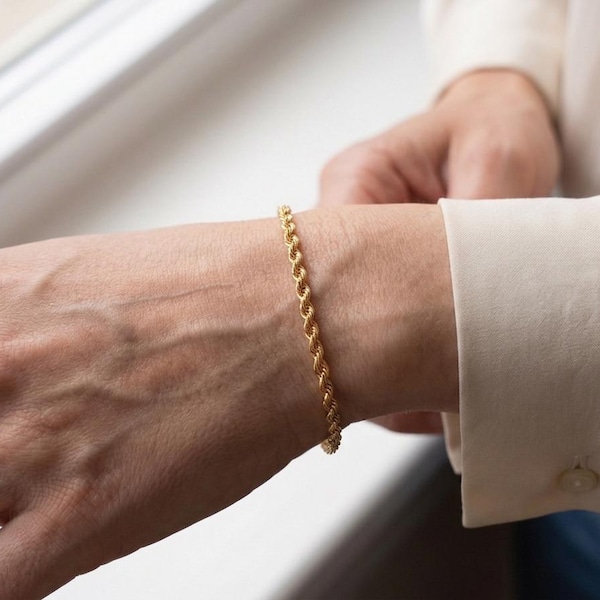 Rope Chain Bracelet
View Rope Chain Bracelet on Etsy
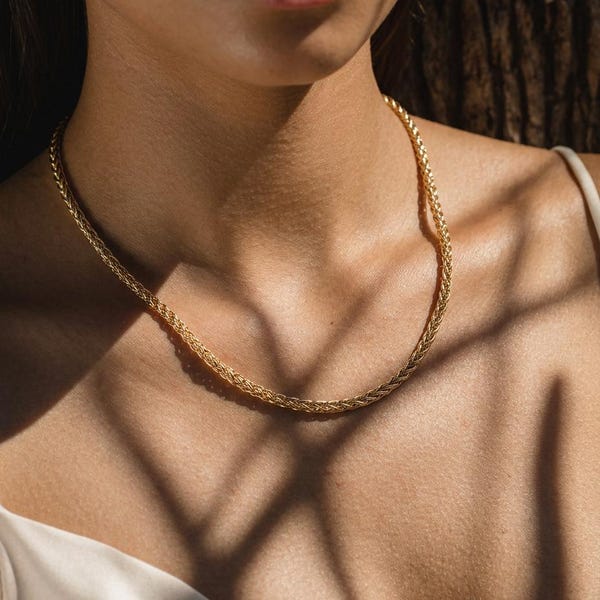 Wheat Chain Necklace
View Wheat Chain Necklace on Etsy
You cannot always tell from a photo, but these checks help:
If you are buying in person, a reputable jeweler will happily tell you how a piece is constructed. Online, a clear answer to a simple question is a good sign. If a seller avoids saying whether a piece is hollow, assume it may be.
None of these tests confirm the karat. For that, see our guide on how to tell if gold is real.
As third-generation goldsmiths, we would rather make a piece that can be worn for decades and repaired if needed than one that looks bigger for a season. Every piece we sell is solid 14K gold, stamped 585, and covered by our lifetime guarantee on craftsmanship. You can browse our solid gold earrings and solid gold necklaces knowing there is no hollow construction to worry about.
Yes, hollow gold can be genuine 14K or 18K gold. The difference is construction: it is a thin shell with an empty center rather than solid metal.
Sometimes, but it is difficult. Thin walls are hard to reshape without leaving marks, and badly dented pieces often cannot be fully restored.
Because it is gold all the way through. The same shape in solid gold contains more metal than its hollow version.
No. Every piece we sell is solid 14K gold stamped 585. We do not make hollow, semi-hollow, plated or gold-filled jewelry.
Not always. They are light and affordable, but they dent easily. If you plan to wear hoops daily, solid gold is the more durable option.
Share:
Yellow, white and rose gold guide: how 14K alloys create each color, what rhodium on white gold really is, choosing by preference, and caring for two…
Gold cross necklace guide: the difference between a cross and a crucifix, what INRI means, choosing size and chain, two-tone styles and sacrament gif…
Gold charm bracelet guide: what heart, clover, star, butterfly and nazar charms traditionally mean, how to choose chain and fit, and how to care for…