Turkish Jewelry Traditions: Wedding Gold, Nazar, Maşallah and Şahmeran
Turkish jewelry traditions explained by Grand Bazaar goldsmiths: wedding gold pinning, nazar, maşallah charms, crescent and star, Şahmeran and baby g…

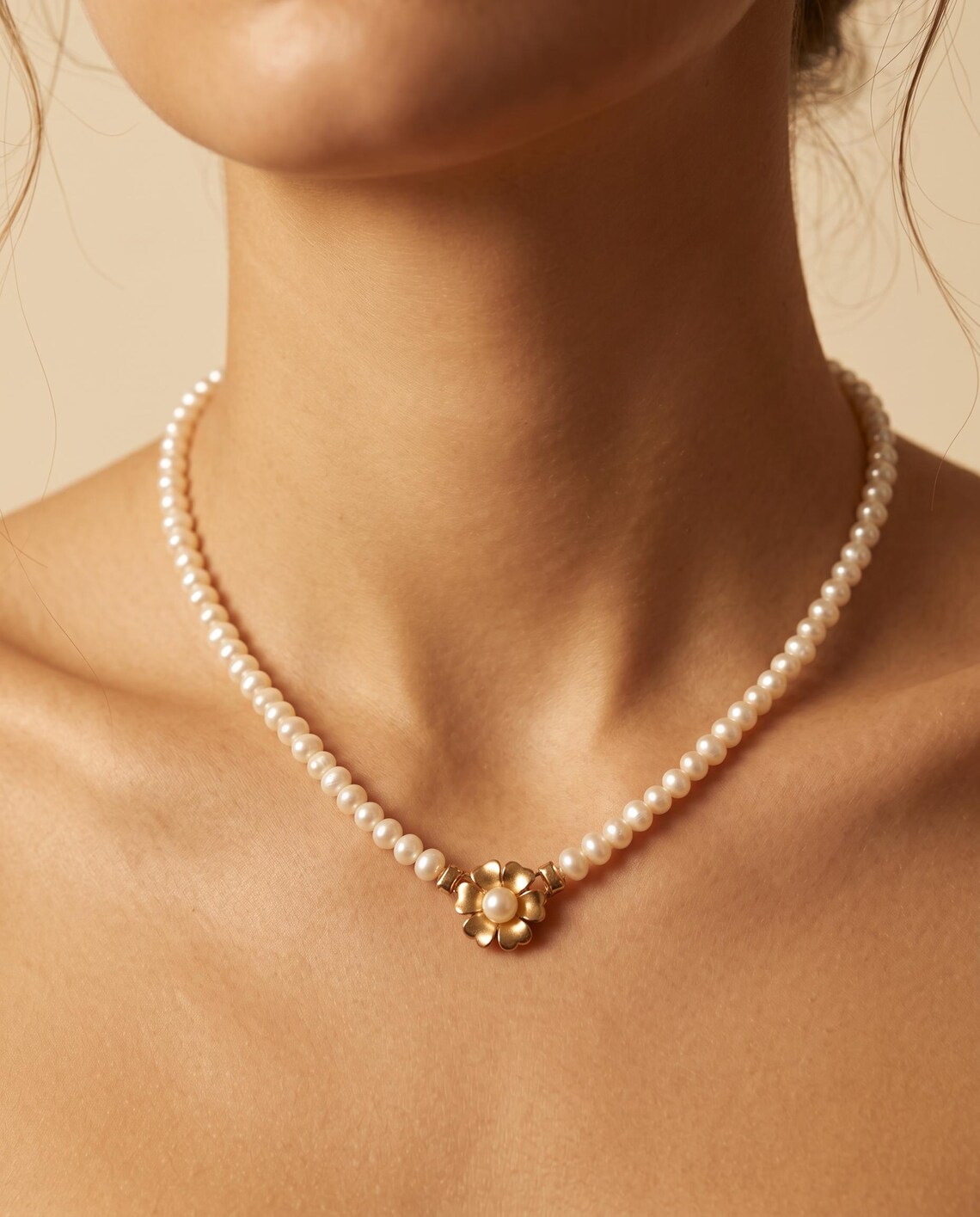
Pearls are the only gem made by a living animal, and that is the key to choosing and caring for them: they are beautiful, but softer and more sensitive than any metal or stone. The pearls in our jewelry are freshwater pearls wherever the listing says so, set in solid 14K gold, and with simple care they last for decades.
This guide covers what freshwater pearls are, how to judge them, how to look after them, and how to choose pearls for a gift or a wedding.
A pearl forms when a mollusk coats an irritant inside its shell with layer after layer of nacre, the same iridescent material that lines the shell. Natural pearls, which form with no human help, are very rare today. Almost every pearl sold now is cultured: a pearl farmer starts the process, and the mollusk does the rest.
Cultured pearls are real pearls. The nacre is made by the animal in exactly the same way. The difference is only how the process began.
Nacre is made of thin layers of mineral crystals bound together by organic material, and those layers are what create a pearl's glow. They are also why pearls need care: nacre is soft, around 2.5 to 4.5 on the Mohs hardness scale, compared with about 7 for amethyst and 8 to 8.5 for cubic zirconia. A pearl can be scratched by grit, by other jewelry, and even by the edge of a zipper.
Freshwater pearls are grown in mussels in lakes and ponds. Saltwater pearls such as Akoya, Tahitian and South Sea pearls are grown in oysters in the sea.
| Freshwater pearls | Saltwater pearls (e.g. Akoya) | |
|---|---|---|
| Grown in | Freshwater mussels | Saltwater oysters |
| Structure | Usually solid nacre throughout | Usually a bead nucleus coated with nacre |
| Shapes | Wide variety, from round to baroque | More often round |
| Luster | Soft, satiny glow | Often sharper, more mirror-like |
| Durability of surface | Good, because nacre runs throughout | Depends on the thickness of the nacre layer |
Freshwater pearls suit our work well: their soft glow sits well next to warm yellow gold and bright white gold, and their varied shapes suit our vintage-style settings. Some of our pearl listings name the pearl type and some do not, so check the listing description, or message us and we will tell you exactly what a piece uses.
Luster is the glow that seems to come from inside a pearl, and it is the most important quality. Look at a pearl under a lamp: a good one shows a clear, bright reflection and a soft glow, not a chalky or flat surface.
Almost every pearl has small marks, because it grew inside a living animal. Small spots or ripples are normal. Look for a surface that is mostly clean, with no deep pits or cracks.
Perfectly round pearls are the classic choice for strands. Near-round, button, drop and baroque (irregular) pearls each have their own character. Drop shapes suit earrings and pendants; baroque pearls give a more relaxed, artistic look.
Freshwater pearls come in white, cream, pink and lavender tones. White and cream suit almost every skin tone and are the usual choice for brides.
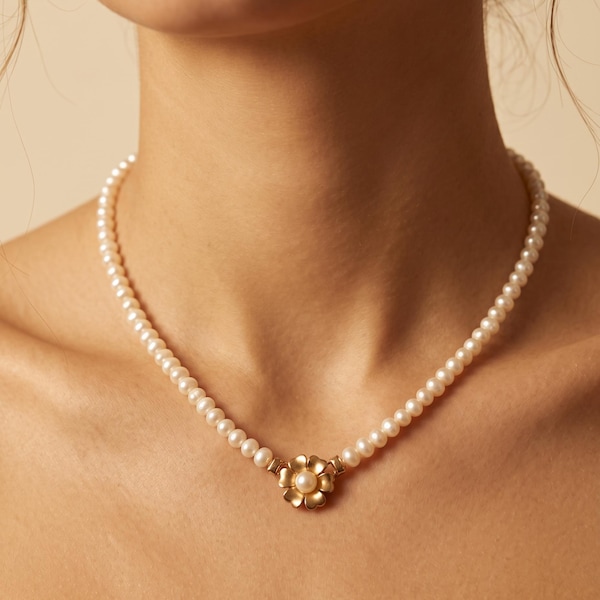 Flower Pendant Freshwater Pearl Choker Necklace
View Flower Pendant Freshwater Pearl Choker Necklace on Etsy
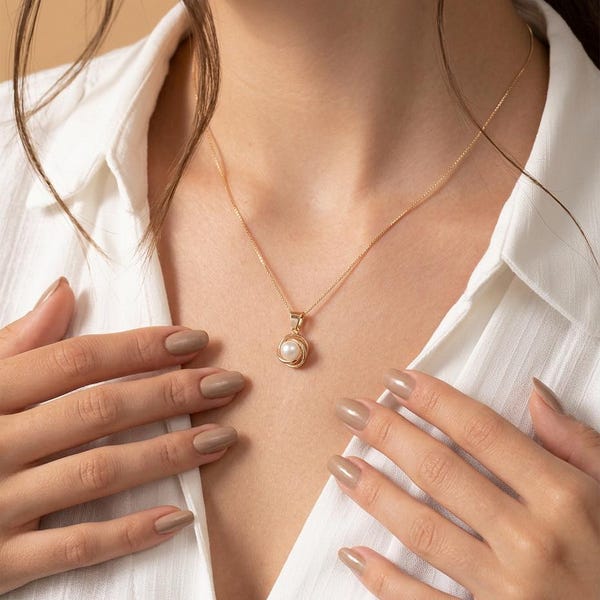 Love Knot Pearl Necklace
View Love Knot Pearl Necklace on Etsy
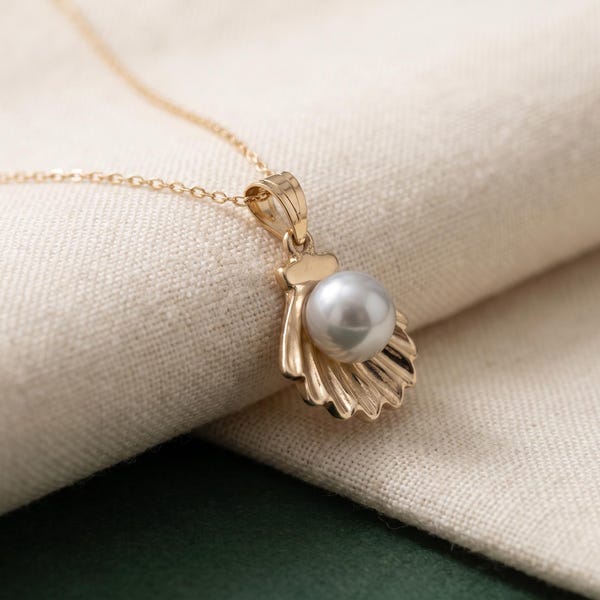 Seashell Necklace with Freshwater Pearl
View Seashell Necklace with Freshwater Pearl on Etsy
Pearls are soft and porous compared with gold and stones. They can be scratched by other jewelry and damaged by chemicals. The old rule still holds: pearls are the last thing you put on and the first thing you take off.
The gold parts of a pearl piece can be cleaned gently, but keep water and soap away from the pearl itself. Our guides to cleaning gold jewelry at home and storing gold jewelry explain how to work around pearls.
Yes, with a little care. Pearl studs and small pendants are among the easiest pearl pieces to wear daily, because they sit away from friction. Bracelets see the most wear, as they knock against desks and rub against sleeves, so keep them for days when your hands are not busy.
Pearl is one of the birthstones for June, along with moonstone and alexandrite. It is the most traditional of the three. Pearls are widely associated with purity, calm and wisdom, which is part of why they have long been given at milestones: graduations, weddings and the birth of a child.
A small pearl pendant or a pair of pearl studs is a natural June birthday gift. For more ideas by month, see our birthstone jewelry gift guide.
Pearls are a classic choice for brides because they flatter almost any dress and do not compete with it. A few things to consider:
Many of our bridal pearl pieces combine pearls with cubic zirconia halos. These sparkle like diamonds but are CZ, and we always state this clearly. If you are comparing the two, our article on diamond vs cubic zirconia explains the differences.
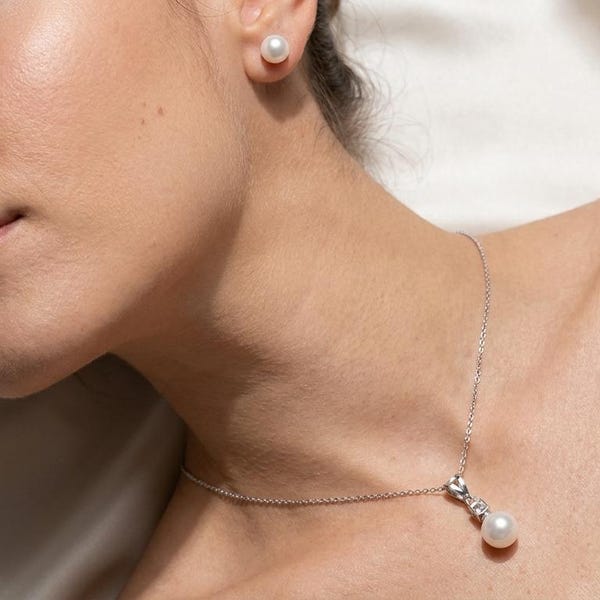 Freshwater Pearl Necklace and Stud Earrings Set
View Freshwater Pearl Necklace and Stud Earrings Set on Etsy
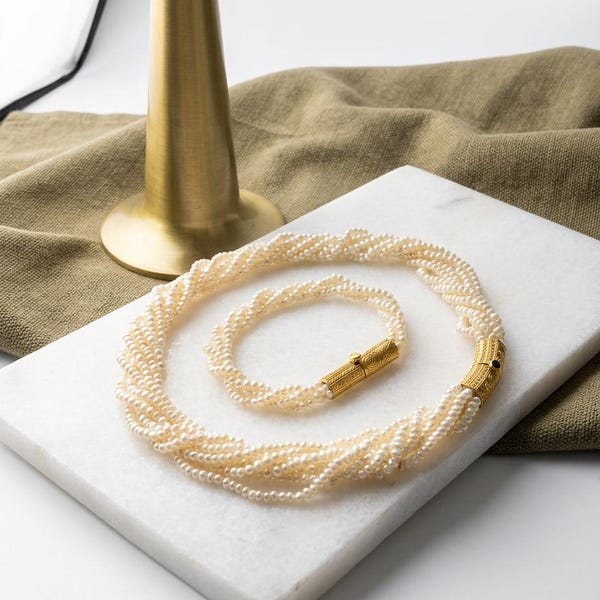 Freshwater Pearl Necklace Bracelet Set
View Freshwater Pearl Necklace Bracelet Set on Etsy
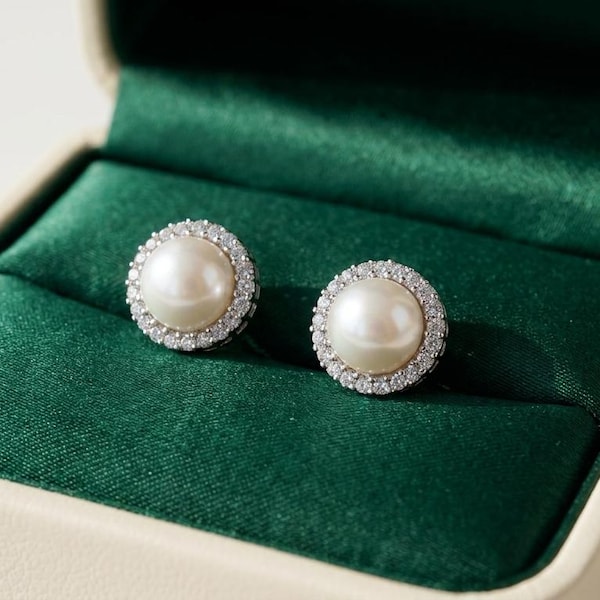 Pearl Halo Stud Earrings
View Pearl Halo Stud Earrings on Etsy
Pearls are usually glued onto a post or cup and sometimes secured with a cage or prongs. That setting has to hold for decades. In plated metal, the post or cup can wear and corrode near the pearl. In solid 14K gold, it stays sound, and if a pearl ever loosens, a goldsmith can reset it. Our lifetime craftsmanship guarantee covers that work.
See our full pearl collection or our jewelry sets for bridal pairings.
Yes. Freshwater cultured pearls are real pearls made of nacre by a living mussel. Cultured simply means the growing process was started by a pearl farmer.
A wipe with a slightly damp cloth is fine, but pearls should not be soaked, swum or showered in. Water and soap can dull their surface and weaken settings over time.
No. Ultrasonic and steam cleaners can damage nacre and loosen the pearl from its setting. Use only a soft, damp cloth.
June has three birthstones: pearl, moonstone and alexandrite. Pearl is the most traditional of them.
Yes. Pearls suit almost every dress and skin tone. Match white pearls to bright white fabric and cream pearls to ivory.
Share:
Turkish jewelry traditions explained by Grand Bazaar goldsmiths: wedding gold pinning, nazar, maşallah charms, crescent and star, Şahmeran and baby g…
Gemstone meanings for amethyst, blue topaz, turquoise, emerald, ruby, garnet and pearl, plus an honest guide to natural stones vs cubic zirconia in g…
What does the Turkish evil eye mean? The story of the blue nazar bead, what it protects against, what it means when it breaks and how to wear it in g…