Gemstone Meanings in Gold Jewelry: Amethyst, Topaz, Turquoise and More
Gemstone meanings for amethyst, blue topaz, turquoise, emerald, ruby, garnet and pearl, plus an honest guide to natural stones vs cubic zirconia in g…

In Turkey, gold jewelry is part of life's big moments: guests pin gold onto a bride and groom at their wedding, newborns receive gold coins and small charms, and blue nazar beads are worn to turn away envy. Gold here is a gift, a blessing and a family's savings all at once, which is why it is bought and given so often.
Our family has worked as goldsmiths inside Istanbul's Grand Bazaar for three generations. These are the customs we see at our counter every week, described as they are practiced, with the understanding that traditions vary from region to region and family to family.
At many Turkish weddings there is a moment called the takı, from the verb takmak, to attach or put on. The couple stand together while relatives and guests come up one by one to pin gold onto them, usually onto a red sash or ribbon, or to put bracelets and necklaces on the bride.
In many weddings the gifts are announced aloud as they are given. The gold is the couple's to keep, and for many young couples it forms a starting fund for their new home. Turkish gold coins are 22 karat, higher than the 14K used for most jewelry; our guide to the gold karat chart explains the difference.
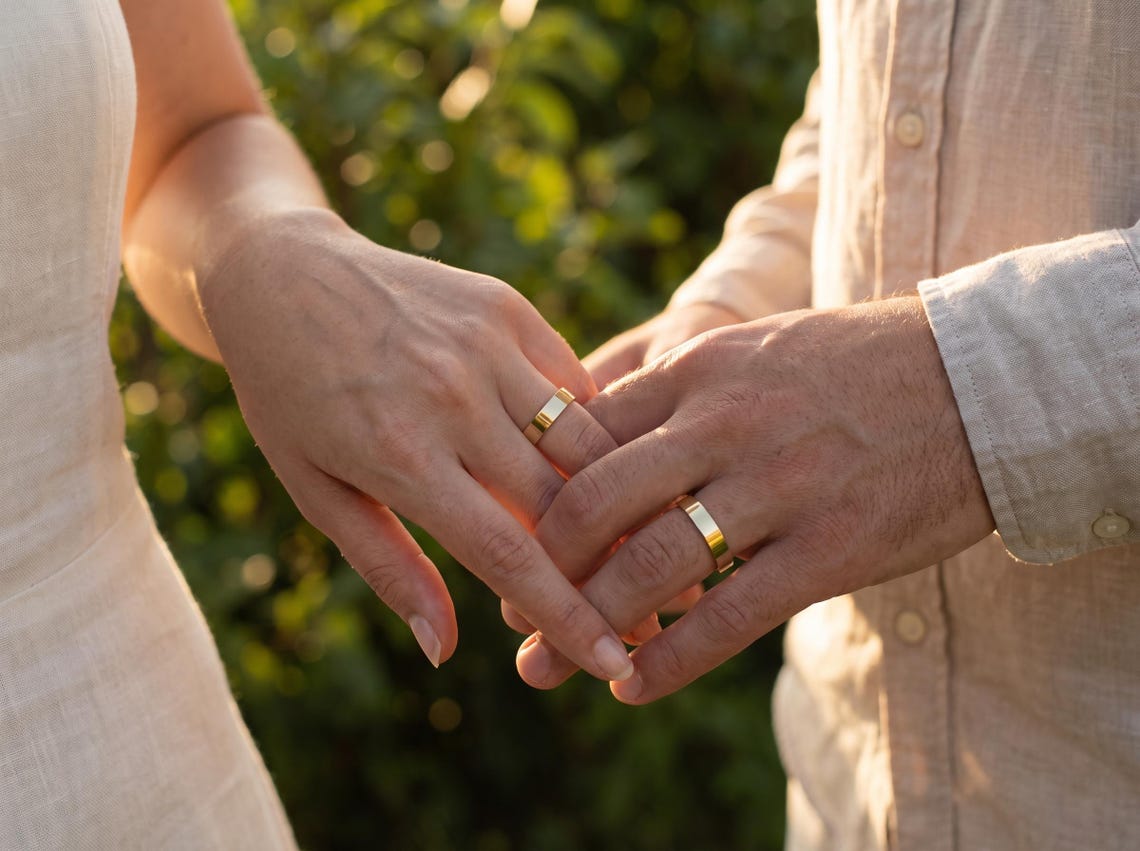
At a traditional engagement (nişan), the couple's rings are often joined by a red ribbon. A respected elder of the family cuts the ribbon, and the couple are then engaged. Plain gold bands remain the most common choice, worn on the right hand during engagement and moved to the left at the wedding in many families.
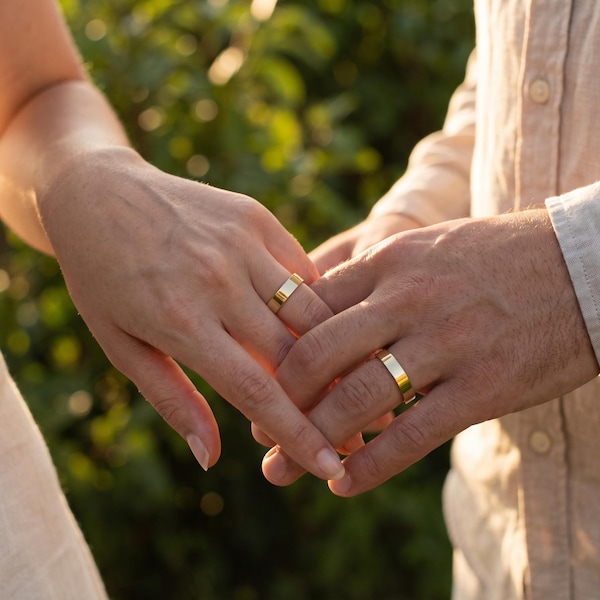 Flat Wedding Band Polished Ring for Him and Her
View Flat Wedding Band Polished Ring for Him and Her on Etsy
 Caged Pearl Necklace Earrings Ring Set
View Caged Pearl Necklace Earrings Ring Set on Etsy
The nazar boncuğu, a blue glass bead with an eye at its center, is the most familiar Turkish symbol. It reflects the widespread belief that admiring or envious looks can bring bad luck, and the bead is thought to absorb that look. You will see it on doors, in cars, on baby clothes and in jewelry. When a nazar bead cracks, the traditional explanation is that it has done its job, and it is replaced.
In gold jewelry, the nazar appears as enamel, glass or blue stones set in pendants, bracelets and rings. We cover its history in depth in the Turkish evil eye (nazar) meaning.
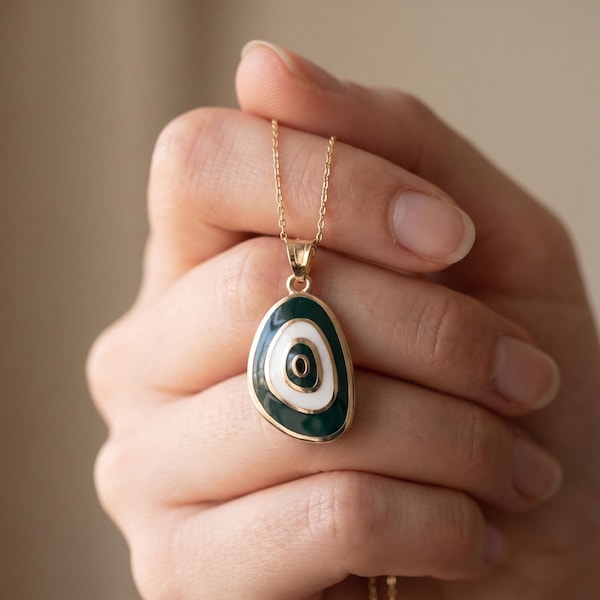 Evil Eye Necklace
View Evil Eye Necklace on Etsy
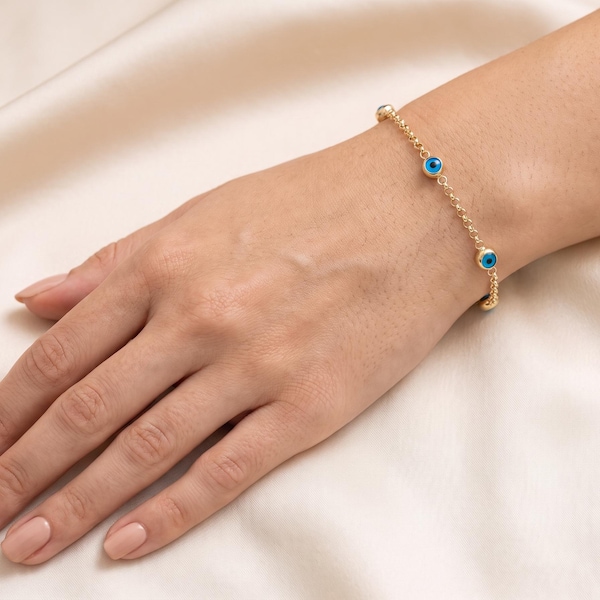 Evil Eye Bracelet with Five Glass Nazar Beads
View Evil Eye Bracelet with Five Glass Nazar Beads on Etsy
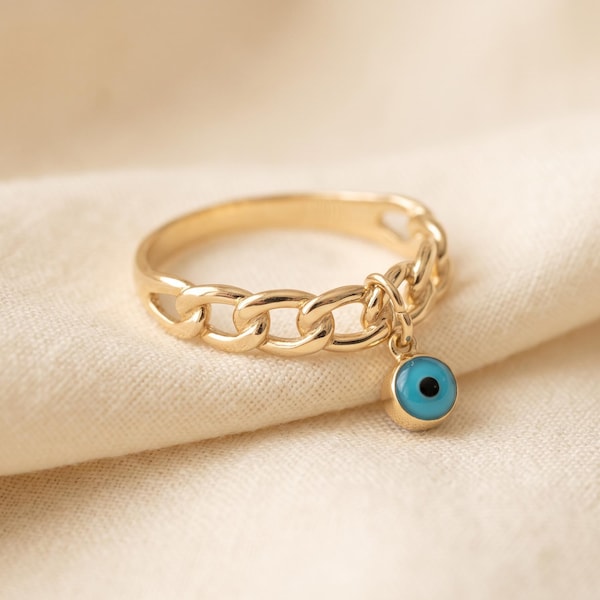 Curb Chain Ring with Turkish Nazar Charm
View Curb Chain Ring with Turkish Nazar Charm on Etsy
Maşallah is an Arabic expression used widely in Turkish, roughly meaning "what God has willed". People say it when praising a child, a new home or good news, as a way of expressing admiration without inviting envy. It is also made into small gold charms and pins, often in flowing script, and is a common gift for babies, frequently alongside a nazar bead. Many families who give it see it as a cultural blessing as much as a religious phrase.
The crescent and star form the Turkish flag, and a crescent and star pendant is worn by many Turks, at home and abroad, as a sign of national pride and connection to the country. It is a popular gift for students leaving to study abroad, for national holidays and for Turks living far from home.
 Crescent Moon Star Necklace
View Crescent Moon Star Necklace on Etsy
 Turquoise Star Pendant Necklace
View Turquoise Star Pendant Necklace on Etsy
Şahmeran is a figure from Anatolian and Mesopotamian folklore: a wise queen with the head of a woman and the body of a snake, who ruled the serpents in an underground realm. Her story is especially associated with Mardin and with Tarsus in southern Turkey, and is told in several versions.
In the best-known telling, a young man named Camsap falls into her cave and lives among the serpents. Şahmeran teaches him their wisdom and lets him go only after he promises never to reveal where she lives. Years later, a sick king is told that only Şahmeran's flesh can cure him, and Camsap's secret is discovered. Şahmeran is captured, but before her death she arranges for her wisdom and healing to pass on. In some regions she is still considered a protector of homes and of women.
Her image is traditional in Mardin's silverwork and painted glass, and in the jewelry trade her name became linked with hand chains: bracelets joined by a chain across the back of the hand to a ring, which many Turkish jewelers call Şahmeran pieces. Our hand chain bracelet guide explains how they are worn.
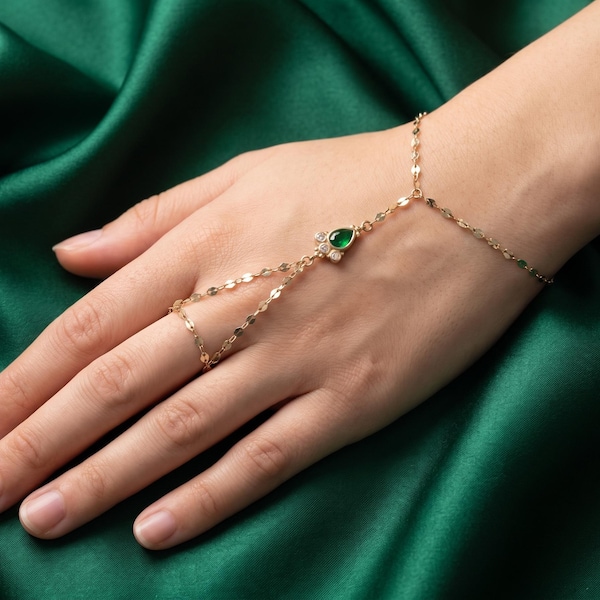 Hand Chain Bracelet with Emerald Pear Stone
View Hand Chain Bracelet with Emerald Pear Stone on Etsy
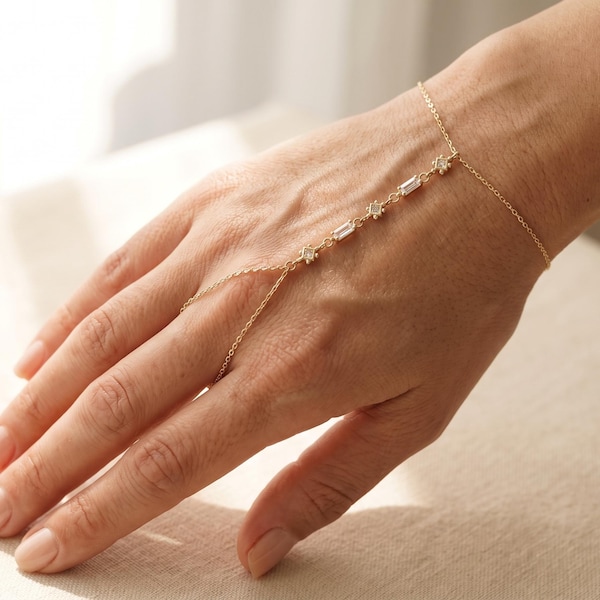 Hand Chain Bracelet with Baguette Stones
View Hand Chain Bracelet with Baguette Stones on Etsy
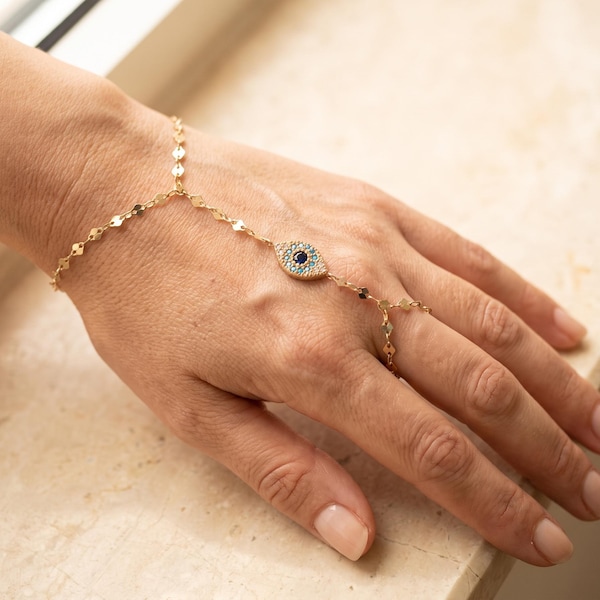 Evil Eye Hand Chain Bracelet
View Evil Eye Hand Chain Bracelet on Etsy
When a baby is born, family and friends who visit often bring gold. A quarter gold coin pinned to the baby's clothes or pillow with a nazar bead is the classic gift. Small gold bracelets, maşallah pins and name bracelets are also common. The coins are usually kept by the parents as savings for the child.
If you are choosing gold for a baby, size and safety matter: a secure clasp, smooth edges and no small charms that could come loose. Our baby gold bracelet guide covers what to look for, and our kids collection has engravable pieces.
Gold is also a way to save. In an altın günü ("gold day"), a group of women meets regularly at a different member's home, and each guest brings an agreed amount of gold for the host. Over a full cycle, everyone receives a turn. It is a social gathering and a savings plan in one.
Istanbul's Grand Bazaar (Kapalıçarşı) dates back to the fifteenth century, soon after the Ottoman conquest of the city, and is one of the oldest covered markets in the world. Gold and jewelry have been central to it for centuries. Its main jewelers' street, Kalpakçılar Caddesi, is lined with gold shops, and workshops in the surrounding inns and lanes still make pieces by hand. Buying gold here is often a conversation over tea, with time to look, compare and ask questions.
That is the spirit we try to keep in our Etsy shop. Read more in our Istanbul Grand Bazaar jewelry guide, or browse our hand chains.
It is called the takı ceremony. Guests and relatives pin gold coins onto the couple or give the bride bracelets and necklaces, and the gold becomes the couple's savings.
Maşallah roughly means "what God has willed" and is said to express admiration without inviting envy. On jewelry it is a blessing, often given to babies with a nazar bead.
Gold is a blessing and a practical gift. Visitors often pin a gold coin to the baby's clothes, and the parents keep it as savings for the child.
Şahmeran is a half-woman, half-serpent queen from Anatolian and Mesopotamian folklore, linked especially with Mardin and Tarsus. Her name is used in the Turkish jewelry trade for hand chain bracelets.
Turkish gold coins such as the çeyrek are 22 karat. Most jewelry, including ours, is made in 14K for durability.
Share:
Gemstone meanings for amethyst, blue topaz, turquoise, emerald, ruby, garnet and pearl, plus an honest guide to natural stones vs cubic zirconia in g…
Our pearl jewelry guide: how freshwater pearls form, judging luster and shape, how to care for them, June birthstone meaning and choosing bridal pear…
What does the Turkish evil eye mean? The story of the blue nazar bead, what it protects against, what it means when it breaks and how to wear it in g…