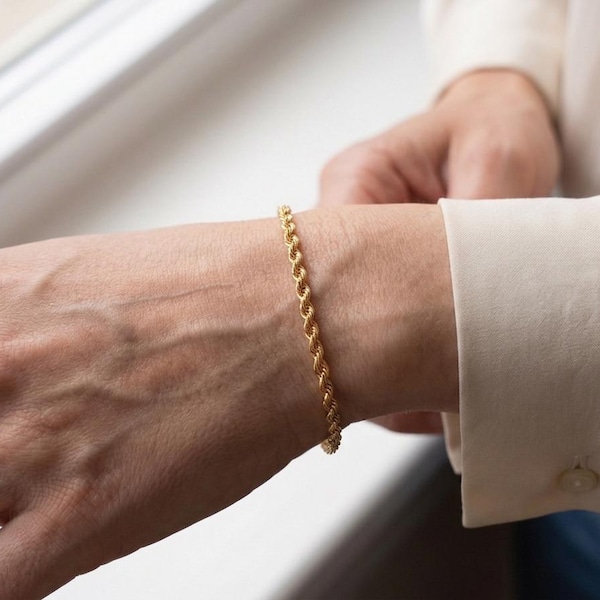
Rope Chain Guide: How Twisted Gold Chains Are Made, Worn and Cared For
Our rope chain guide explains how twisted gold rope links are made, why solid rope chains last, how to avoid tangles and kinks, and how to wear and c…

The difference between 14K and 22K gold is purity: 14K is 58.5% pure gold, while 22K is about 91.6% pure gold. 22K has a deeper, richer yellow and more gold value per gram, but it is much softer, so it scratches, bends and wears faster than 14K in everyday use.
Here in Istanbul's Grand Bazaar, both karats are part of daily life. 22K is a traditional standard for Turkish and Indian gold, especially for wedding gold and bangles. We make our jewelry in solid 14K because it is built for daily wear. This guide explains both honestly so you can choose with confidence.
| Feature | 14K gold | 22K gold |
|---|---|---|
| Pure gold content | 58.5% | About 91.6% |
| Common stamp | 14K or 585 | 22K or 916 |
| Color | Soft, classic yellow | Deep, saturated orange-yellow |
| Hardness | Hard enough for daily wear | Soft; dents and scratches easily |
| Stone settings | Holds prongs and pave securely | Less secure for small prongs |
| Colors available | Yellow, white, rose, two-tone | Almost always yellow |
| Typical use | Everyday rings, chains, earrings | Bangles, wedding gold, ceremonial pieces |
If you want to see every karat in one place, our gold karat chart has the full list.
In Turkey, India and much of the Middle East and South Asia, gold has long been given at weddings, births and religious holidays. In these traditions, a piece of jewelry is also a store of family wealth, so high purity matters. 22K keeps most of the gold content while adding just enough alloy to hold a shape.
Walk through the Grand Bazaar and you will see shop windows full of 22K bangles, wedding sets and coins, alongside 14K and 18K everyday jewelry. Each serves a different purpose. If you would like to know more about these customs, read our guides to Turkish jewelry traditions and Turkish gold coin traditions.
The more gold in an alloy, the richer the color. 22K has a deep, almost buttery orange-yellow that many people love, especially against warm and olive skin tones. 14K has a softer, lighter yellow that reads as classic gold and pairs easily with other jewelry.
Because 22K is so close to pure gold, there is very little room to change its color. That is why you rarely see 22K white gold or rose gold. 14K, with more alloy, can be made in yellow, white and rose, and combined in two-tone designs. If color is your priority, our yellow, white and rose gold guide is a useful next read.
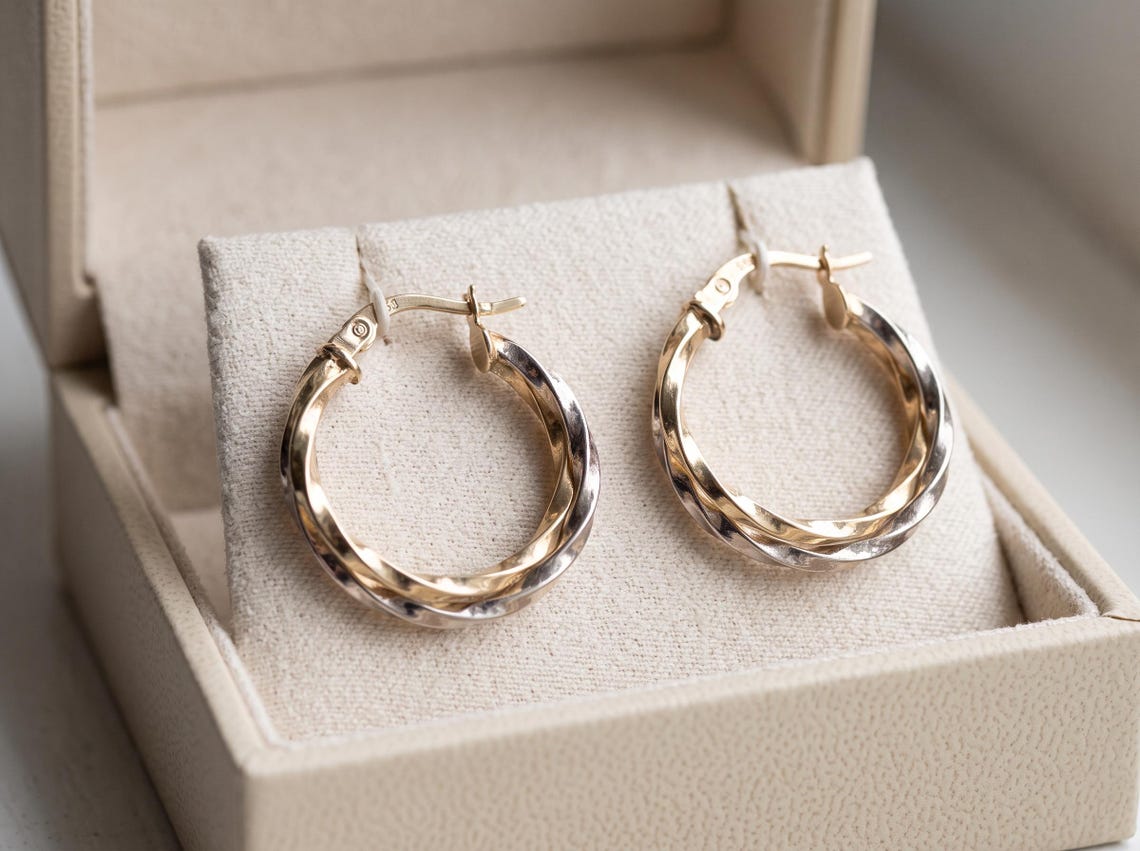
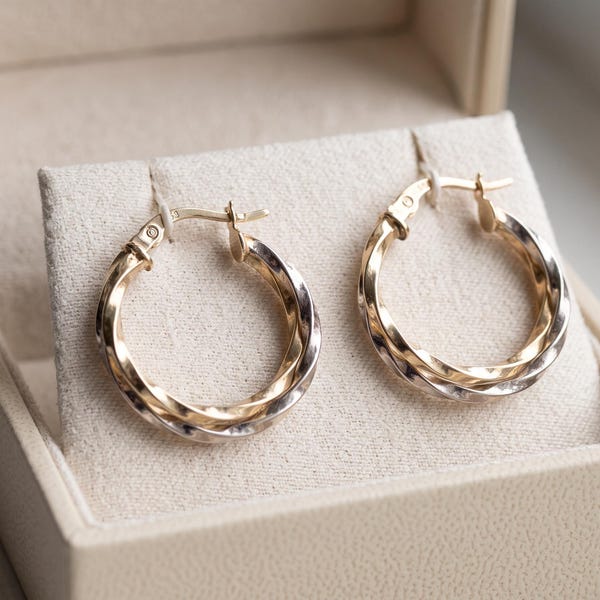 14K Two-Tone Twisted Hoop Earrings
View 14K Two-Tone Twisted Hoop Earrings on Etsy
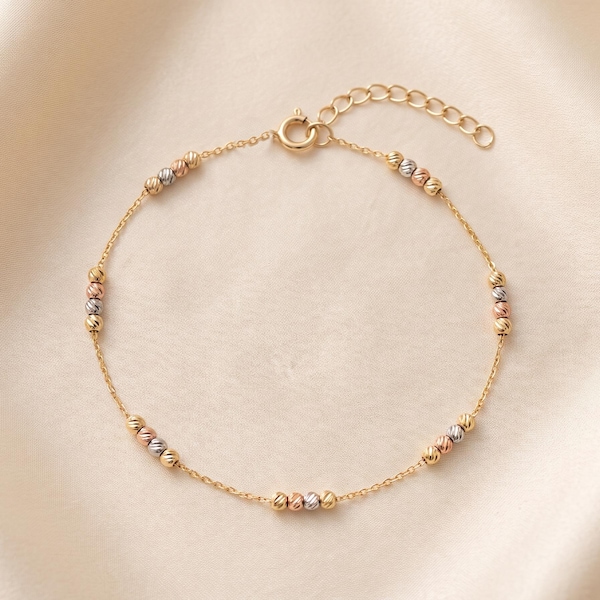 Two Tone Bracelet
View Two Tone Bracelet on Etsy
Pure gold is soft enough to mark with a fingernail. 22K is harder than pure gold, but still soft compared with 14K. For pieces you wear every day, that softness shows up in practical ways:
Some people love that softly worn patina on a family bangle. For a ring you wear to the office, the gym and the kitchen, most people prefer the firmer feel of 14K. For more on daily wear, read our guide to whether gold jewelry scratches.
Many modern designs depend on fine details: pave cubic zirconia, thin prongs, crisp diamond-cut facets and delicate links. These details need a metal that holds its shape. 14K keeps prongs tight and edges sharp for years. 22K is better suited to bold, smooth shapes, hand-chased patterns and bezel settings.
That is why our pave and prong-set pieces, like a CZ halo pendant or a half eternity band, are all made in 14K.
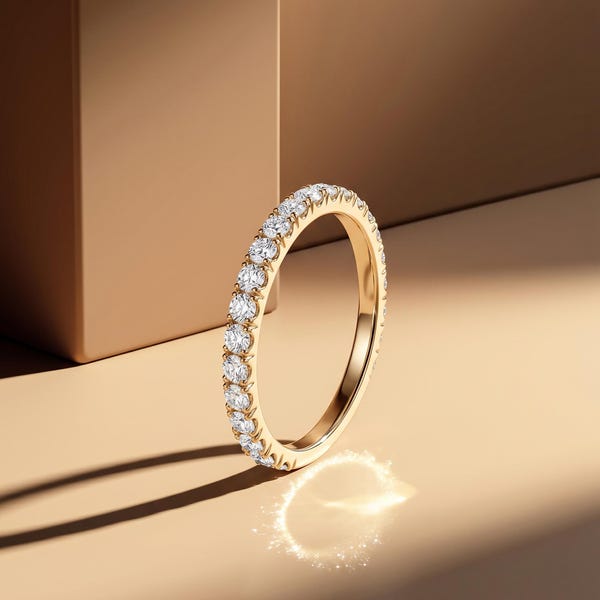 Half Eternity Ring
View Half Eternity Ring on Etsy
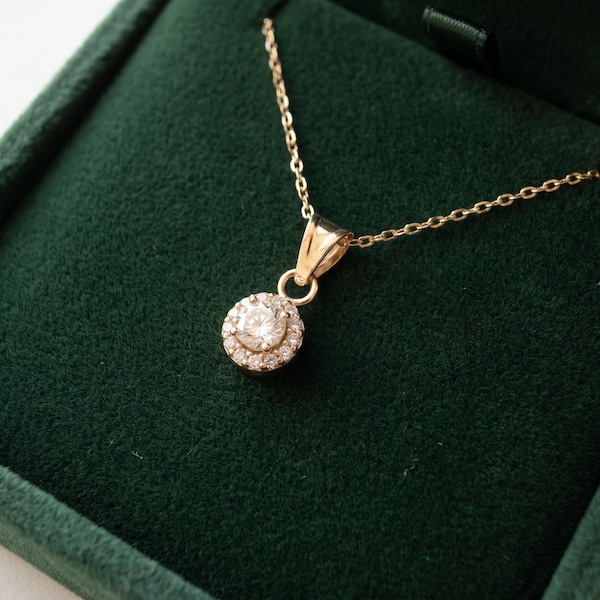 Halo Pendant Necklace
View Halo Pendant Necklace on Etsy
We never discuss gold prices, but the logic is simple. A 22K piece contains more pure gold per gram than a 14K piece of the same weight. That is part of why 22K is chosen for wedding gold and gifts that may be kept as family savings.
For jewelry you plan to wear rather than store, value also comes from the design, the workmanship and how well the piece survives. Our article on why gold jewelry costs more than scrap gold breaks this down, and gold weight explained shows why grams matter.
Both karats need the same gentle basics: warm water, a drop of mild soap, a soft brush and a soft cloth to dry. The difference is how careful you need to be with storage and handling.
Our step-by-step guides on how to clean gold jewelry at home and how to store gold jewelry apply to both karats.
If you are torn between 14K and something in between, our comparison of 14K vs 18K gold explains the middle option.
Every Şerif Ağa piece is solid 14K gold stamped 585, made to be worn daily and backed by a lifetime guarantee on craftsmanship. Browse our gold bracelets or gold rings to see 14K in everyday designs.
22K can be worn daily, but it scratches, dents and bends more easily than 14K. Bangles and simple chains hold up better than thin rings or pieces with small prongs.
916 is the hallmark for 22K gold and means 916 parts pure gold per thousand. It is common on Turkish, Indian and Middle Eastern gold.
22K has far less alloy, so the natural deep yellow of pure gold shows through more strongly. 14K contains more silver and copper, which soften the color.
It can, but small prongs in 22K wear and loosen faster. Bezel settings are more common in 22K, while 14K is better for pave and prong settings.
No. All of our jewelry is solid 14K gold stamped 585, chosen for daily wear, secure stone settings and a choice of yellow, white and rose gold.
Share:
Our rope chain guide explains how twisted gold rope links are made, why solid rope chains last, how to avoid tangles and kinks, and how to wear and c…
10K vs 14K gold compared: gold content, color, durability, skin sensitivity and value, explained honestly by Grand Bazaar goldsmiths. Find your best…
Winter jewelry styling tips for gold: what to wear with turtlenecks, chunky knits and coats, how to avoid snags, and caring for jewelry in cold, dry…