Heart Necklace Meaning: History, Open vs Closed Hearts and Heart Keys
Heart necklace meaning: how the heart became a love symbol, open vs closed vs puffed hearts, heart key pendants, and gift ideas for partners and daug…

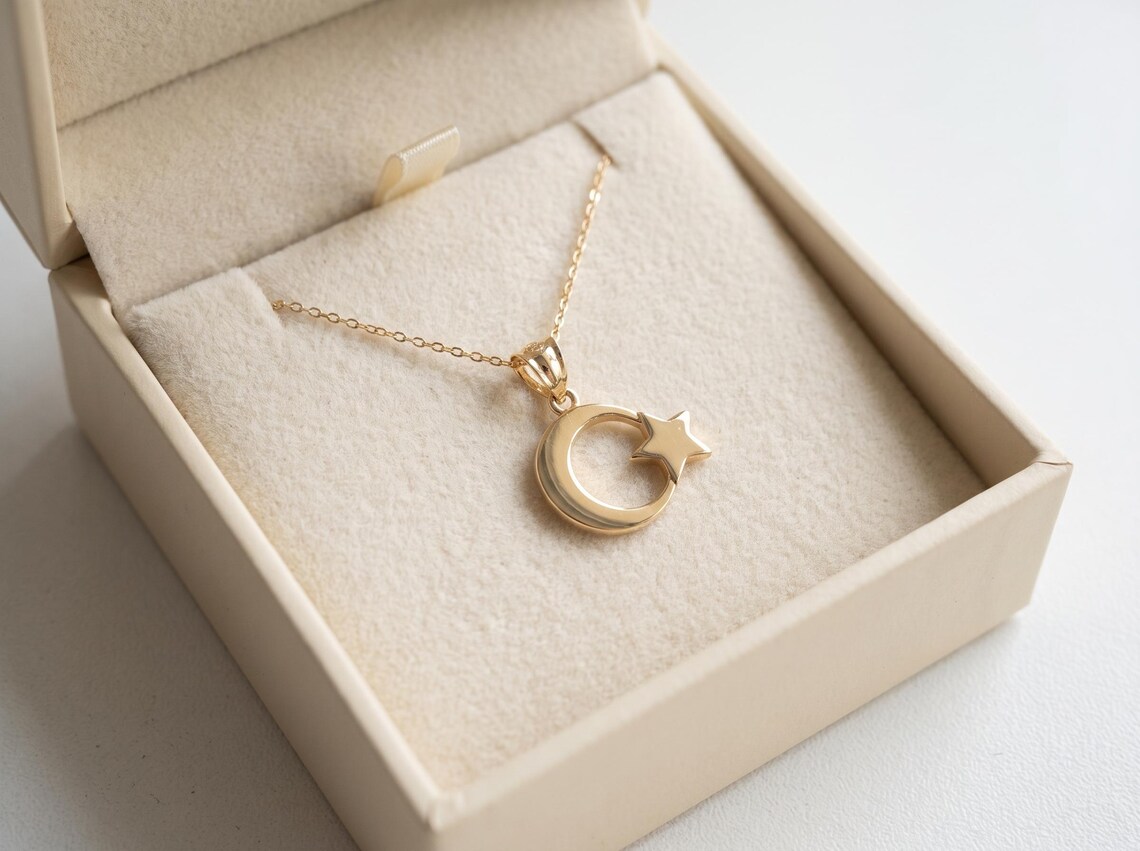
The crescent moon and star is an ancient celestial motif that became the emblem of the Ottoman Empire and is today the central symbol of the Turkish flag. In jewelry it is most often worn as a sign of Turkish heritage and national pride, and many people also associate it with the wider Muslim world.
As goldsmiths working in Istanbul, we make and sell this symbol often, and we are asked about it often. Here is its history, told as plainly and accurately as we can, and some practical advice on wearing it.
Crescent and star shapes appear on objects from the ancient Near East and the Mediterranean thousands of years ago, usually linked to the moon, the night sky and the gods people associated with them. The pairing of a crescent with a star or sun disc is one of the oldest celestial images people have drawn.
The city of Byzantium, which later became Constantinople and then Istanbul, used a crescent, sometimes with a star, on its coins in the centuries before the Roman era. Local tradition connects this to the moon goddess the city honored. So the symbol was tied to this city long before the Ottomans arrived.
The Ottomans conquered Constantinople in 1453. Over the following centuries the crescent became closely linked to the empire, appearing on banners, finials and buildings. Historians generally agree that the combination of a red field with a white crescent and star became the standard Ottoman flag in the late 18th and 19th centuries, when the state was formalizing its official symbols.
There are several popular legends about the symbol's origin, including a story of a crescent moon and star reflected in a pool after a battle. These are part of Turkish folklore and are told with affection, but they are legends rather than documented history.
When the Republic of Turkey was founded, it kept the red flag with the white crescent and star. Its exact proportions were fixed by law in 1936. For many Turks at home and abroad, the crescent and star is first of all a national symbol: it stands for the country, its history and a sense of belonging.
Other countries use the motif too, including Tunisia, Algeria and Pakistan, each with its own design and history. In Turkey the flag is treated with real respect: it is flown on national holidays, on buildings and from balconies, and many families keep one at home.
| Period | How the crescent (and star) was used |
|---|---|
| Ancient Near East and Mediterranean | Celestial and religious imagery tied to the moon and sky |
| Ancient Byzantium | Civic emblem on the city's coins |
| Ottoman Empire | Imperial emblem; red flag with crescent and star standardized in the late Ottoman period |
| Republic of Turkey | National flag, with proportions set by law in 1936 |
This is the question we are asked most, so we want to answer it carefully. The crescent and star does not come from the Quran or early Islamic teaching, and many Muslim scholars note that Islam has no official symbol. However, because of its long Ottoman use, it became widely associated with Islam during the 20th century, and you will see it on some mosques and in many Muslim communities.
In practice the meaning depends on the wearer. For some it is national pride, for some a sign of faith, for some a link to family roots in Turkey or the region, and for many it is all three. A respectful approach is simply to let the wearer decide what it means to them.
Our Crescent Moon Star Necklace is designed as a Turkish flag pendant, so it is closest to the heritage meaning. The crescent opens toward the star, as on the flag, and the pendant is sized to wear every day rather than only on special occasions.
A crescent and star pendant reads clearly on a fine chain worn at the collarbone or just below. Our necklace length guide shows how each length sits.
The crescent pairs naturally with the nazar, the blue eye bead you see across Turkey. Read more in our evil eye meaning guide and our overview of Turkish jewelry traditions. Some wearers add a hamsa hand or a small star. Keep each pendant at its own length so they do not tangle.
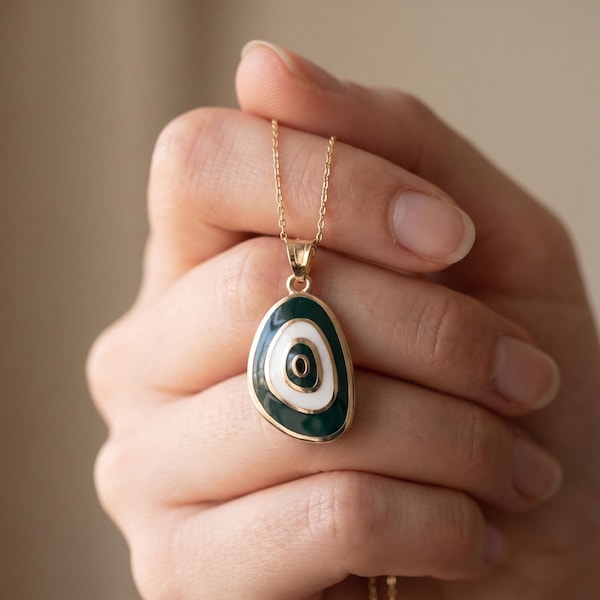 Evil Eye Necklace
View Evil Eye Necklace on Etsy
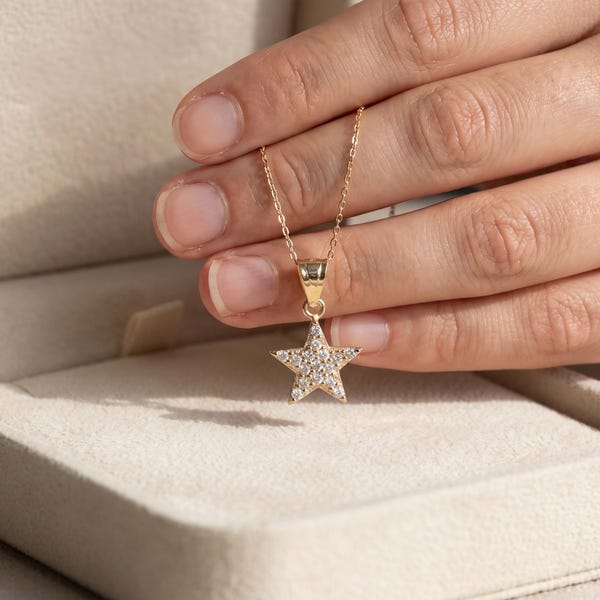 Pave CZ Star Pendant Necklace
View Pave CZ Star Pendant Necklace on Etsy
It suits milestones such as a graduation, a first trip back to Turkey or a new citizenship. For graduation ideas, see our graduation jewelry gift ideas.
Our atelier is inside Istanbul's Grand Bazaar, and we are third-generation goldsmiths. Every crescent pendant we make is solid 14K gold, stamped 585, never plated. That matters for a piece people often wear for life and hand to their children. Each order ships free and insured to the USA, UK and Europe, in an illuminated jewelry box. Browse more on our necklaces page.
It is an ancient celestial motif that became the Ottoman emblem and is now the symbol of the Turkish flag. Today it is worn mainly as a sign of Turkish heritage, and many people also associate it with the Muslim world.
No. It is not part of early Islamic teaching. It became associated with Islam largely through its long use by the Ottoman Empire.
Anyone can, but it is good to know it is a national and, for many, a religious symbol. Wear it with that respect in mind.
The red flag with a white crescent and star was inherited from the late Ottoman period. The Republic of Turkey kept it and fixed its proportions by law in 1936.
Yes. It is solid 14K gold stamped 585, made in our Istanbul atelier.
Share:
Heart necklace meaning: how the heart became a love symbol, open vs closed vs puffed hearts, heart key pendants, and gift ideas for partners and daug…
Infinity symbol jewelry meaning: where the lemniscate came from, why it means endless love, infinity heart designs in solid 14K gold and gift ideas.
North star necklace meaning: why Polaris stands for guidance, how it differs from the Star of Bethlehem, and why it makes a fitting graduation or tra…