Bracelet Size Guide: How to Measure Your Wrist and Choose a Fit
Bracelet size guide with a cm and inch chart: how to measure your wrist, how much ease to add for a snug, comfort or loose fit, and sizing for kids.

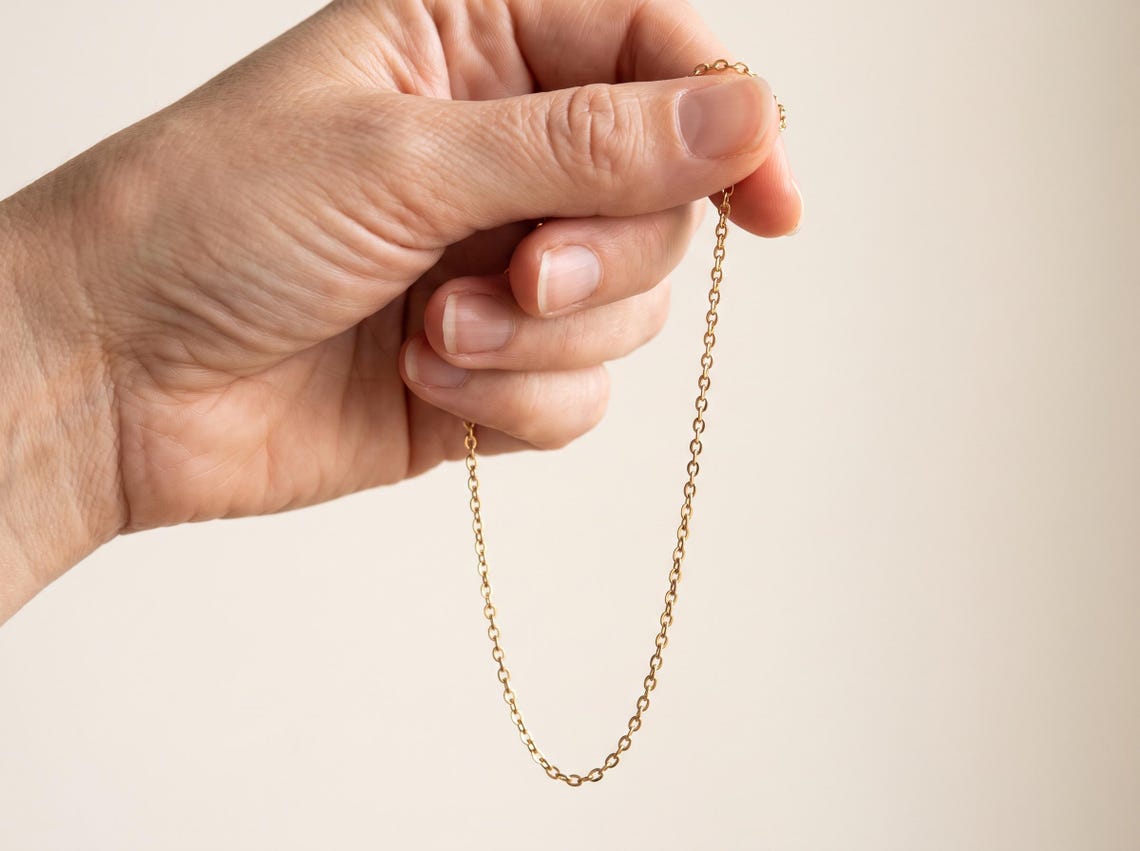
To layer necklaces well, choose chains that are at least 5 cm (about 2 inches) apart in length, vary their weight and texture, and limit yourself to one statement pendant. Those three rules handle most of the work: the spacing keeps pendants from crowding each other, and the variety keeps the stack from looking like one thick knot.
Below is how our goldsmiths build a layered look that sits properly through the day.
Layering only works if each necklace has its own place on the neckline. When two chains are close in length, they rest on top of each other and tangle within minutes. A gap of about 5 cm (2 inches) between each layer is the usual starting point. With large pendants, go wider.
| Length | Inches (approx.) | Where it sits | Role in a stack |
|---|---|---|---|
| 35-38 cm | 14-15 in | High on the neck, choker style | Top layer |
| 40-42 cm | 16 in | At the base of the neck, near the collarbone | Top or middle layer |
| 45 cm | 18 in | Just below the collarbone | Middle layer, most common pendant length |
| 50 cm | 20 in | A few centimeters below the collarbone | Lower layer |
| 55-60 cm | 22-24 in | Upper chest | Bottom layer |
Exactly where each length falls depends on your neck and build. Our necklace length guide shows how to measure your own neckline with a piece of string before you buy.
A chain with extension rings, or one sold with several length options, lets you fine-tune the gap once you see the stack in a mirror. Our dainty cable chain comes in lengths from 35 to 45 cm, which makes it a useful base layer.
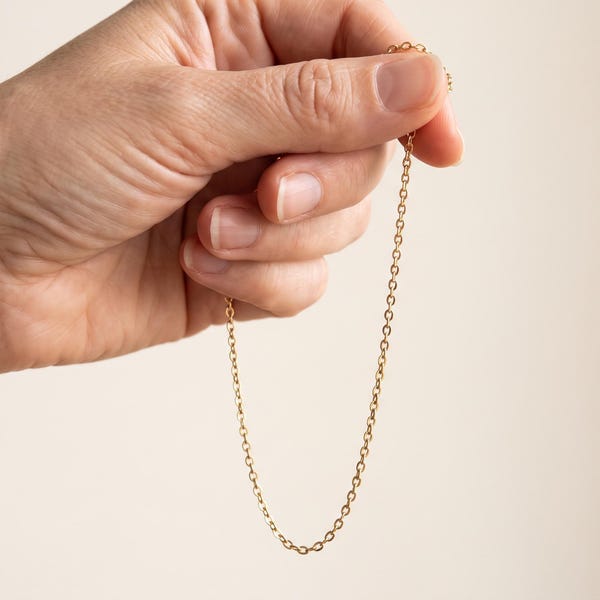 Cable Chain Necklace
View Cable Chain Necklace on Etsy
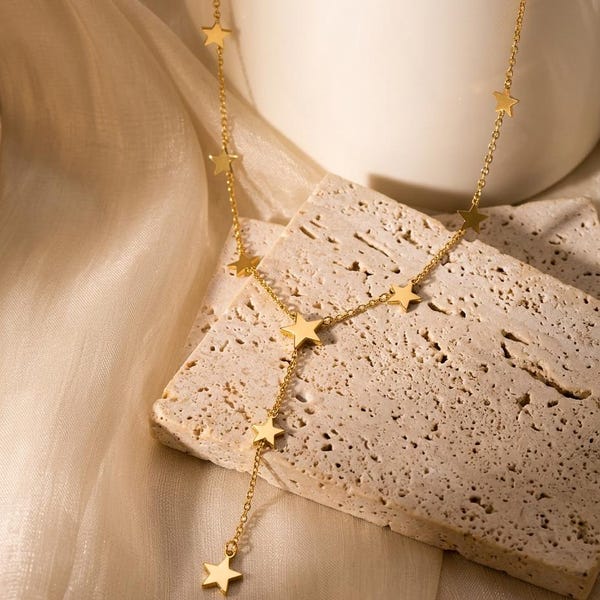 Star Lariat Necklace
View Star Lariat Necklace on Etsy
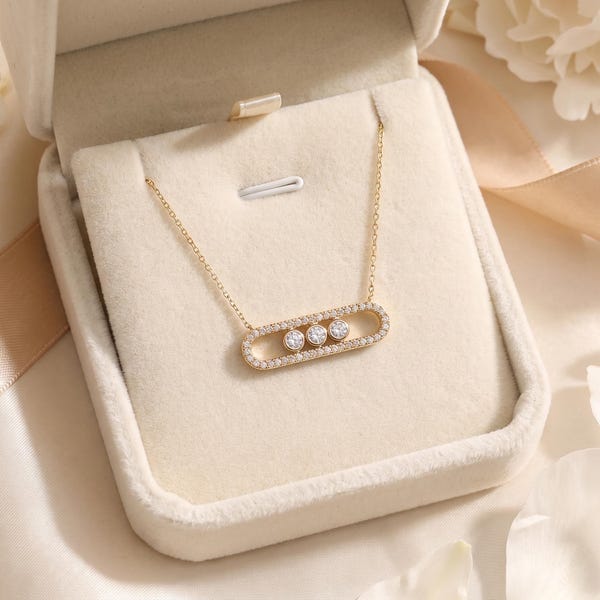 Bar Necklace with Three Moving Cubic Zirconia Stones
View Bar Necklace with Three Moving Cubic Zirconia Stones on Etsy
Three identical fine chains look busy and tangle fast. Contrast does the opposite. A good layered set usually has:
Put the finest chain at the top and the heaviest at the bottom. A heavier chain sitting high tends to pull lighter chains underneath it out of place. Different textures also catch the light differently, which is what makes a stack look deliberate.
Pendants are where most layering goes wrong. Two pendants of similar size compete for attention, and if they are close in length, they knock together and twist around each other.
Personal pieces work well as the focal point. A name or initial necklace at 40-45 cm with a plain textured chain below it is one of the easiest layered looks to wear. Our guide on choosing a name necklace helps with sizing and style.
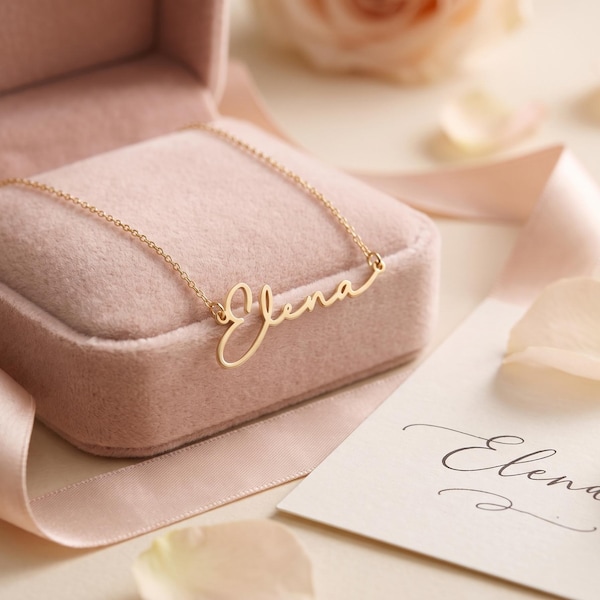 Cursive Name Necklace
View Cursive Name Necklace on Etsy
 North Star Necklace
View North Star Necklace on Etsy
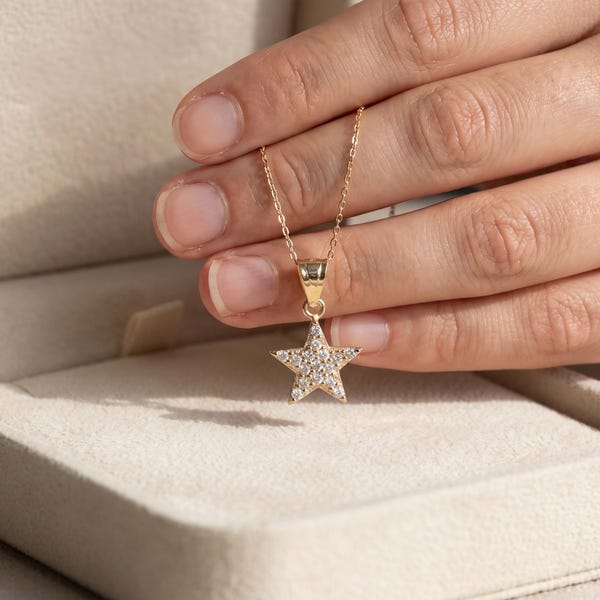 Pave CZ Star Pendant Necklace
View Pave CZ Star Pendant Necklace on Etsy
Mixing metals used to be a style rule people avoided. Today it is common, and it has an advantage: it lets you wear pieces you already own together. A few things make it look intentional rather than accidental:
Two-tone pieces made from 14K yellow and white gold are a simple way to start. Both colors are solid gold, stamped 585, so they age the same way.
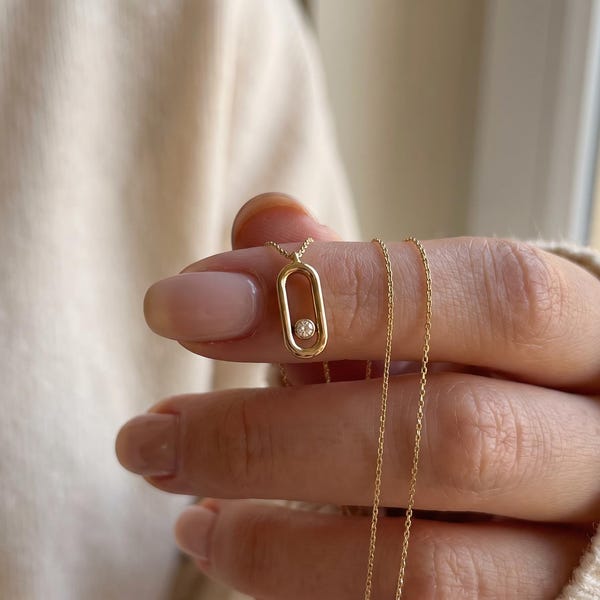 Oval Pendant Necklace with One Moving Stone
View Oval Pendant Necklace with One Moving Stone on Etsy
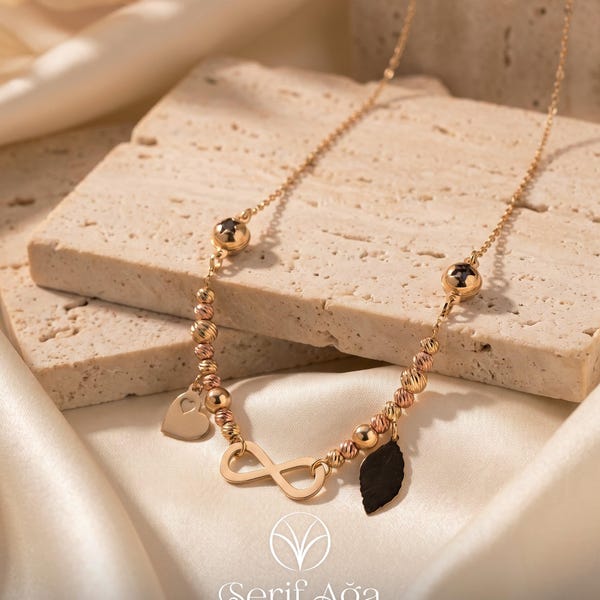 Infinity Heart Leaf Star Station Necklace
View Infinity Heart Leaf Star Station Necklace on Etsy
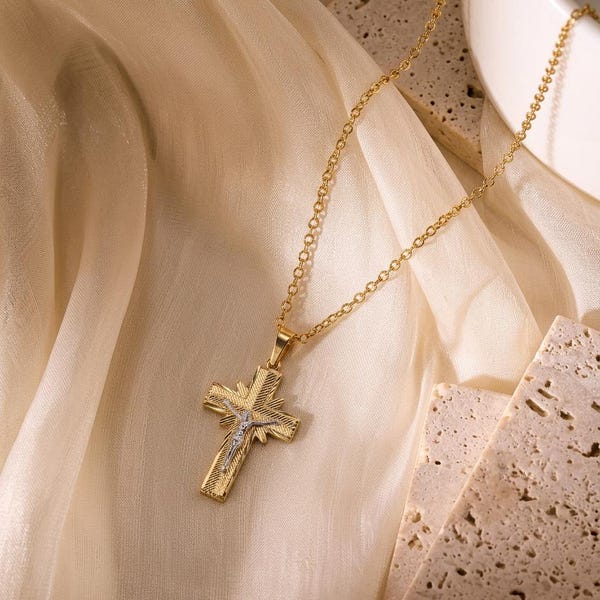 Two-Tone Crucifix Necklace
View Two-Tone Crucifix Necklace on Etsy
Some movement is unavoidable, but these habits help a lot:
At night, always take layered necklaces off. Chains that roll together in bed will knot almost every time; we explain why in can you sleep in gold jewelry. Store each necklace separately with its clasp fastened, as covered in how to store gold jewelry.
A fine 40 cm chain with a small star or heart, and a plain 45 cm paperclip or rope chain. Quiet enough for work.
An initial pendant at 40 cm, a name necklace at 45 cm and a plain textured chain at 50 cm. A good gift idea if you are buying for someone who wears gold daily.
A yellow gold fine chain at 40 cm, a two-tone pendant at 45 cm and a white gold chain at 50 cm. The middle piece ties both colors together.
Layered chains rub against each other all day. On plated jewelry that friction wears through the gold surface quickly, especially at the points where chains touch. Solid gold has no surface layer to wear away, so a stack keeps looking the same for years. If you are deciding between materials, our comparison of solid gold vs gold filled vs plated explains the difference.
Browse all necklaces or personalized pieces in our personalized collection to start your stack.
Two or three is the easiest number to wear and keep untangled. Four or more can work with very fine chains, but needs careful spacing.
About 5 cm (2 inches) between each chain is a good starting point. Leave more space under any chain that carries a pendant.
Yes. Including a two-tone piece and repeating each color at least twice makes a mixed-metal stack look intentional.
Space the lengths well, mix chain styles, put the heaviest piece at the bottom and turn each clasp to the back of your neck.
Yes. Layered chains roll together while you sleep and will usually knot. Store them separately with clasps fastened.
Share:
Bracelet size guide with a cm and inch chart: how to measure your wrist, how much ease to add for a snug, comfort or loose fit, and sizing for kids.
How to store gold jewelry at home and on the road: separate compartments, tangle-free chains, pearls apart, humidity tips and what our box is for.
Can you sleep in gold jewelry? Solid 14K gold will not tarnish overnight, but chains, prongs and hoops can. What to keep on, what to remove, and why.