What Is a Goldsmith? The Craft, the Tools and How It Differs from a Jeweler
What is a goldsmith? Learn what goldsmiths do, the tools and skills of the bench, how they differ from jewelers and silversmiths, and how it is learn…

Lost-wax casting is a method of making metal objects in which a wax model is encased in a heatproof mold, the wax is melted or burned away, and molten metal is poured into the empty space it leaves behind. In jewelry, it is the main way goldsmiths make rings, pendants and other pieces with three-dimensional shapes, texture and fine detail.
The technique is thousands of years old, and archaeologists have found lost-wax castings from many ancient cultures. The basic idea has not changed, though modern workshops use better materials and equipment. Here is how it typically works, step by step.
Some pieces are easiest to build from wire and sheet. Others, like a sculpted animal pendant or a chunky textured ring, would take a very long time to fabricate by hand. Casting lets a goldsmith create almost any shape that can be modeled in wax, then reproduce it in solid gold.
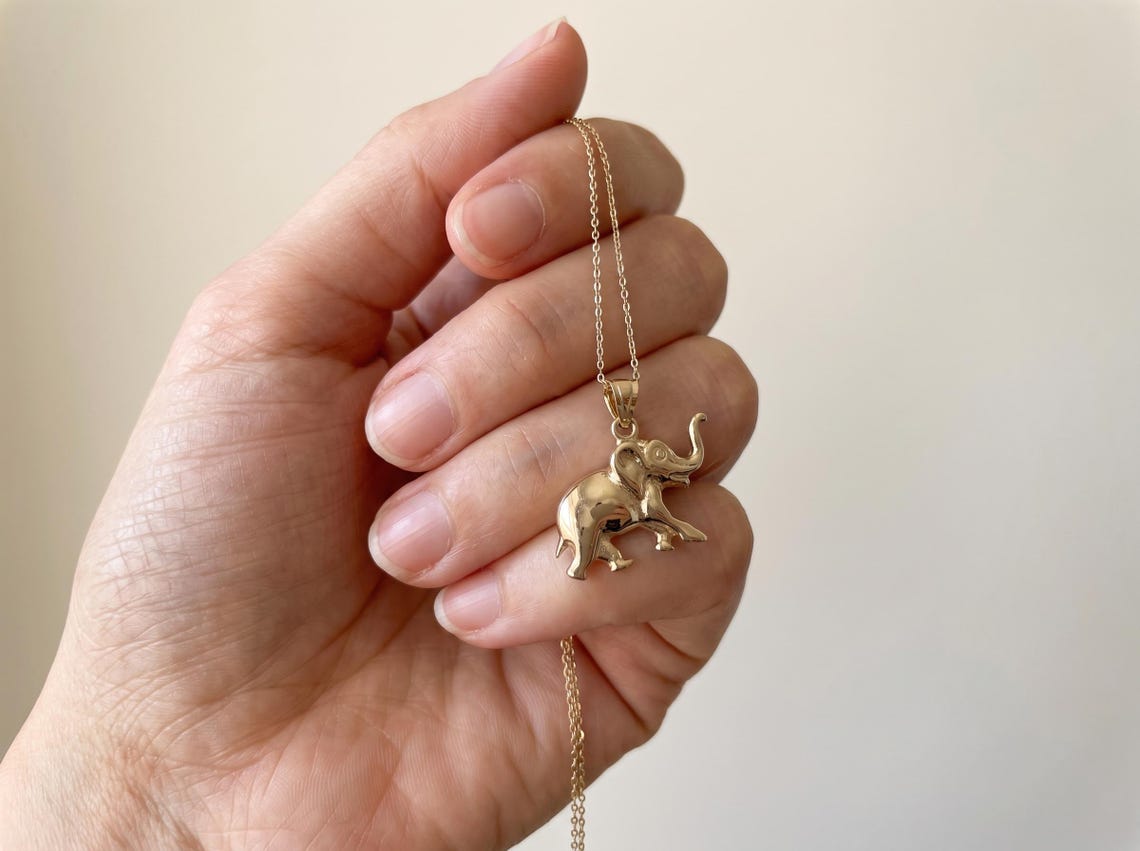
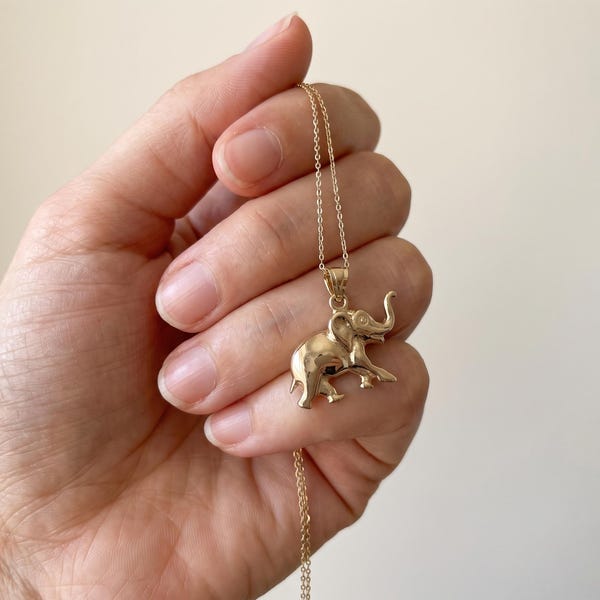 3D Elephant Pendant Necklace
View 3D Elephant Pendant Necklace on Etsy
 Solid Dolphin Necklace
View Solid Dolphin Necklace on Etsy
Everything starts with a model of the finished piece. There are two main routes:
For pieces made in quantity, a metal master model is often used to create a rubber mold. Hot wax is injected into the mold to make as many identical wax copies as needed.
Each wax model gets a small wax rod, called a sprue, attached to it. The sprue becomes the channel through which molten gold will flow. Several models are then attached by their sprues to a central wax trunk, forming what goldsmiths call a tree. One tree can hold many pieces, which saves time and metal.
The tree is weighed before casting. Because wax and gold have known densities, the weight of the wax tells the caster roughly how much gold to melt.
The tree is placed in a steel cylinder called a flask, and a liquid investment is poured around it. Investment is a fine, plaster-like material designed to withstand very high heat. The flask is usually placed in a vacuum chamber to pull out air bubbles, which would otherwise show up as tiny bumps on the cast metal.
Once the investment sets, the wax tree is completely enclosed in a hard mold.
The flask goes into a kiln and is heated slowly over several hours. The wax melts, drains and burns away completely, leaving a hollow cavity in the exact shape of the tree. This is the step that gives the technique its name: the wax is lost.
A careful burnout schedule matters. Heat it too fast and the investment can crack; leave residue behind and the casting can come out rough or incomplete.
While the flask is still hot, the goldsmith melts the karat gold alloy in a crucible. For 14K gold, that alloy is 58.5% pure gold mixed with other metals, as we explain in what 585 means on gold.
The molten gold is then forced into the cavity. Common methods include:
After a short cooling period, the flask is plunged into water. The sudden temperature change breaks up the investment, and the gold tree emerges, still rough and dull. Remaining investment is cleaned off with water jets, brushing or an ultrasonic bath.
Each piece is cut from the tree, and the sprue stub is filed away. Then comes the long part: shaping, sanding and smoothing every surface. If the design has stones, they are set at this stage. Finally the piece is polished, as described in how jewelry is polished, cleaned and stamped with its karat mark.
Casting can take hours, but finishing often takes longer. A cast piece only looks crisp and comfortable after careful hand work.
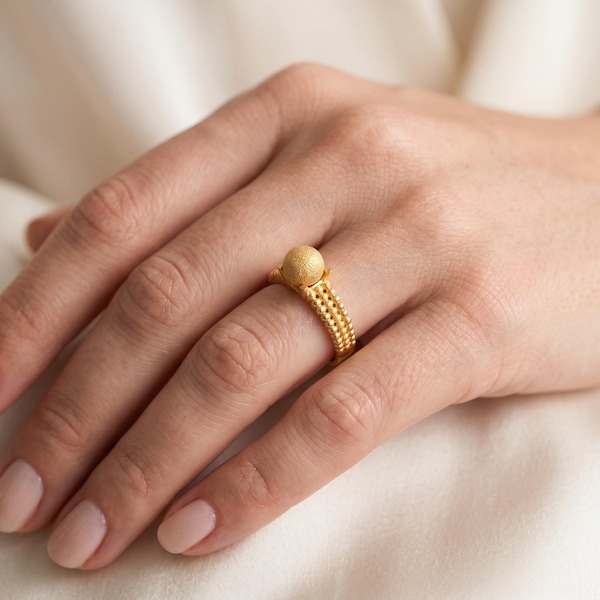 Chunky Gold Ring
View Chunky Gold Ring on Etsy
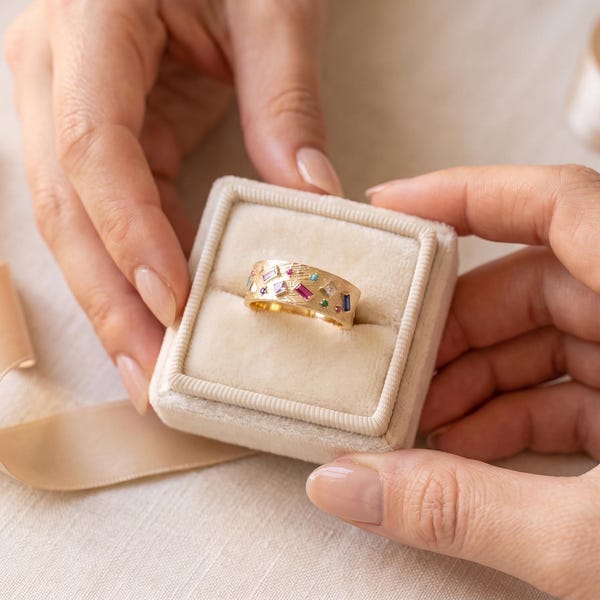 Chunky Ring Wide Textured Band
View Chunky Ring Wide Textured Band on Etsy
| Method | How it works | Best for | Trade-offs |
|---|---|---|---|
| Lost-wax casting | Metal poured into a mold made from a wax model | Sculpted, textured and detailed pieces | Needs careful finishing; porosity possible if done poorly |
| Hand fabrication | Built from wire and sheet, then soldered | Plain bands, simple shapes, one-offs | Time-consuming for complex forms |
| Die striking (stamping) | Metal pressed between hard steel dies | Flat pendants, coins, medals | Limited to shallow relief; dies are costly to make |
| Machine chain making | Wire formed and joined into links by machine | Chains | Specialized equipment |
Chains are a world of their own; see how gold chains are made.
A well-cast and well-finished piece has:
Solid castings also give a piece real weight. Our pieces are solid 14K gold, never semi-hollow. If you want to understand why that matters, read hollow vs solid gold jewelry and gold weight explained, or browse our gold rings and pendant necklaces.
Because the wax model is melted and burned out of the mold during the process. The wax is "lost," and gold takes its place in the cavity it left.
No. Casting is a traditional goldsmithing technique, and cast pieces still need extensive hand finishing. Quality depends on the model, the casting process and the finishing work.
No, each wax model is destroyed in the burnout. To make copies, goldsmiths create a rubber mold from a master model and inject new wax copies for each casting.
Porosity means tiny holes or bubbles in the metal, caused by trapped gas or uneven cooling. Good investing, burnout and casting technique keep it to a minimum.
Yes. A 3D printed castable resin or wax model is burned out of the mold just like a hand-carved wax, so the process is the same.
Share:
What is a goldsmith? Learn what goldsmiths do, the tools and skills of the bench, how they differ from jewelers and silversmiths, and how it is learn…
Ottoman jewelry history: palace goldsmiths, the Topkapı treasury, favorite gems, tulip and rumi motifs, and how Ottoman style still shapes jewelry to…
Turkish gold coin traditions explained: what çeyrek, yarım and tam coins are, how they are pinned at weddings and births, and the customs behind the…


