Herringbone Chain Guide: Flat Gold Chains, Kink Risk and Proper Care
Herringbone chain guide from Istanbul goldsmiths: how flat V-pattern gold chains are made, why they kink, how to wear them safely and how to store th…

Gold weight is the mass of a piece of jewelry, usually measured in grams, and it tells you how much metal you are actually getting. Combined with the karat, weight shows how much pure gold a piece contains, and it is one of the best clues to how solid, durable and comfortable a piece will be.
Two chains can look identical in photos and differ greatly in weight. As third-generation goldsmiths in Istanbul's Grand Bazaar, we weigh every piece we make. Here is what those grams mean and how to use them when you shop.
Jewelers weigh gold on precise scales, normally in grams to one or two decimal places. In some places you may also see pennyweight (dwt), a traditional unit equal to about 1.555 grams, or troy ounces, which are used for bullion rather than jewelry. For buying jewelry, grams are the clearest unit.
Total weight includes everything in the piece: the gold alloy, the clasp, and any stones. Stones are usually light compared with gold, but a large stone can add noticeable weight, so a listing that separates gold weight from stone weight gives you the most accurate picture.
Weight alone does not tell you how much pure gold you have. You also need the karat. A 14K piece is 58.5% pure gold, so a 10 gram 14K chain contains about 5.85 grams of pure gold. A 10 gram 10K chain contains about 4.17 grams.
| Karat | Pure gold share | Pure gold in a 10 g piece |
|---|---|---|
| 10K | 41.7% | About 4.17 g |
| 14K | 58.5% | About 5.85 g |
| 18K | 75% | 7.5 g |
| 22K | About 91.6% | About 9.16 g |
For more on karats, see our gold karat chart and the comparison of 10K vs 14K gold.
A solid piece is gold all the way through. A hollow piece is a gold tube or shell with air inside. Hollow construction makes a piece look larger for less gold, which is why big hoops and chunky chains are often hollow.
Some pieces are semi-hollow, combining solid and hollow parts. Others are plated or gold-filled, meaning a thin gold layer sits over another metal. Our guides to hollow vs solid gold jewelry and solid gold vs gold filled vs gold plated explain each type.
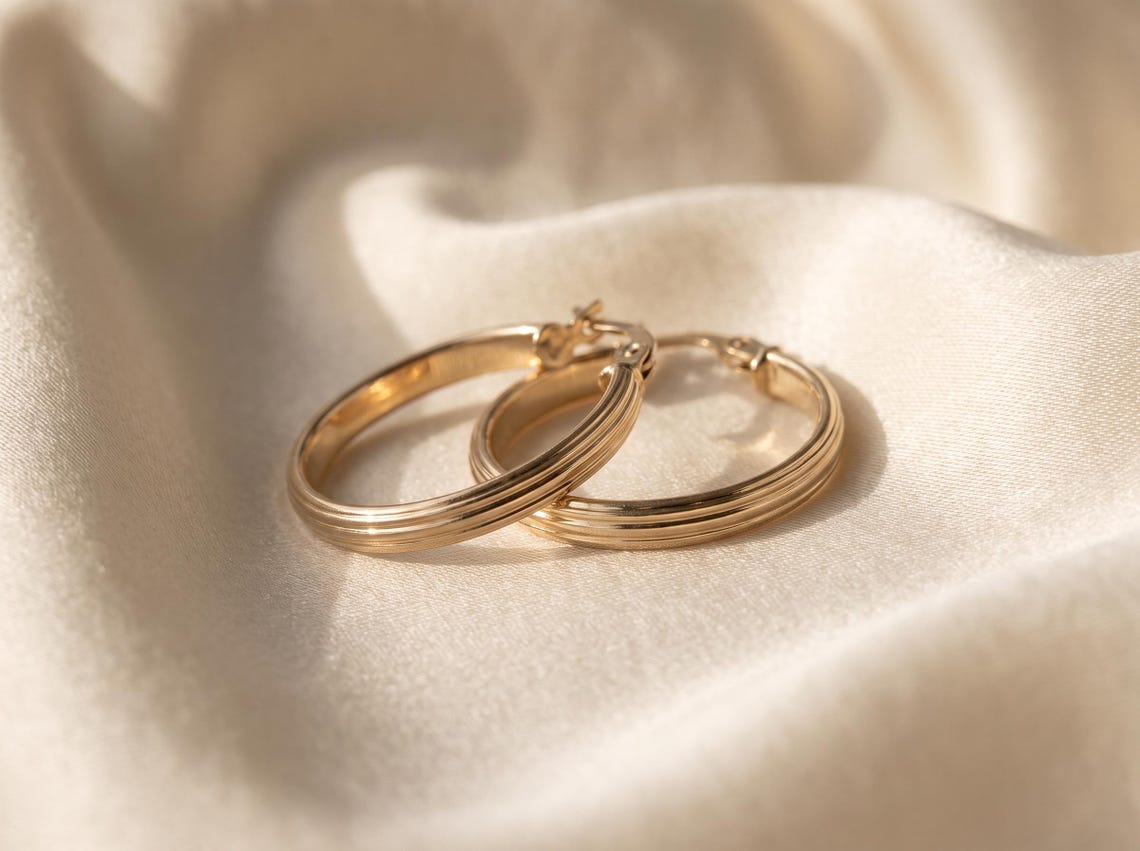
Every Şerif Ağa piece is solid 14K gold, never hollow, semi-hollow, plated, gold-filled or vermeil. When we describe a tube hoop or a ribbed hoop, it is still solid gold, shaped to look bold while staying wearable.
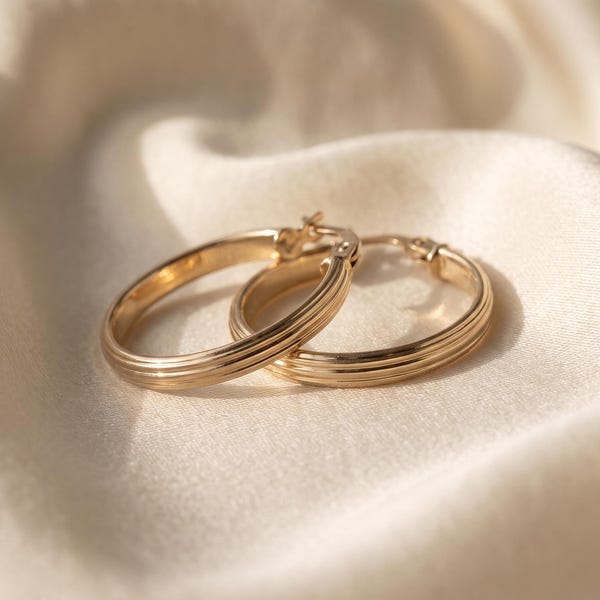 Hoop Earrings Thick Ribbed Tube Hoops
View Hoop Earrings Thick Ribbed Tube Hoops on Etsy
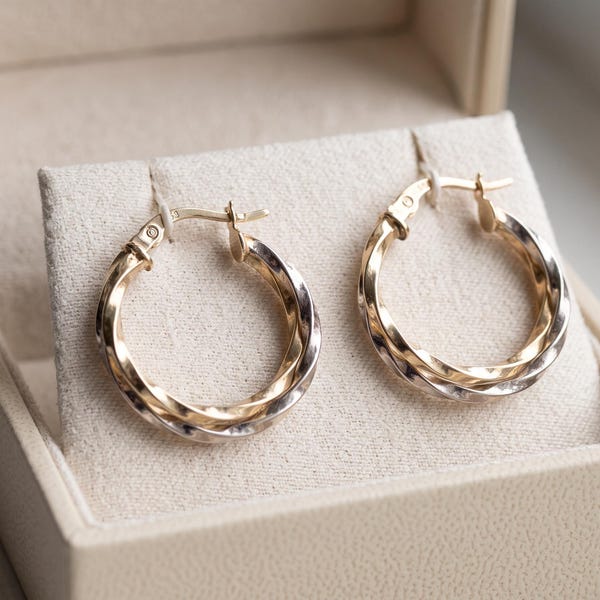
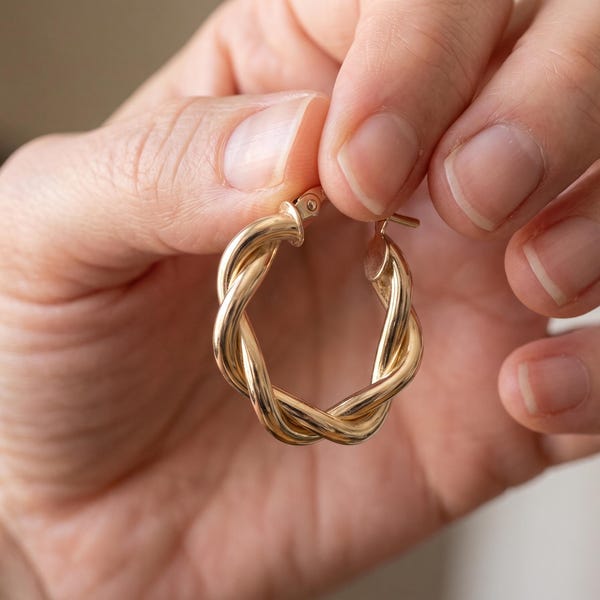 Braided Hoop Earrings
View Braided Hoop Earrings on Etsy
More metal generally means more strength. This shows up in a few places:
If a chain does break, solid gold makes repair much simpler. A jeweler can usually solder a broken solid link neatly.
Weight changes how jewelry feels and moves. A pendant with a little weight hangs straight and stays centered. A bracelet with some heft drapes around the wrist instead of sliding up the arm. Very light pieces can flip, twist or tangle more easily.
That said, heavier is not always better. Large earrings that are too heavy can pull on the earlobe. Dainty necklaces are meant to be light. The right weight is the one that suits the design and the way you will wear it. Our dainty gold necklace guide and chunky gold jewelry guide explore both ends.
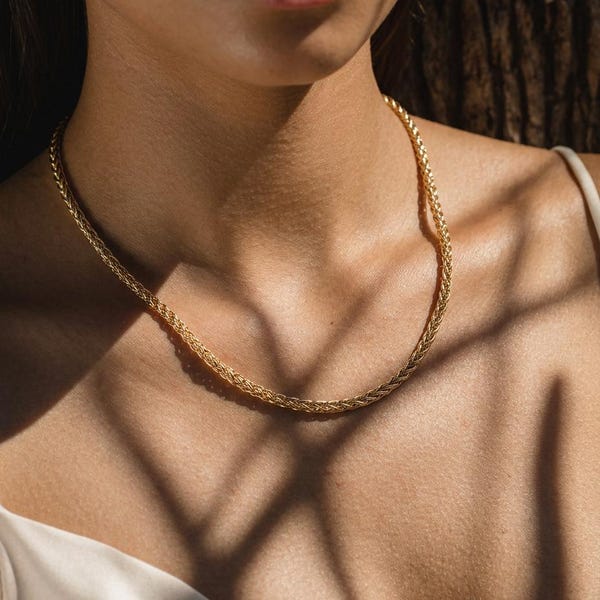 Wheat Chain Necklace
View Wheat Chain Necklace on Etsy
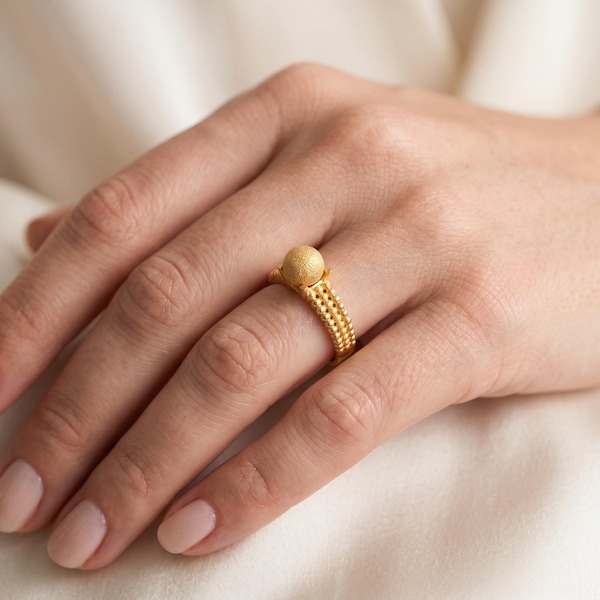 Chunky Gold Ring
View Chunky Gold Ring on Etsy
Chain weight depends on three things: length, link width and link style. A wheat, rope or herringbone chain packs a lot of gold into a small width, while an open cable or paperclip chain uses less metal for the same length. When comparing chains, always compare the same length, because a longer chain naturally weighs more. Our gold chain types guide shows how each style is built.
Ring weight follows width, thickness and size. A wide band or dome ring uses much more gold than a thin stacking band, and larger ring sizes weigh a little more than smaller ones in the same design. A ring that is too thin for daily wear can bend over time, so a little extra weight is often worth it for a band you never take off.
Earrings are the one place where lighter is often better. A solid hoop needs enough gold to keep its shape, but not so much that it pulls on the lobe. Good earring design balances visual size and comfort.
Bracelets take more knocks than any other jewelry, against desks, door frames and bag straps. A bit of weight helps links and clasps survive that daily wear.
We do not discuss prices or gold markets, but weight is central to value. More grams of the same karat means more gold in the piece. That is why a solid chain carries more material value than a hollow chain that looks just as big.
Weight is not the whole story, though. Labor, finishing and stone setting add value that scales do not measure. Our article on why gold jewelry costs more than scrap gold explains those layers.
On Etsy, our owner Şerif Temizkan answers messages personally, so you can ask about the weight or construction of any listing. Browse our gold necklaces and gold earrings to compare pieces.
It varies widely with length, chain style and construction. A dainty cable chain may weigh only a gram or two, while a solid wheat or rope chain can weigh many times more.
Total weight usually includes stones, clasps and all parts. Some sellers list gold weight separately, which gives the clearest picture of the gold you are getting.
Heavier usually means more durable and more gold, but comfort and design matter too. A light, well-made dainty necklace can be the right choice for everyday wear.
Hollow pieces feel surprisingly light for their size and may have a small seam or vent hole. The listing should state construction clearly; ours are always solid.
A pennyweight (dwt) is a traditional jewelry unit equal to about 1.555 grams. Most jewelers today use grams.
Share:
Herringbone chain guide from Istanbul goldsmiths: how flat V-pattern gold chains are made, why they kink, how to wear them safely and how to store th…
14K vs 22K gold compared: purity, color, softness and daily wear. Why 22K is common in Turkish and Indian gold, and when 14K is the smarter choice. R…
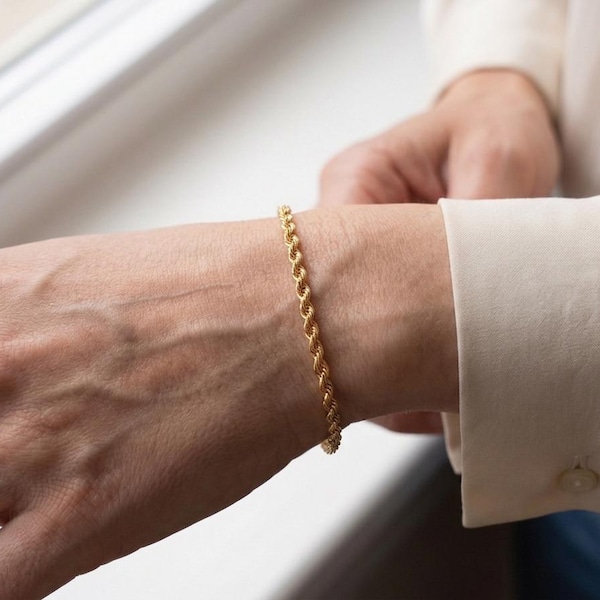
Our rope chain guide explains how twisted gold rope links are made, why solid rope chains last, how to avoid tangles and kinks, and how to wear and c…