14K vs 22K Gold: Color, Softness and Which Is Better for Daily Wear
14K vs 22K gold compared: purity, color, softness and daily wear. Why 22K is common in Turkish and Indian gold, and when 14K is the smarter choice. R…

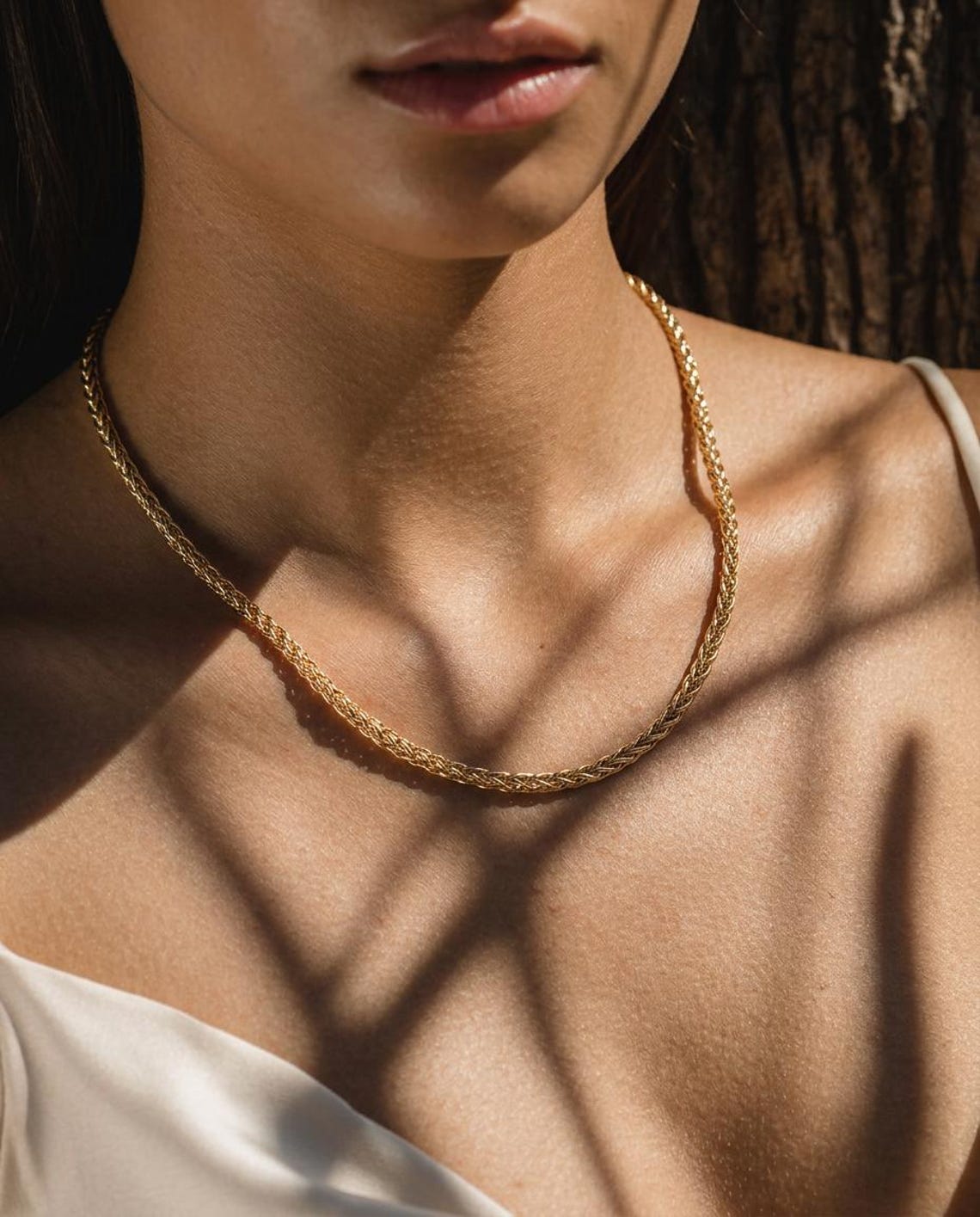
A herringbone chain is a flat, smooth gold chain made of short, slanted links laid in rows so they form a V or zigzag pattern, like the bones of a fish. It lies on the skin almost like liquid gold and reflects a lot of light, but it is also the chain style most likely to kink, so it needs a little more care than most.
This guide explains how herringbone chains are made, how strong they are, why they kink and how to prevent it, plus styling and care advice from our goldsmiths. For a comparison with every other chain style, visit our gold chain types guide.
Unlike chains built from rings that swing freely, a herringbone chain is made of flat, angled links packed tightly together. Each row of links slants one way and the next row slants the other, which creates the herringbone pattern. The result is a ribbon of gold with almost no gaps.
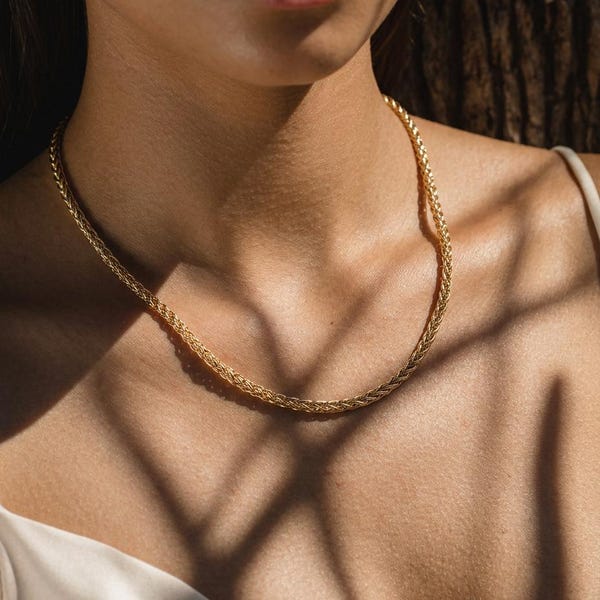
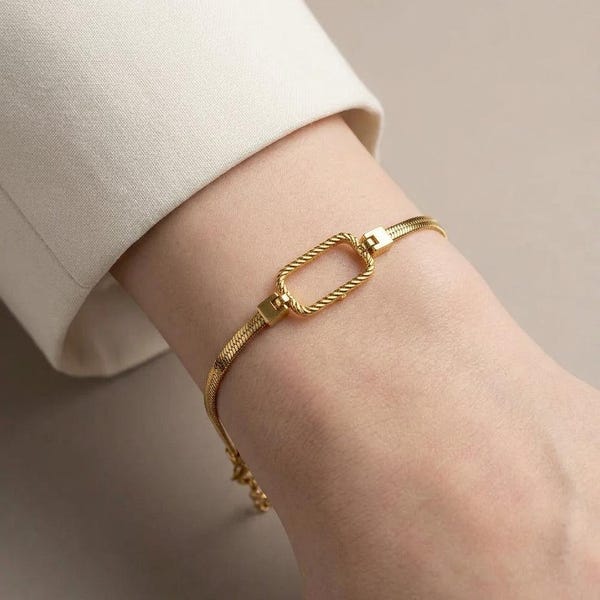
Because the surface is flat and continuous, herringbone chains show off polish better than almost any other style. They read as sleek and a little retro, and they look particularly good at short lengths where they sit flat against the collarbone or wrist.
People often confuse these three. A snake chain is round and made of tightly fitted rings or plates; it is flexible and less flat. A wheat chain (also called a Spiga chain) is made of twisted oval links that form a braided look and is more resilient. A herringbone is fully flat with a V pattern.
| Chain | Shape | Shine | Kink risk | Best for |
|---|---|---|---|---|
| Herringbone | Flat ribbon | Very high | High | Wearing alone, short lengths |
| Snake | Round, smooth | High | Medium | Light pendants, sleek looks |
| Wheat | Round, braided | Medium to high | Low | Pendants, everyday wear |
In general, herringbone chains start as gold wire that is shaped into small, flat, angled links. The links are assembled in alternating rows so each row interlocks with the next, then the whole chain is pressed and rolled to flatten it into a smooth ribbon. Finally it is polished, sometimes partly diamond-cut, and finished with end caps and a clasp.
The flattening step is what gives herringbone its glassy look, and it is also why the links cannot rotate freely like a cable chain. To learn more about how goldsmiths form chains in general, see how gold chains are made.
A solid gold herringbone chain is strong in a straight pull. The tightly packed rows share the load well. Where it is weak is sideways bending. If the chain is folded sharply, knotted, or twisted, the flat links can bend out of line and leave a permanent crease.
Width and construction matter. Wider and thicker solid herringbone chains are more forgiving than very thin ones. Hollow herringbone chains, which you will find from some sellers, are much more fragile. Everything we make is solid 14K gold stamped 585; our article on hollow vs solid gold jewelry explains why that matters.
A kink is a sharp bend where some links have been pushed out of their row. On a herringbone chain, kinks are easy to see because they break up the smooth reflective surface. Common causes include:
Small kinks can sometimes be eased out by a jeweler, but a hard crease may leave a visible mark, and a herringbone chain is difficult to repair invisibly if links break. Prevention is much easier than repair.
Herringbone looks best on its own at choker or collarbone length, where it lies flat. Our necklace length guide shows exactly where each length sits. On the wrist, a herringbone bracelet works as a sleek single piece or as the flat element in a stack.
As a rule, avoid adding a heavy sliding pendant to a plain herringbone chain, because the weight concentrates in one spot and encourages kinks. Pieces designed with the pendant as part of the necklace are a different matter, since the maker has balanced chain and pendant together.
Because herringbone is flat, it layers well with rounder chains such as rope or bead chains, which add contrast. Keep the herringbone as the shortest layer so it sits flat and does not rub against the others. For bracelet ideas, see our bracelet stacking guide, or browse gold necklaces.
Solid 14K gold will not rust or peel, and our lifetime craftsmanship guarantee covers the piece. If you ever notice a kink starting, message us and our owner will answer personally with advice.
Choose herringbone if you love a smooth, mirror-like surface and are happy to treat your jewelry gently. If you want a chain you can forget about, sleep in occasionally, or hang different pendants on, a curb, rope or wheat chain will be more forgiving. Many people own both: a herringbone for its look and a sturdier chain for daily pendants.
Yes, they are the chain style most prone to kinking because the flat links cannot rotate freely. Storing them flat and not sleeping in them prevents most problems.
Small kinks can sometimes be eased out by a jeweler, but a hard crease may leave a visible mark. Prevention is far easier than repair.
It is best to avoid heavy sliding pendants on a plain herringbone chain. Necklaces designed with the pendant as part of the piece are balanced for it.
We recommend taking it off at night, since folding under your body is one of the most common causes of kinks.
Yes, if you treat it a little more gently than other chains: put it on last, take it off for sleep and exercise, and store it flat.
Share:
14K vs 22K gold compared: purity, color, softness and daily wear. Why 22K is common in Turkish and Indian gold, and when 14K is the smarter choice. R…
Our rope chain guide explains how twisted gold rope links are made, why solid rope chains last, how to avoid tangles and kinks, and how to wear and c…
10K vs 14K gold compared: gold content, color, durability, skin sensitivity and value, explained honestly by Grand Bazaar goldsmiths. Find your best…