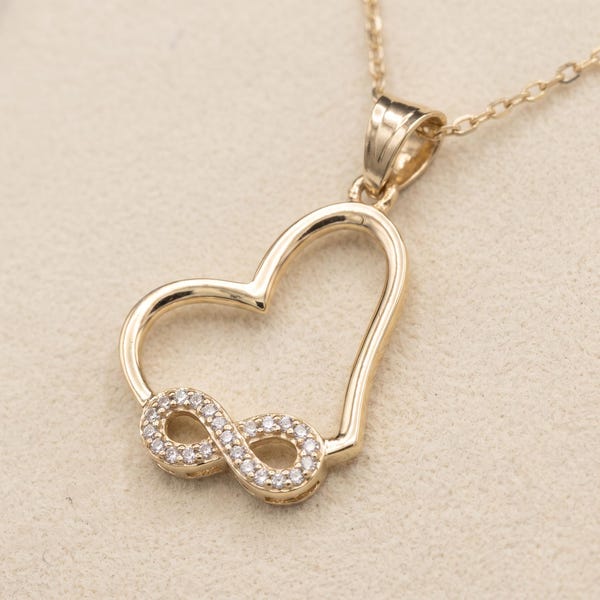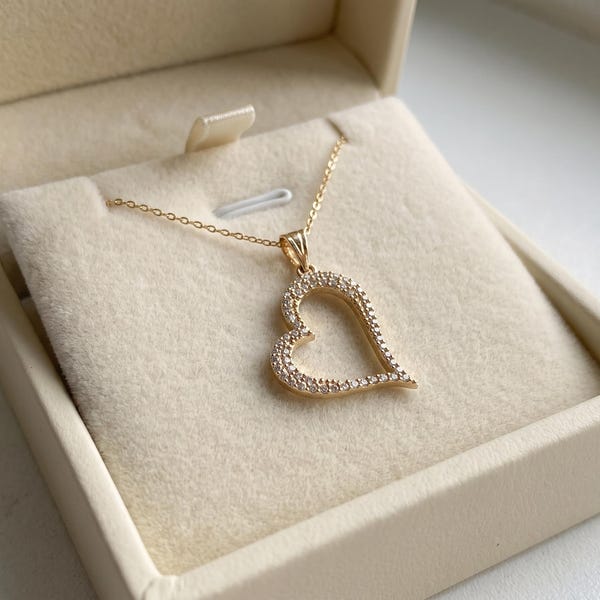
Heart Necklace Meaning: History, Open vs Closed Hearts and Heart Keys
Heart necklace meaning: how the heart became a love symbol, open vs closed vs puffed hearts, heart key pendants, and gift ideas for partners and daug…

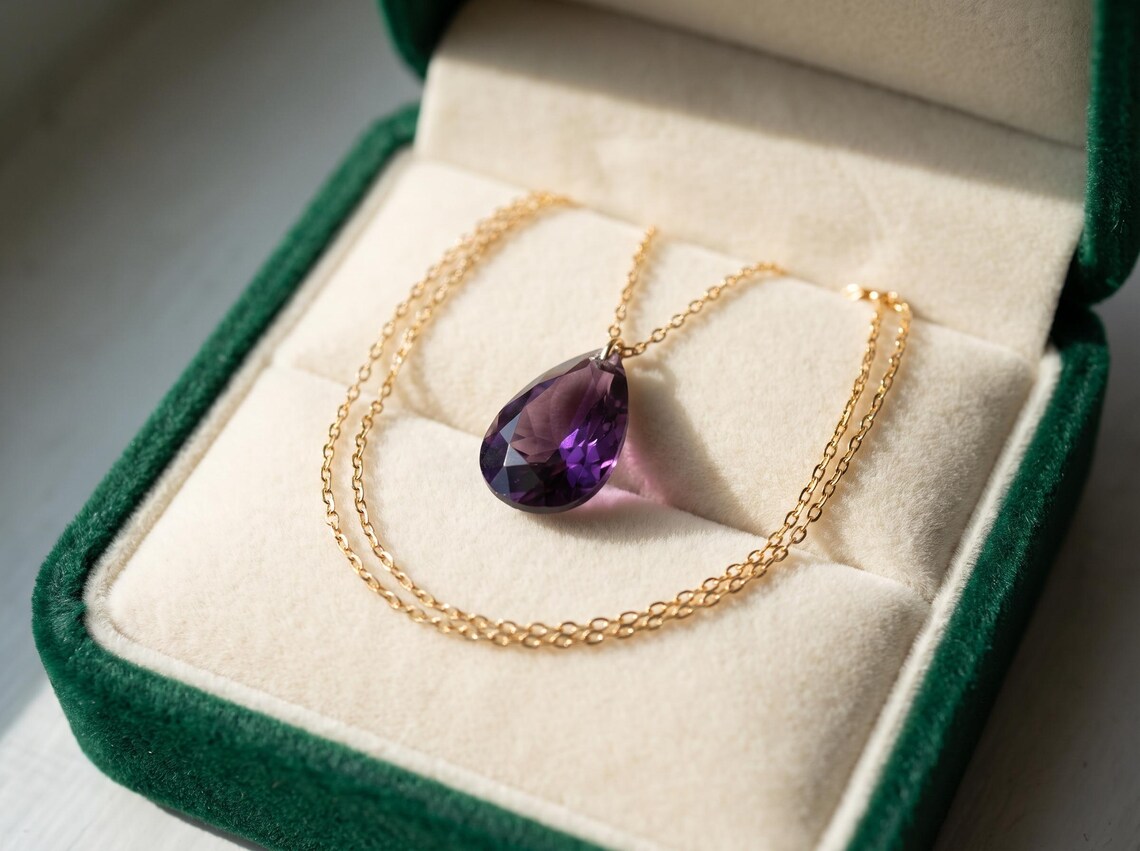
Natural stone gold jewelry uses gemstones that formed in the earth, such as amethyst or topaz, set in gold. Cubic zirconia (CZ) is a lab-made crystal that looks bright and clean for far less, but it is not a mined gem and it is not a diamond.
Both have a place in a jewelry box. This guide explains how the two differ, which of our solid 14K gold pieces use natural stones, and how to look after each type so it stays bright for years.
A natural gemstone is a mineral (or, in a few cases like pearl, an organic material) that formed without human help. It is mined, cut and polished, and each stone carries small differences in color and inclusions that make it one of a kind.
Many natural gems are also treated after mining. Heating and irradiation are common and accepted ways to improve or fix color. A treated stone is still a natural stone; it simply had help reaching its final color. Honest sellers say so in general terms, and we do the same.
Cubic zirconia is different. It is grown in a lab from zirconium oxide, then cut like a gem. It is hard, sparkly and very consistent, which is why most of our pieces use it and say so plainly in the title. If you want the full comparison with diamonds, read our guide to diamond vs cubic zirconia.
| Feature | Natural stone | Cubic zirconia (CZ) |
|---|---|---|
| Origin | Formed in the earth, then mined and cut | Grown in a lab, then cut |
| Look | Each stone slightly different, natural inclusions possible | Very uniform, bright sparkle |
| Hardness (Mohs) | Varies: turquoise about 5 to 6, amethyst 7, topaz 8 | About 8 to 8.5 |
| Color stability | Some stones fade in strong light or heat | Stable color in normal wear |
| Best for | Birthstone gifts, a piece with a story | Everyday sparkle, pave and halo designs |
Neither is "better." A natural amethyst carries a birthstone tradition and a unique color. A CZ pave pendant gives dense sparkle that would be hard to achieve with mined stones in a small, everyday piece. Our cubic zirconia jewelry guide covers CZ quality and care in more depth.
We only call a stone natural when the listing says so. At the moment, our natural-stone category holds these pieces, all in solid 14K gold stamped 585:
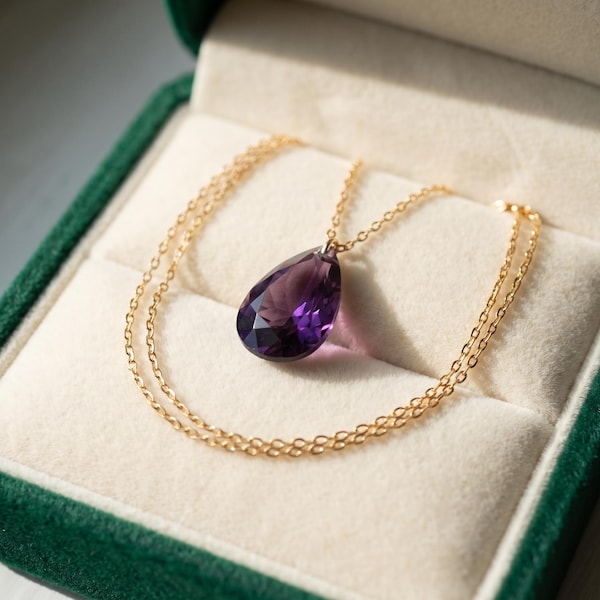 Amethyst Necklace
View Amethyst Necklace on Etsy
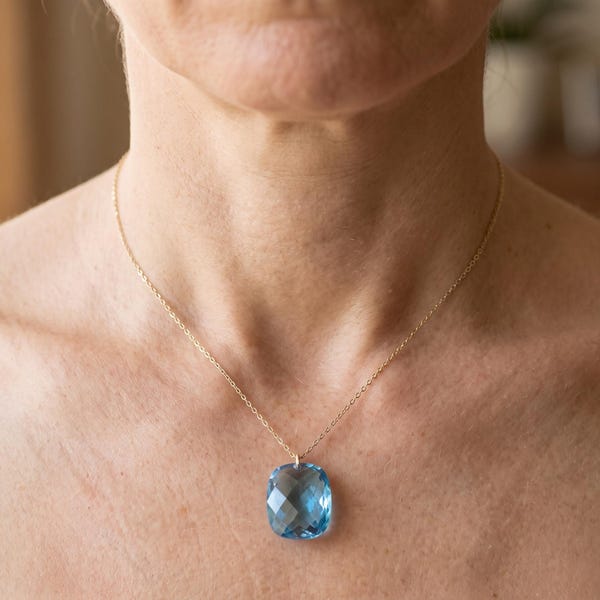 Blue Topaz Necklace
View Blue Topaz Necklace on Etsy
You can browse them together in our natural stone collection.
Some other pieces carry a gem name in their title, such as the Garnet Teardrop Necklace, the Pear Garnet Bracelet, or the Turquoise Station Necklace. Their listings give the stone details, so check the description if natural origin matters to you, and message us if anything is unclear. Pieces that say CZ in the title, like the Pear Ruby Pendant with CZ halo or the Turquoise CZ Phoenix, are cubic zirconia and we describe them that way.
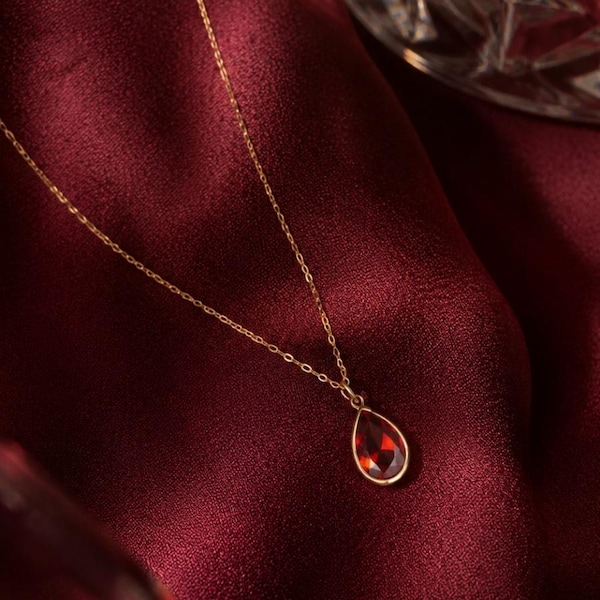 Garnet Teardrop Necklace
View Garnet Teardrop Necklace on Etsy
 Turquoise Station Necklace
View Turquoise Station Necklace on Etsy
Solid 14K gold is a good partner for gemstones for a few practical reasons. It does not flake or wear through like plating, so the setting around a stone keeps its color. It is strong enough to hold prongs and bezels securely, and it can be repaired or re-tipped by a goldsmith if a prong wears down after years of use.
Yellow gold also flatters warm and cool stones alike. Purple amethyst looks rich against it, and blue topaz looks crisp. If you are deciding between metal colors, our journal covers yellow, white and rose gold in detail.
Natural stones need a little more thought than CZ, mostly because some are softer or sensitive to heat and light.
CZ is easier: the same soap-and-water routine works, and it is fine with a gentle brush around the setting to remove lotion buildup.
Many people choose a natural stone for its folklore. Amethyst has long been linked with clear thinking, garnet with loyalty and safe travel, and turquoise with protection in Turkish and other traditions. These are stories passed down over centuries, not promises of any effect, but they make a gift feel personal. Our individual guides go deeper: amethyst jewelry meaning and blue topaz jewelry meaning.
Every order ships free by tracked, insured express to the USA, UK and Europe, in our illuminated jewelry box, and is backed by our lifetime craftsmanship guarantee.
No. Cubic zirconia is grown in a lab. It is hard and sparkly, but it is not a mined gemstone and it is not a diamond.
Our natural-stone category currently includes the 10ct natural amethyst teardrop necklace and the 21.5ct blue topaz cushion necklace. For other pieces named after a gem, the listing gives the stone details.
Yes. Heating and irradiation are common treatments that change or improve color, and the stone itself still formed in nature.
Many stones handle daily wear well, especially in pendants. Take them off for cleaning, the gym and swimming, and keep softer stones away from knocks.
Yes. Every piece we make is solid 14K gold stamped 585, never plated or gold-filled.
Share:
Heart necklace meaning: how the heart became a love symbol, open vs closed vs puffed hearts, heart key pendants, and gift ideas for partners and daug…
Infinity symbol jewelry meaning: where the lemniscate came from, why it means endless love, infinity heart designs in solid 14K gold and gift ideas.
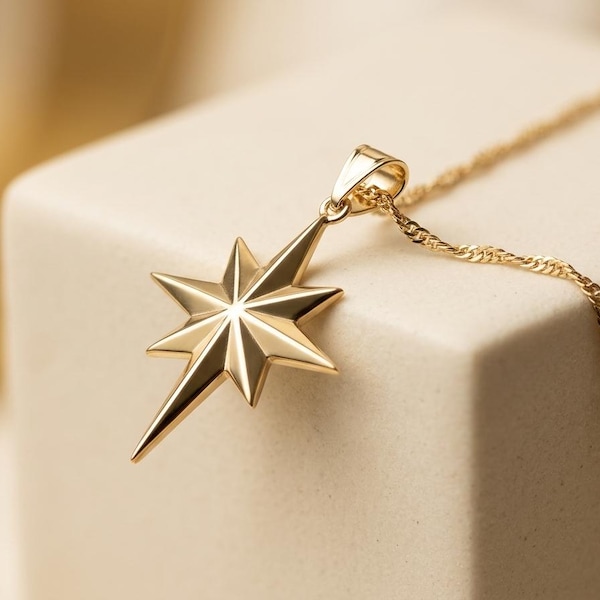
North star necklace meaning: why Polaris stands for guidance, how it differs from the Star of Bethlehem, and why it makes a fitting graduation or tra…