Jewelry Clasp Types: Lobster, Spring Ring, Box, Toggle and Magnetic
Jewelry clasp types explained: lobster, spring ring, box, toggle and magnetic. Learn how each works, which is most secure and how to keep a clasp hea…

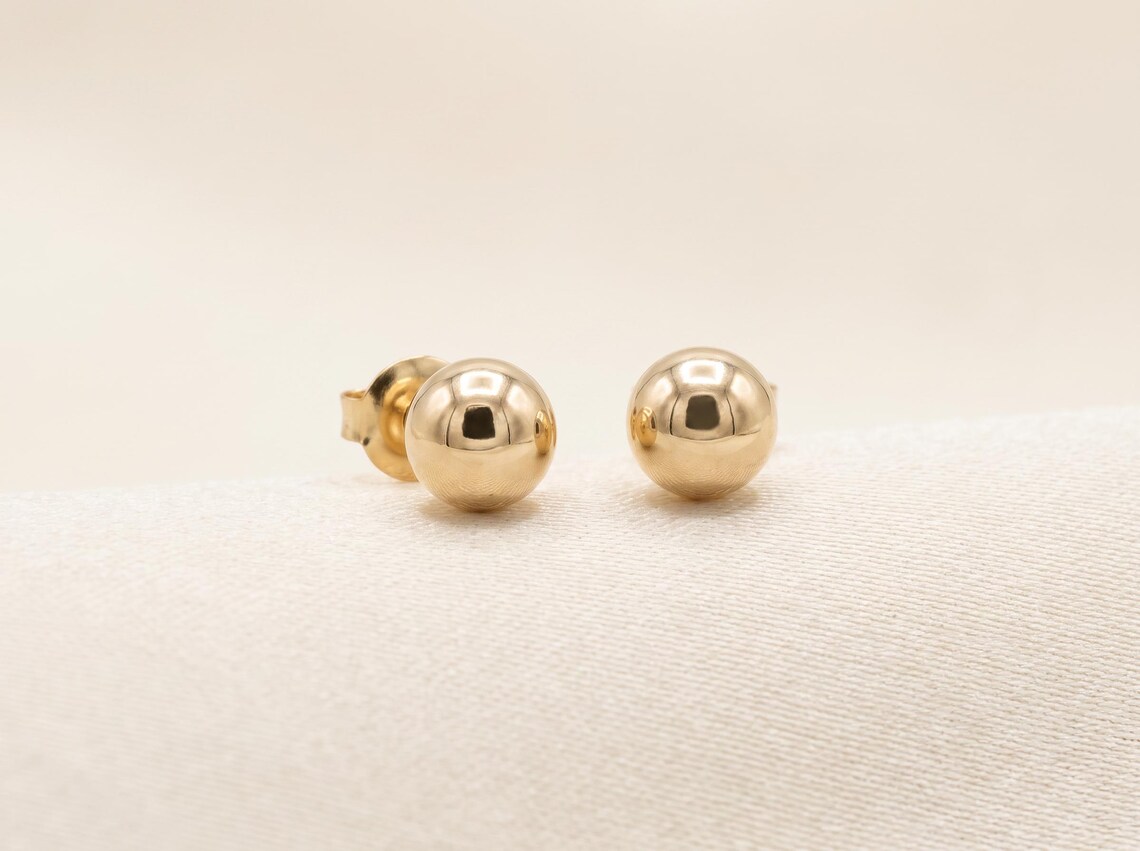
Earring backs are the small fittings that hold an earring in your ear, and the main types are push backs (butterfly backs), screw backs, locking backs, silicone backs and the built-in closures on hoops, such as hinged snaps and latch backs. For studs worn every day, a snug push back in solid gold works well for most people, while screw backs and locking backs give extra security for children and valuable pairs.
Choosing the right back affects comfort, security and how the earring sits on your lobe. Here is how each type works, what to watch for and how to stop the classic problem of finding one earring on the pillow.
The push back is the most familiar earring back. It is a small piece of metal with two curled wings that grip the post by friction. You slide it onto the post until it sits comfortably against the back of the lobe.
Tip: if a push back feels loose, gently squeeze the two curls a little closer together with your fingers. Do this in small steps, because too much pressure makes it hard to slide on.
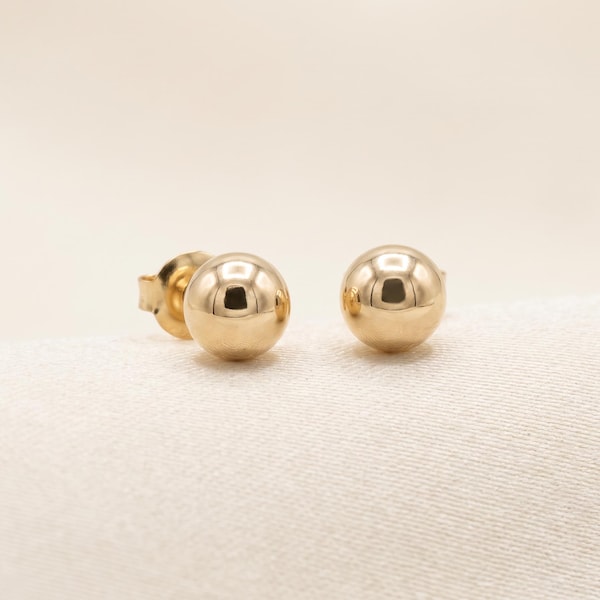 Ball Stud Earrings
View Ball Stud Earrings on Etsy
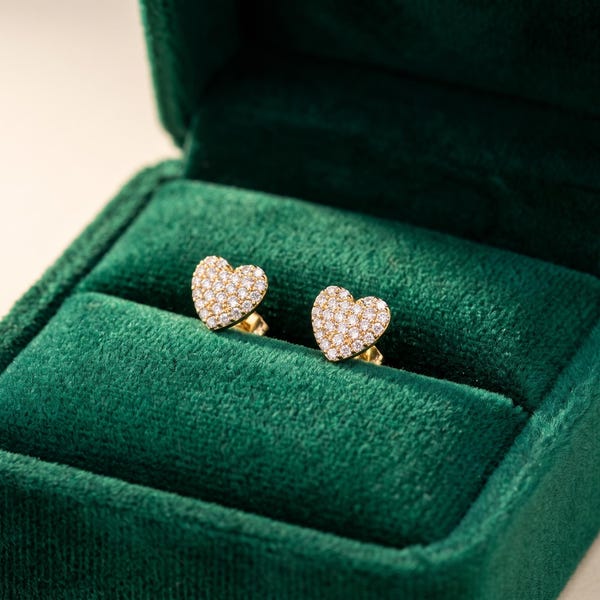 Pave CZ Heart Stud Earrings
View Pave CZ Heart Stud Earrings on Etsy
Screw backs thread onto a post that has a fine spiral groove cut into it. Because the back has to be twisted on and off, it cannot simply slide away.
For little ones, see our baby gold jewelry guide and the pieces in our kids collection.
Locking backs use a small mechanism, often a spring-loaded clutch with a button, that grips a post with a notch or groove. You press to release and let go to lock.
Silicone backs are small soft discs or bullets that grip the post. Some combine a metal back with a silicone pad, which adds grip and helps heavier earrings sit straight instead of drooping forward.
If you have sensitive skin, the metal touching your lobe matters. Our guide to gold jewelry for sensitive skin explains why solid gold posts and backs are often easier to tolerate.
Hoops usually have the closure built in, so there is no separate back to lose.
A hinged section of the hoop swings open and clicks into a slot on the other side. This is common on huggies and many tube hoops. It is secure, easy to use and keeps a clean outline.
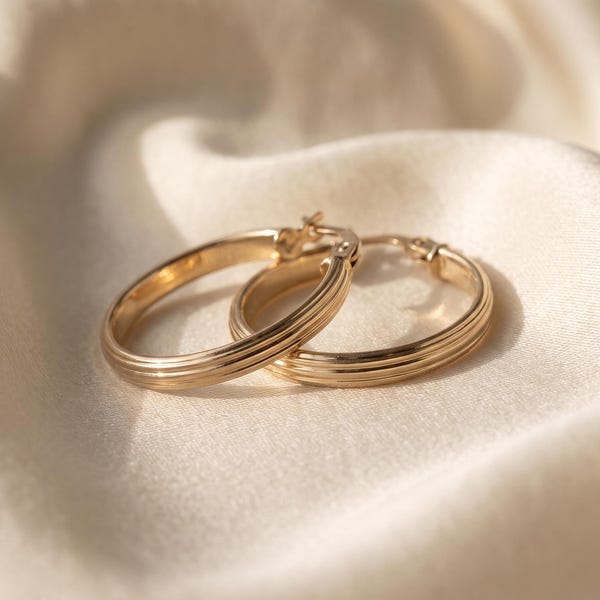 Hoop Earrings Thick Ribbed Tube Hoops
View Hoop Earrings Thick Ribbed Tube Hoops on Etsy
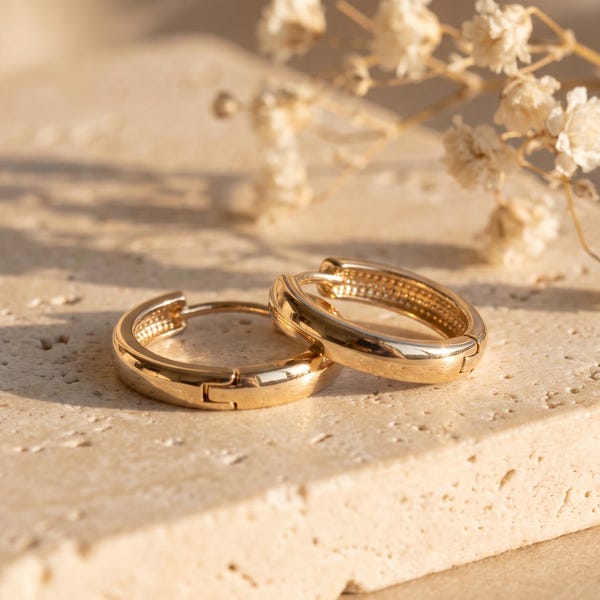 Huggie Hoop Earrings Thick Domed Band
View Huggie Hoop Earrings Thick Domed Band on Etsy
A wire or post on one end passes through the lobe and a hinged latch on the other end closes over it. Latch backs are popular on larger hoops and drop styles.
Sleeper hoops have a thin, smooth wire that tucks into the tube of the hoop, often with a hinge. They are made for wearing day and night with minimal snagging.
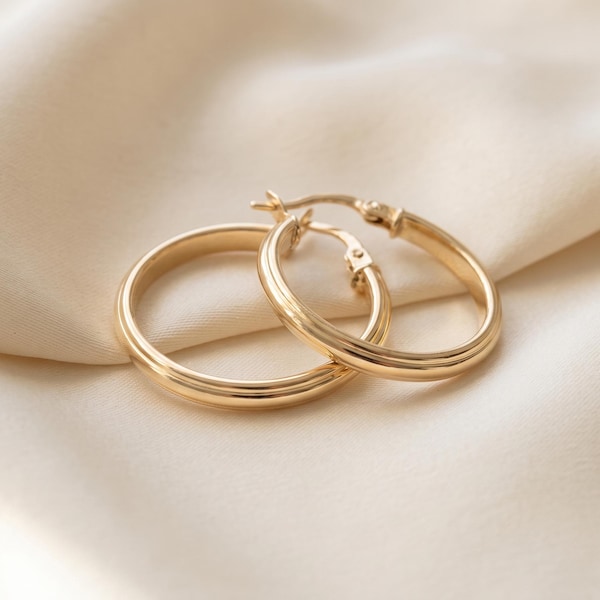 Tube Hoop Earrings
View Tube Hoop Earrings on Etsy
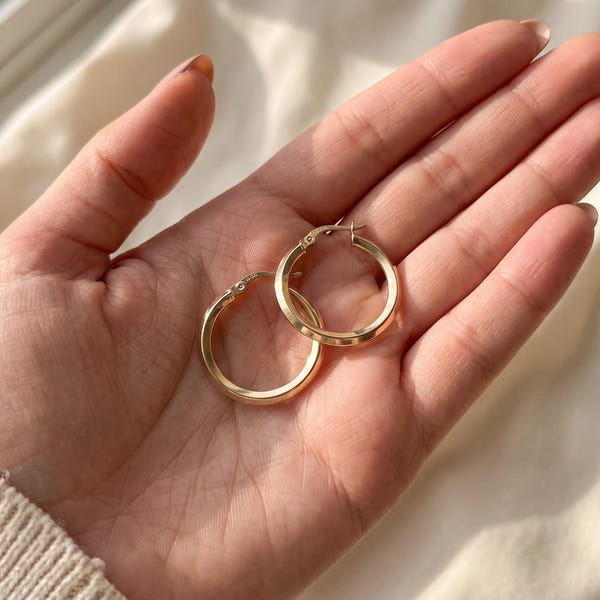 Sleeper Earrings Square Edge Hoops
View Sleeper Earrings Square Edge Hoops on Etsy
Drop earrings often hang from a curved hook. They are simple and comfortable but can slip out unless you add a small rubber or silicone stopper on the end. Learn more in our drop earrings guide.
| Back type | Security | Speed | Good for sleeping? | Best for |
|---|---|---|---|---|
| Push back | Moderate | Fast | Sometimes | Everyday studs |
| Screw back | High | Slow | Yes | Children, valuable studs |
| Locking back | High | Medium | Yes | Studs you cannot risk losing |
| Silicone back | Moderate | Fast | Yes, very comfortable | Spares, sensitive ears |
| Hinged snap (hoops) | High | Fast | Small hoops, yes | Huggies, everyday hoops |
| Hook wire | Low without stopper | Fast | No | Drop earrings |
Posts are not all the same thickness, so a back from one pair may not grip another. Ideally, use the backs that came with the earring, or ask a goldsmith to match a replacement to the post. On solid gold earrings, a solid gold back of the same karat keeps the color consistent and avoids reactions from base metals.
Heavier studs, like pearl clusters, benefit from a wider back or a back with a comfort pad, which spreads the weight across more of the lobe and keeps the face of the earring looking forward.
If you are planning several piercings, our ear stack guide and the stud and huggie earrings guide help you choose which closures suit each spot. You can browse all our gold earrings; each Etsy listing describes the closure used on that pair.
Screw backs and locking backs are the most secure because they cannot slide off the post by friction alone. For hoops, a hinged snap closure is very secure and leaves nothing loose to lose.
Yes. Gently press the two curled wings slightly closer together with your fingers, then test it on the post. Adjust in small steps, and replace the back if it no longer holds.
Not always. Screw backs need threaded posts and locking backs need notched posts, and post thickness varies. Using the backs supplied with the earring, or a matched replacement, is safest.
Small, smooth styles such as sleeper hoops, slim huggies and flat studs with secure backs are the most comfortable at night. Our guide on sleeping in gold jewelry covers the details.
It is best. A solid gold back matches the color and avoids skin reactions that base metal backs can cause, especially if you have sensitive ears.
Share:
Jewelry clasp types explained: lobster, spring ring, box, toggle and magnetic. Learn how each works, which is most secure and how to keep a clasp hea…
Why does gold turn skin black? Usually makeup or metal particles rub off tiny flecks, or sweat reacts with alloys. See the real causes and easy fixes.
Does gold jewelry scratch? Yes, but 14K is tougher than higher karats. Learn why scratches happen, which finishes hide them and how to prevent them.