Why Does Gold Turn Skin Black? The Real Causes and Easy Fixes
Why does gold turn skin black? Usually makeup or metal particles rub off tiny flecks, or sweat reacts with alloys. See the real causes and easy fixes.

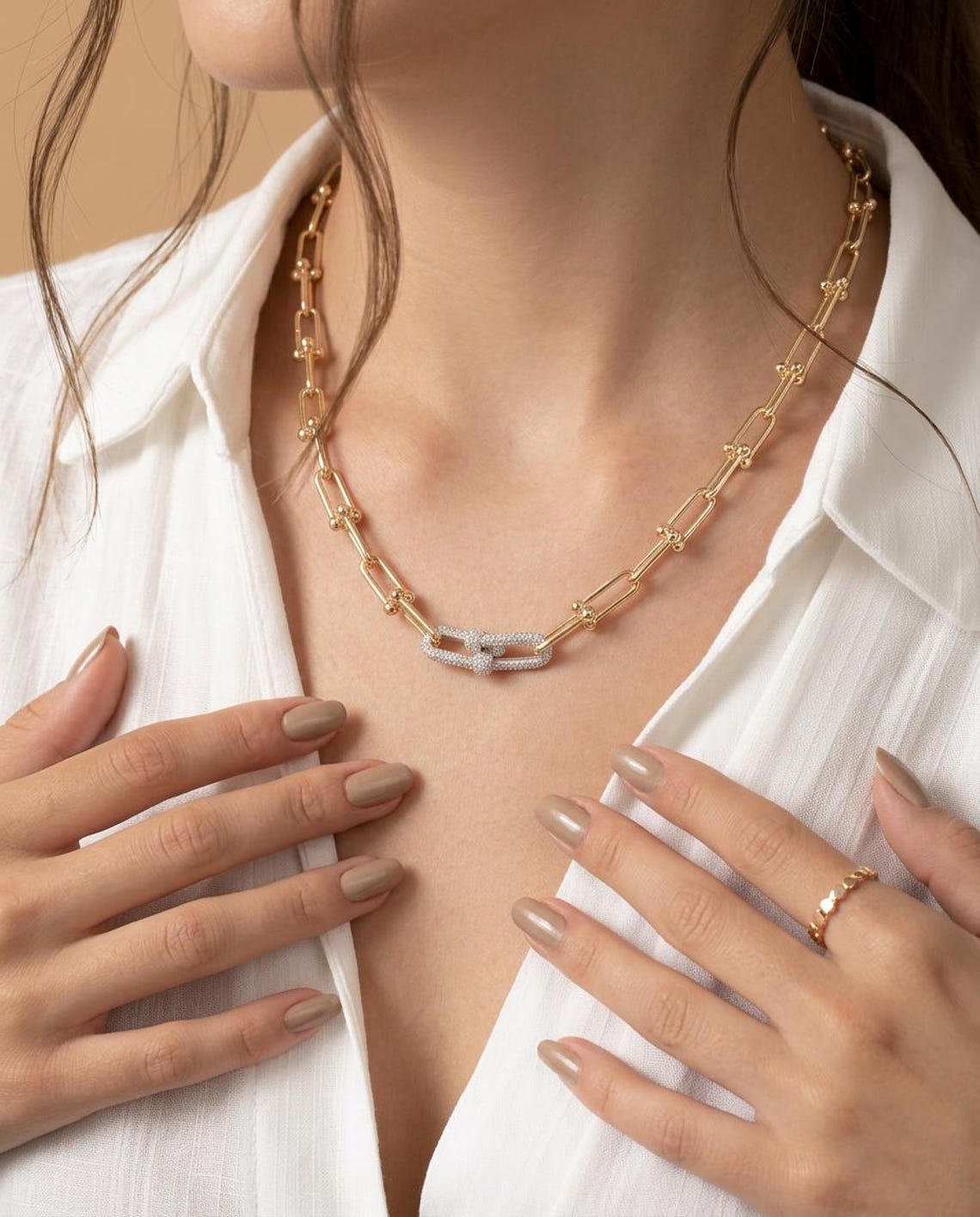
The five jewelry clasp types you will meet most often are the lobster clasp, the spring ring, the box clasp, the toggle and the magnetic clasp. For everyday gold chains, the lobster clasp is usually the most secure and easiest to use, while toggles and box clasps suit heavier bracelets and statement pieces.
A clasp is a small part with a big job. It takes the strain every time you put a piece on, take it off or catch it on a sweater. Below we explain how each type works, where it shines, where it struggles and how to keep it working for years. Each Etsy listing describes the closure on that particular piece, so check the listing when the clasp matters to you.
When a necklace or bracelet goes missing, the chain itself is rarely the culprit. Far more often, a clasp opened by accident, a jump ring stretched, or a worn spring stopped snapping shut. In our experience at the bench, a well-made clasp in solid gold, sized properly for the chain, prevents most of these losses.
Three things decide how well a clasp performs:
The lobster clasp is shaped a little like a lobster claw. You press a small lever with your fingernail, a hinged gate swings open, and a spring snaps it closed again when you let go. It is the most common clasp on modern gold chains, and for good reason.
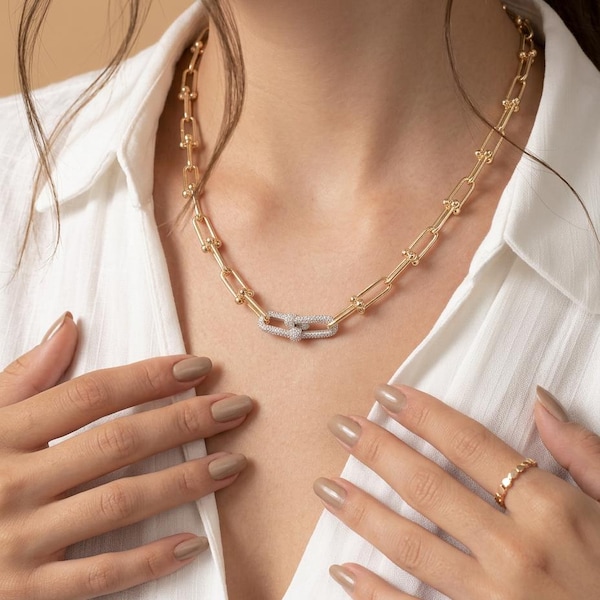
Carabiner-style clasps are a close cousin: a larger, often decorative clasp with a spring gate that can be worn at the front as a design feature, like the pave carabiner on this paperclip chain.
A spring ring is a small round ring with a tiny lever. Pull the lever back with a fingernail and a section of the ring slides open; release it and a spring pushes it closed. Spring rings have been used on fine chains for generations and are still common on very delicate necklaces.
If you love a fine chain with a spring ring but struggle with it, ask a goldsmith about swapping it for a small lobster clasp. It is a simple job.
A box clasp has two parts: a flat tongue that folds slightly and a hollow box it slides into. As the tongue enters, it compresses, then springs up and locks inside. You open it by pressing a small button or tab. Many box clasps add a safety latch, a figure-eight catch on the side that clips over a small post.
A toggle is a ring on one end and a bar on the other. You pass the bar through the ring and turn it sideways; the tension of the chain keeps the bar from slipping back through. Toggles are often worn as a visible design element at the front or side.
A magnetic clasp uses two magnets housed in metal caps. Bring them close and they pull together; pull them apart to open. Some designs add a mechanical catch so the magnet only does part of the work.
| Clasp | How it closes | Security | Ease of use | Best for |
|---|---|---|---|---|
| Lobster | Spring-loaded gate | High | Good | Everyday necklaces and bracelets |
| Spring ring | Spring-loaded sliding ring | Moderate | Fiddly | Very fine, light chains |
| Box | Tongue locks into box | High with safety latch | Good | Bracelets, heavier and multi-strand pieces |
| Toggle | Bar held by tension | Moderate, depends on fit | Very easy | Chunky, statement pieces |
| Magnetic | Magnet attraction | Lower unless backed by a catch | Easiest | Limited dexterity, light pieces |
Not every piece uses a classic clasp. Adjustable bracelets often use a sliding bead or a long chain with several rings so you can choose the fit. Hand chains connect a ring to a bracelet, and hoop earrings use their own closures, which we cover in our earring backs guide.
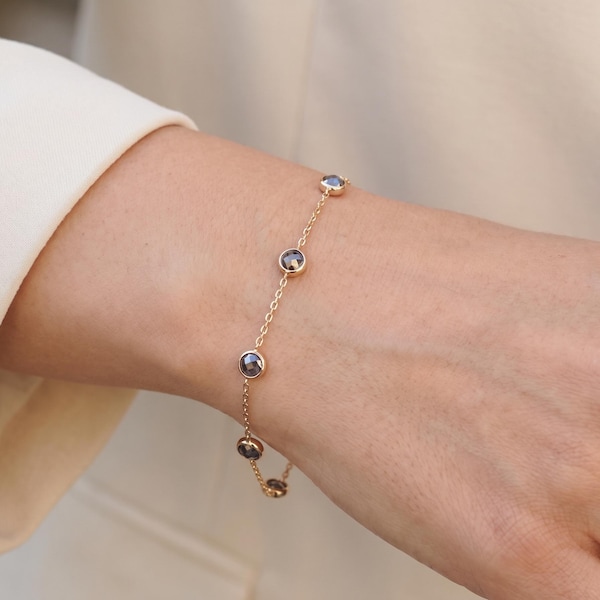 CZ Bezel Station Bracelet
View CZ Bezel Station Bracelet on Etsy
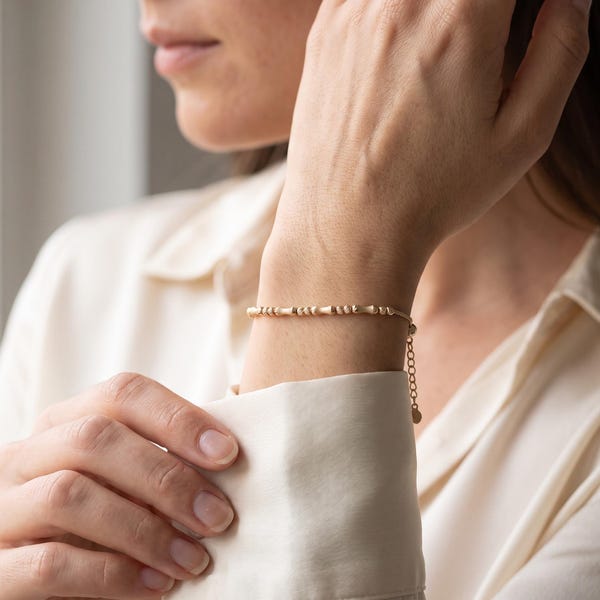 Mom Bracelet
View Mom Bracelet on Etsy
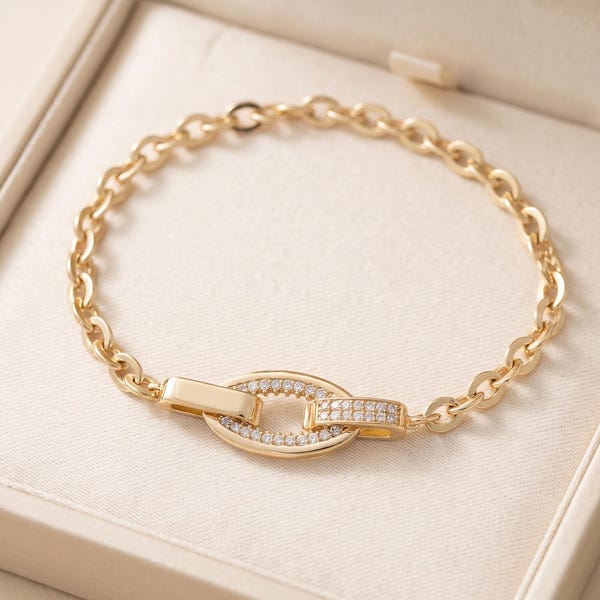
Some bracelets also carry a decorative clasp designed to be seen, which doubles as a place to hang charms.
If a clasp has already failed, do not wait. Our article on how to fix a broken gold chain explains what a goldsmith can do. Our lifetime guarantee on craftsmanship covers our own pieces, and you can message us on Etsy anytime. You can also browse our gold necklaces and gold bracelets to see the closures described on each listing.
For most everyday chains, a well-sized lobster clasp is the most secure option because its gate stays shut unless you press the lever. A box clasp with a safety latch is also very secure, especially on bracelets.
Yes. Clasps are attached with small jump rings, so a goldsmith can remove the old clasp and solder or fit a new one. On solid gold pieces, the replacement should be solid gold of the same karat.
Usually the clasp is heavier than the pendant side, or the chain is slightly too short. A lighter clasp, a heavier pendant or a little more length often fixes it, and our necklace length guide can help.
The magnet does not harm the gold, but a pure magnetic clasp can open if the chain catches. They are best for light pieces and for people who find mechanical clasps hard to use.
Look at the product photos and description on each Etsy listing. If anything is unclear, message us before you order and we will tell you exactly how that piece closes.
Share:
Why does gold turn skin black? Usually makeup or metal particles rub off tiny flecks, or sweat reacts with alloys. See the real causes and easy fixes.
Does gold jewelry scratch? Yes, but 14K is tougher than higher karats. Learn why scratches happen, which finishes hide them and how to prevent them.
Does perfume damage gold jewelry? Solid 14K gold holds up, but perfume dulls shine and harms pearls and some stones. Learn the safe order and simple…