Does Gold Jewelry Scratch? Why It Happens and How to Prevent It
Does gold jewelry scratch? Yes, but 14K is tougher than higher karats. Learn why scratches happen, which finishes hide them and how to prevent them.


Gold turns skin black mainly because of abrasion: harder particles in makeup, sunscreen or powder rub off microscopic flecks of metal, which look black on the skin. Sweat and chemicals can also react with the copper and silver in gold alloys, leaving a dark mark. It happens with real gold too and is usually harmless and easy to fix.
Many people assume black marks mean their gold is fake. That is not necessarily so. Below we explain each cause, who is more likely to notice it and the simple steps that stop it.
This is the most common cause. Many cosmetics contain fine mineral powders such as zinc oxide and titanium dioxide, which are found in foundations, powders and many sunscreens. These particles are harder than gold alloys. When a ring, chain or earring rubs against skin coated with them, the particles act like a very fine abrasive and wear off tiny metal flecks.
Metal particles that small do not look gold. They scatter light differently and appear as a black or gray smudge. This is why black marks often show up on the neck, under earrings or on fingers after applying foundation or sunscreen.
The process is called abrasion, and it has been well understood by jewelers for a long time. It explains why the same piece can leave a mark one day and not the next.
Sweat contains salts, fatty acids and other compounds. In some people, or in hot and humid weather, sweat can react with the base metals in gold alloys, mainly copper and silver, producing dark compounds that rub onto the skin.
Pure gold does not react this way. It is the other metals in the alloy that can, which is why lower karats are a little more likely to cause marks than higher karats.
Fine metal dust from other jewelry, watches, keys or work environments can also collect on skin and between the jewelry and the body. When pieces rub together, such as stacked bracelets or layered chains, they shed particles too. Combined with sweat or lotion, this residue forms a gray film.
Chlorine, household cleaners and some hair products can react with the alloy metals and leave a dark film on the jewelry, which then transfers to the skin. Our guides to swimming with gold and perfume and gold jewelry look at these exposures in more detail.
| Cause | Where you notice it | Fix |
|---|---|---|
| Makeup or sunscreen abrasion | Neck, ears, fingers after applying products | Apply products first, let them dry; clean skin under jewelry |
| Sweat reacting with alloy | Under rings and bracelets, in hot weather | Clean and dry jewelry regularly; remove for exercise |
| Metal particles | Wrists with stacked pieces | Clean jewelry and skin; space out stacked pieces |
| Chemical residue | After swimming or cleaning | Remove jewelry first; wash it in soapy water |
Not on its own. Real solid gold can leave a black mark through abrasion and alloy reactions. Plated and costume jewelry can also cause discoloration, often green, as the base metal reacts once the plating wears thin. A green mark is more typical of copper-heavy base metals, while black marks are common with real gold alloys and makeup.
To check what you have, look for a karat stamp such as 585 or 14K, and read our guide on how to tell if gold is real. If you want to know what the stamp means, see what 585 means on gold.
For most people, the black mark is a cosmetic nuisance and washes off with soap and water. If you notice itching, redness or a rash under jewelry, that is a different issue, possibly a sensitivity to one of the alloy metals. Our guide to gold jewelry for sensitive skin covers what to look for, and a doctor can advise if irritation continues.
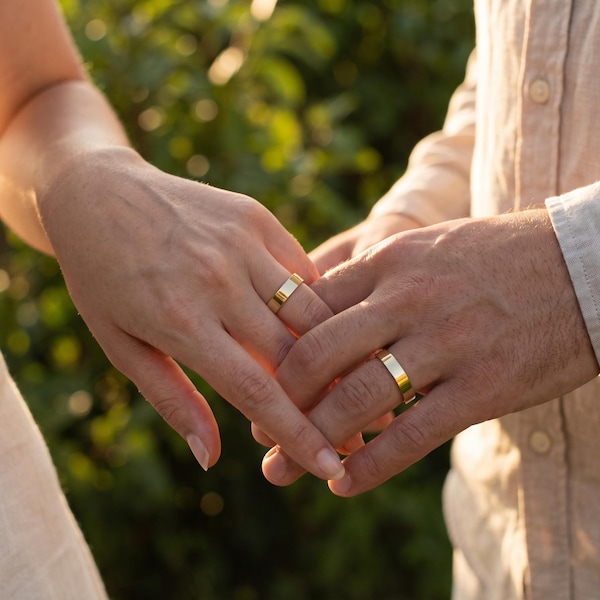 Flat Wedding Band Polished Ring for Him and Her
View Flat Wedding Band Polished Ring for Him and Her on Etsy
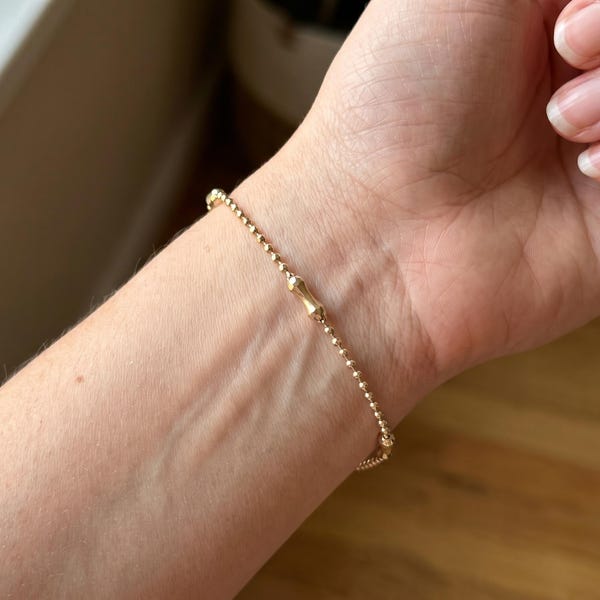 Diamond-Cut Ball Chain Bracelet
View Diamond-Cut Ball Chain Bracelet on Etsy
Rings and bracelets, like a flat polished band or a diamond-cut ball chain bracelet, sit where sweat and hand cream collect, so they benefit most from regular washing.
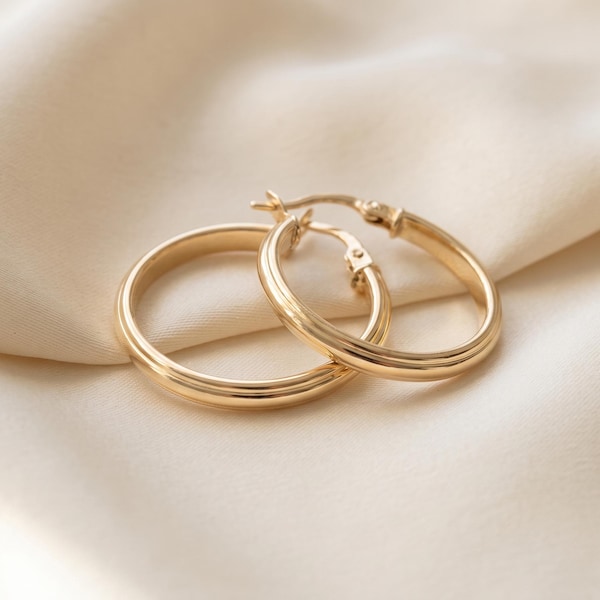
Earrings sit where foundation, powder and hair products meet, so they often show abrasion marks on the earlobe. Wipe the lobe clean before putting earrings in, and clean posts and hoops regularly. Smooth, seamless hoops collect less residue than detailed ones.
Simple tube sleeper hoops like these are easy to wipe clean. For more on earring care and styles, read our earring backs guide, and browse our gold earrings.
Solid 14K gold may occasionally leave a mark, but it will not peel, flake or turn your skin green the way plated costume jewelry often does once the plating wears away. The gold is the same all the way through, so cleaning restores it fully. That is why every piece we make is solid 14K gold, stamped 585, and why we explain these quirks openly rather than pretending they never happen.
Usually because makeup, sunscreen or powder rubs off tiny metal particles, or because sweat reacts with the copper and silver in the alloy. It is common with real gold.
No. Real gold can cause black marks. Check for a karat stamp such as 585 or 14K and buy from a seller who states the metal clearly.
Apply makeup and sunscreen first and let them dry, wipe your neck before putting the necklace on, and clean the chain regularly in warm soapy water.
Yes, slightly. Higher karat gold has fewer alloy metals that can react with sweat, although abrasion from makeup can still occur.
For most people it is cosmetic and washes off. If you have itching or a rash, that may be a metal sensitivity and is worth checking with a doctor.
Share:
Does gold jewelry scratch? Yes, but 14K is tougher than higher karats. Learn why scratches happen, which finishes hide them and how to prevent them.
Does perfume damage gold jewelry? Solid 14K gold holds up, but perfume dulls shine and harms pearls and some stones. Learn the safe order and simple…
How to clean cubic zirconia jewelry at home: a gentle soap-and-brush method, what makes CZ cloudy, what to avoid, and how to keep pave settings secur…