Yellow vs White vs Rose Gold Guide: How 14K Colors and Two-Tone Differ
Yellow, white and rose gold guide: how 14K alloys create each color, what rhodium on white gold really is, choosing by preference, and caring for two…

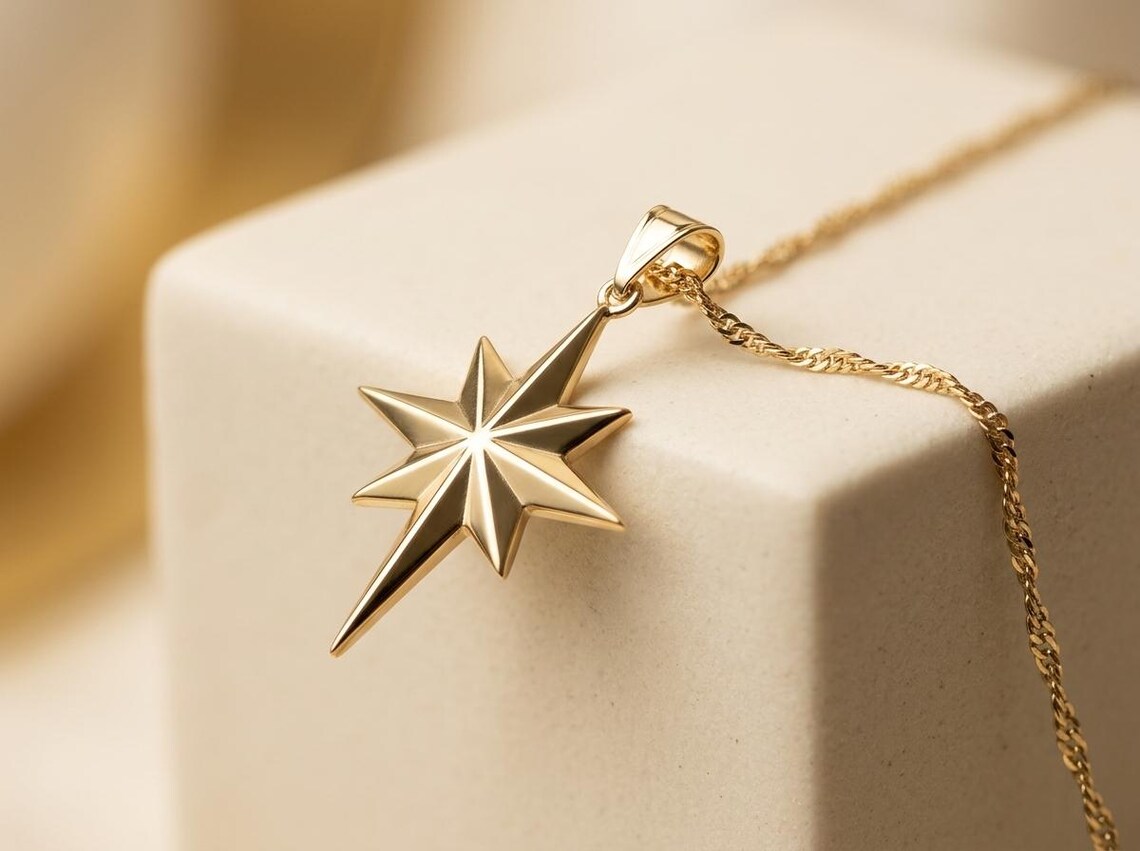
To choose a gold pendant necklace, decide first what the pendant means to you, then match its size to your frame and neckline, check that the bail fits the chain, and pair it with a chain strong enough to carry its weight. A small pendant on a fine chain suits daily wear, while a larger or stone-set pendant needs a sturdier chain and a length that lets it sit where you want it.
A pendant is often the most personal piece someone owns: an initial, a faith symbol, a birthstone or a charm from a meaningful trip. In this guide our goldsmiths explain the practical side, size, bail and chain, so the piece you choose is comfortable and lasts. Every pendant we make is solid 14K gold stamped 585.
Most people choose a pendant because of what it represents. Common themes include:
We have separate articles on many of these, for example the North Star necklace meaning and our gemstone meanings guide. The meanings come from tradition and folklore, and part of the pleasure of a pendant is the story you attach to it yourself.
Size changes how a pendant reads. A small pendant is a quiet detail that works with almost anything. A medium pendant becomes the focus of an outfit. A large pendant is a statement and usually wants a simple neckline around it.
| Pendant size | Best for | Chain to pair with |
|---|---|---|
| Small and dainty | Daily wear, layering, sleep-friendly styles | Fine cable or rolo chain |
| Medium | A single focal piece, work and evening | Cable, rolo or fine wheat chain |
| Large or stone-set | Statement wear, open necklines | Sturdier wheat, figaro or rope chain |
Think about your frame too. A very small pendant can disappear on a broad chest, and a large one can overwhelm a petite frame. If you can, hold a coin of similar size against your collarbone to get a feel for scale before ordering.
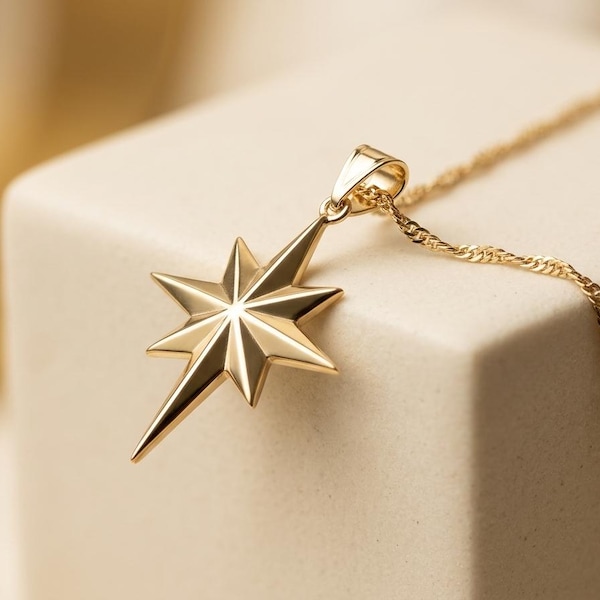 North Star Necklace
View North Star Necklace on Etsy
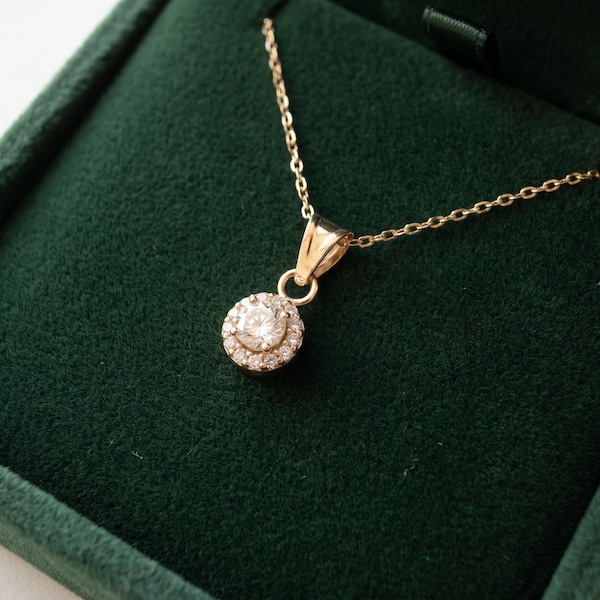 Halo Pendant Necklace
View Halo Pendant Necklace on Etsy
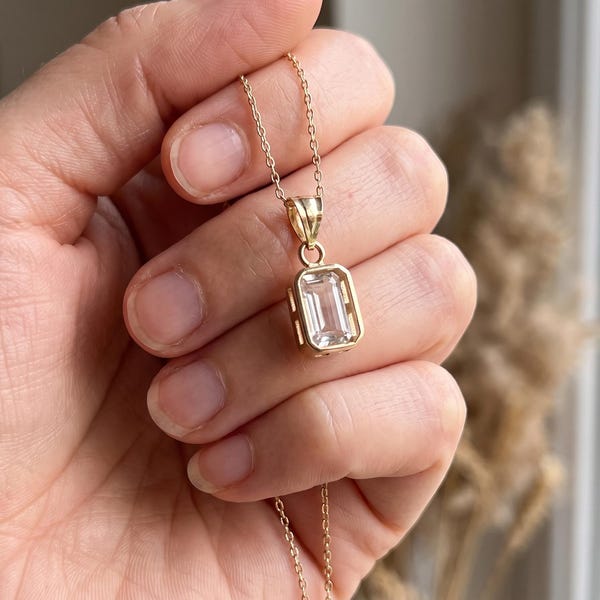 Emerald Cut Solitaire Pendant Necklace
View Emerald Cut Solitaire Pendant Necklace on Etsy
The neckline of what you wear most often is a useful guide. Crew necks and high collars suit a pendant that sits just above the fabric or a longer chain that falls over it. V-necks look balanced with a pendant that echoes the point of the V. Open collars and scoop necks give the most room, so this is where larger or stone-set pendants look their best.
Shape plays a part too. Round and oval pendants soften angular necklines, while vertical shapes such as bars, crosses and teardrops draw the eye down and make the neck look longer. Geometric pendants with straight edges feel modern and sit well with tailored clothes.
The bail is the loop or tube at the top of the pendant that the chain passes through. It is easy to overlook, but it decides which chains will fit and how the pendant hangs.
Before moving a pendant to a different chain, check that the chain's clasp, and any thicker links near the clasp, can pass through the bail. A chunky chain will not fit a small bail, and forcing it can bend the gold. If a pendant tends to flip over, a bail that sits slightly higher or a chain with flatter links often helps.
The chain carries the pendant all day, so match its strength to the pendant's size. A delicate cable chain is perfect for a small charm, while a heavier stone-set pendant is better supported by a sturdier link. Our gold chain types guide explains cable, rolo, wheat, figaro and rope chains in detail.
Length matters just as much. A pendant at the base of the throat feels neat and modern. One that falls just below the collarbone works with most necklines. Longer lengths suit high necklines and layering. Our necklace length guide shows where each length sits.
If a pendant is listed with a chain, the listing tells you which chain and length it comes with. If you want a spare chain for a pendant you already own, our cable chain necklace comes in several lengths from 35 to 45 cm.
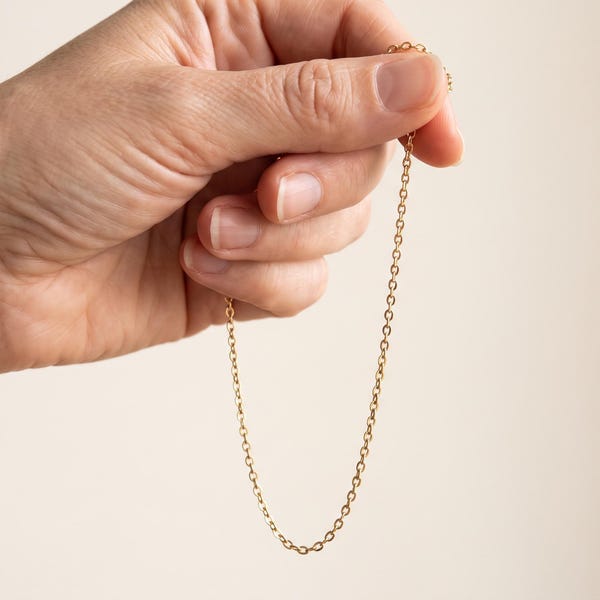 Cable Chain Necklace
View Cable Chain Necklace on Etsy
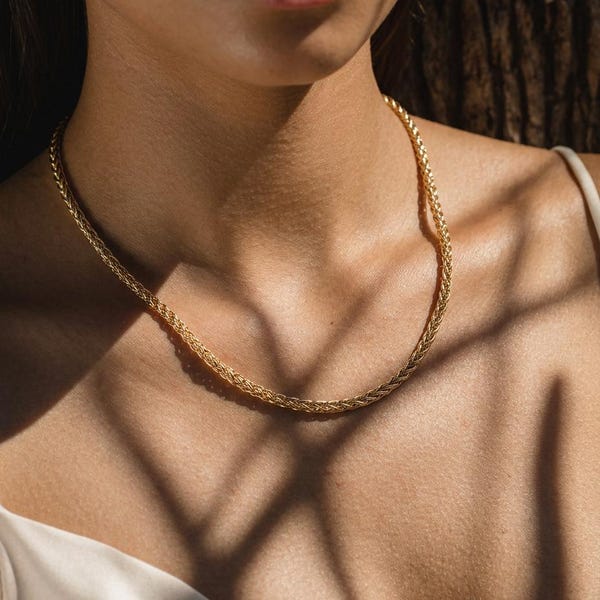 Wheat Chain Necklace
View Wheat Chain Necklace on Etsy
Stone pendants bring color. Most of our stone-set pendants use cubic zirconia, clearly named on each listing. A few use natural stones, such as our 21.5ct cushion-cut blue topaz and our 10ct natural amethyst teardrop, and those listings say so.
Natural stones also vary slightly from piece to piece in color and inclusions, which many people love because no two are exactly alike. CZ, by contrast, is consistent and very bright. Neither is better in every case; it depends on whether you value natural character or uniform sparkle.
Larger stones sit a little heavier and project further from the chest, so they suit a sturdier chain and a length that keeps them from swinging into things. Take stone pendants off for the gym and housework, and store them so the stone cannot scratch other pieces.
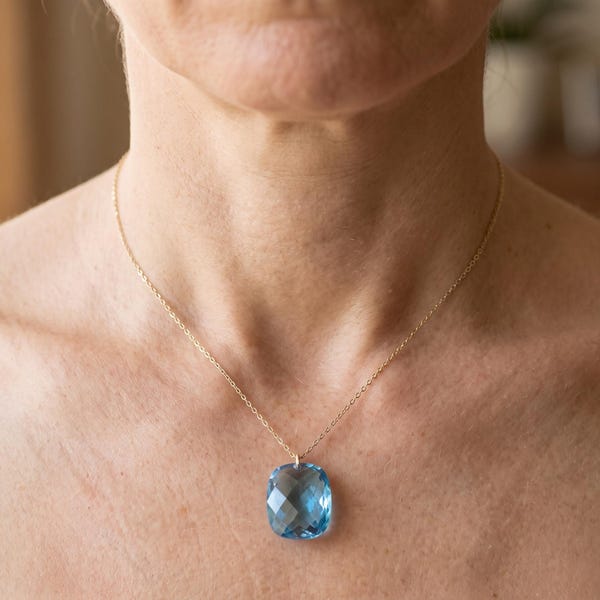 Blue Topaz Necklace
View Blue Topaz Necklace on Etsy
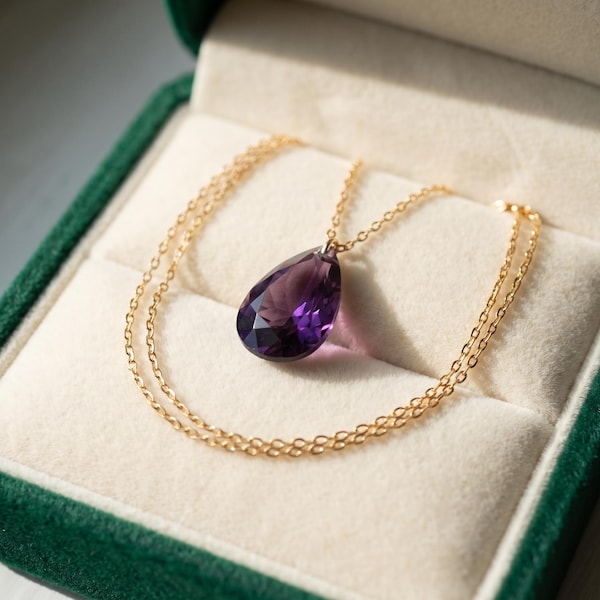 Amethyst Necklace
View Amethyst Necklace on Etsy
A pendant you wear daily should be comfortable enough to forget. Choose a smooth back that will not catch on clothes, a clasp you can open yourself, and a chain strong enough that a tug from a scarf will not snap it. Solid gold will not turn your skin green or flake, but chains still benefit from a gentle clean now and then. If you love minimal pieces, our dainty gold necklace guide covers fine everyday necklaces in more depth.
You can browse all our gold pendant necklaces or the natural stone pieces on their own.
A small to medium pendant on a fine but well-made chain is the most comfortable for daily wear. It sits flat, layers easily and rarely catches on clothing.
Usually yes, as long as the clasp and links pass through the bail without force. Choose a chain at least as strong as the pendant needs.
The bail is the loop or tube at the top of a pendant that the chain passes through. Its size limits which chains will fit.
Pendants flip when the bail lets them rotate or the chain twists. A flatter chain, a fixed bail or a slightly shorter length usually helps.
Most of our pendants use cubic zirconia and say so. Pieces with natural stones, such as amethyst or blue topaz, state that clearly in the listing.
Share:
Yellow, white and rose gold guide: how 14K alloys create each color, what rhodium on white gold really is, choosing by preference, and caring for two…
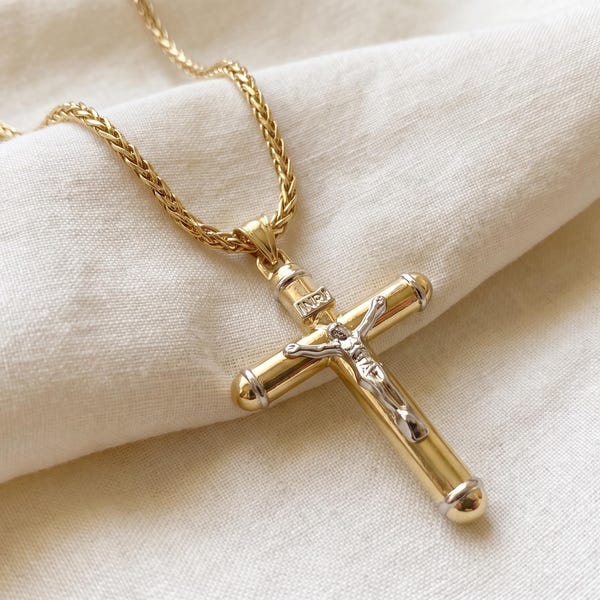
Gold cross necklace guide: the difference between a cross and a crucifix, what INRI means, choosing size and chain, two-tone styles and sacrament gif…
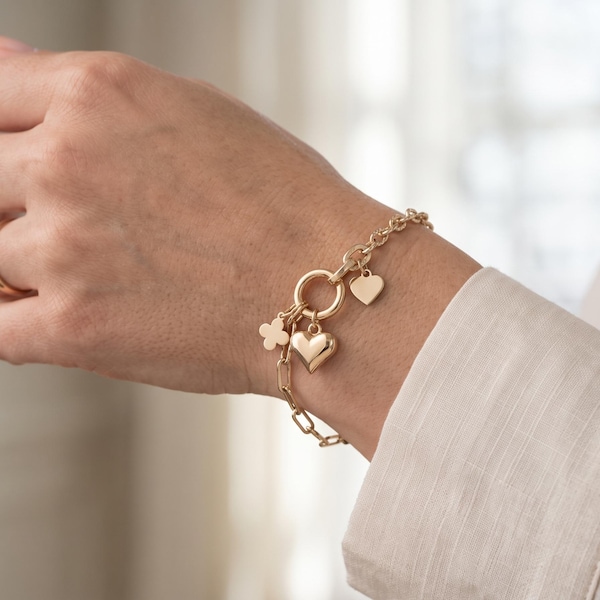
Gold charm bracelet guide: what heart, clover, star, butterfly and nazar charms traditionally mean, how to choose chain and fit, and how to care for…