Can You Swim with Gold Jewelry? Chlorine, Salt Water and Sunscreen
Can you swim with gold jewelry? What chlorine, salt water and sunscreen do to 14K gold, why rings get lost, and how to clean pieces after a swim.

To polish gold jewelry at home, first clean it in warm soapy water, dry it fully, then rub it gently with a jewelry polishing cloth made for gold, using light, straight strokes. That simple routine brings back shine on solid 14K gold without removing metal or harming stones.
Polishing and cleaning are not the same thing. Cleaning removes dirt and oils; polishing smooths the surface so it reflects light again. Below we explain how to do both properly, what to avoid, and when a professional polish from a goldsmith makes more sense.
Most dull gold is simply dirty. Skin oils, lotion, soap film and dust form a thin layer that hides the shine. Washing removes that layer, and many pieces look new again after a clean alone. Our step-by-step guide to cleaning gold jewelry at home covers this in detail.
Polishing goes one step further. It works on fine surface scratches and restores a mirror finish. Because any true polishing removes a tiny amount of metal, it should be done gently and not too often.
| Cleaning | Polishing | |
|---|---|---|
| What it removes | Oils, dirt, product film | Very fine surface scratches and haze |
| Tools | Warm water, mild soap, soft brush | Polishing cloth, or a goldsmith's wheel |
| Removes metal? | No | A tiny amount |
| How often | Every few weeks | Every few months at home; rarely by a goldsmith |
Polishing cloths usually have an inner layer treated with a fine polishing compound and an outer layer for buffing. Keep one just for gold, because a cloth used on silver picks up tarnish that can transfer.
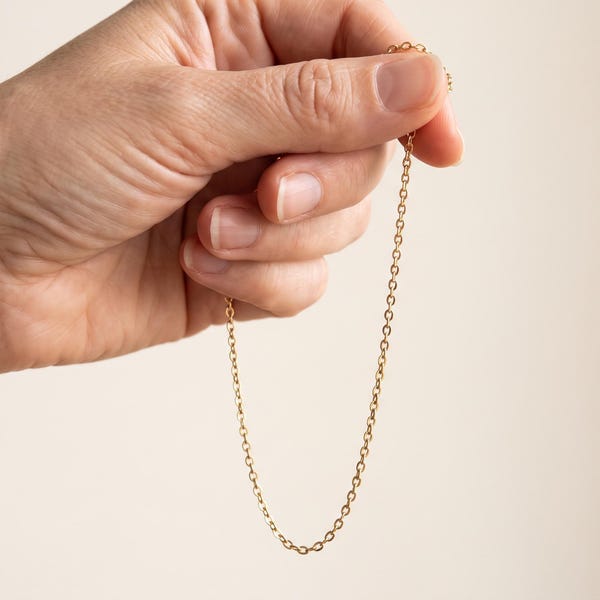
On chains, pinch the cloth around the chain and draw it through slowly. Do not pull hard, as fine chains can kink.
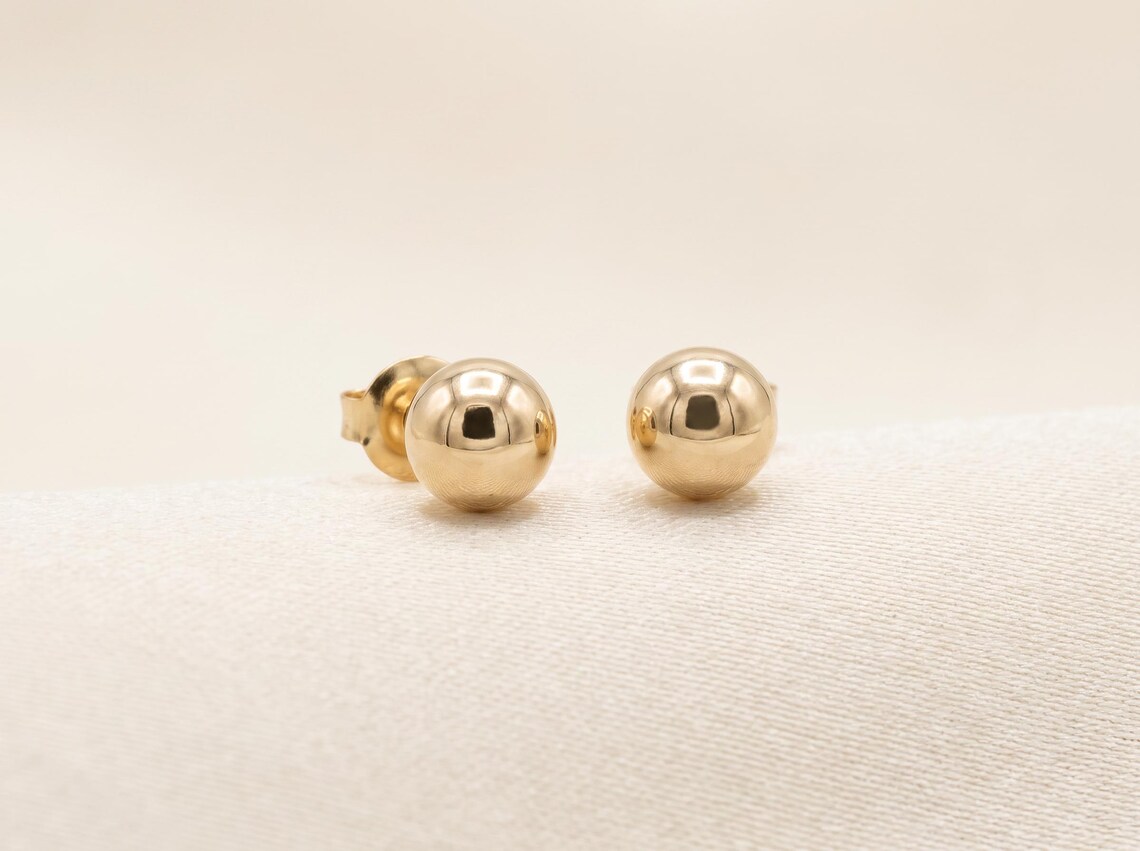
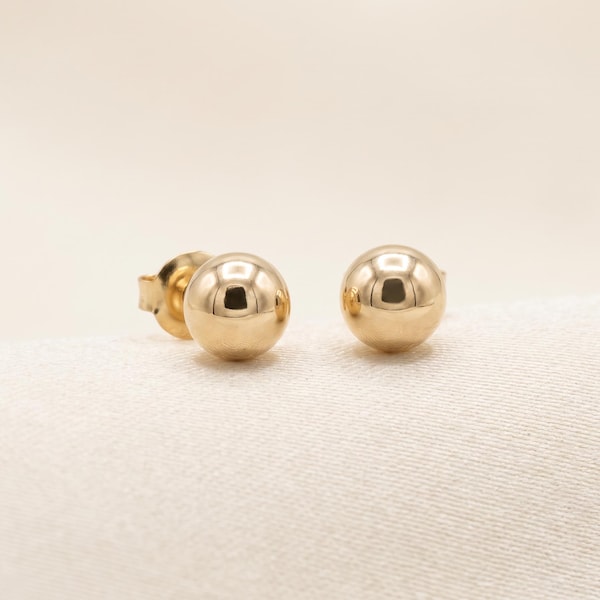 Ball Stud Earrings
View Ball Stud Earrings on Etsy
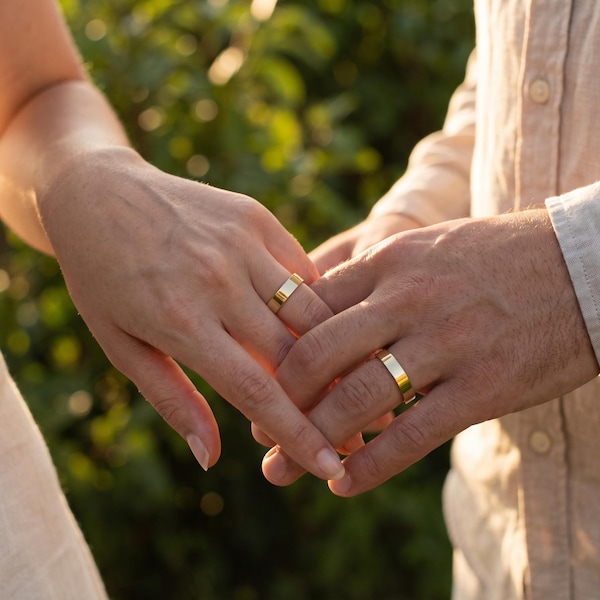 Flat Wedding Band Polished Ring for Him and Her
View Flat Wedding Band Polished Ring for Him and Her on Etsy
Plain, high-polish pieces like our dome ball studs and flat wedding bands respond best to a cloth, because their smooth surfaces show every bit of restored shine.
Diamond-cut gold has small faceted cuts that sparkle; brushed or matte finishes are deliberately soft. Heavy polishing can round the facet edges or turn a matte surface shiny. Clean these pieces with soap and a brush and use the cloth only lightly. Our guide to diamond-cut gold jewelry explains why the finish matters.
Polishing compound can collect around tiny stones and dull them. Polish the metal around the stones, then brush the setting with soapy water to clear any residue. Avoid snagging the cloth on prongs.
Many white gold pieces have a bright white surface finish. Gentle polishing is fine, but frequent or aggressive rubbing can wear it over time. See our white gold jewelry guide for more.
Never use a treated polishing cloth on pearls or enamel. Wipe them with a soft damp cloth only.
After a wash, look at the piece under a bright lamp. If it shines evenly, it only needed cleaning. If you see a soft haze of very fine lines, mostly on the flat or curved surfaces that touch desks, door handles and other rings, a cloth polish will help. If you can feel a scratch with a fingernail or see small dents, a cloth will not reach it, and that is the point where a goldsmith's polish makes sense. Rings and bracelets show wear first because they take the most knocks; earrings and pendants often go years without needing more than a wash.
A cloth will not remove deeper scratches, dents or heavy wear on a ring that has been worn every day for years. A goldsmith uses polishing wheels and graded compounds to restore the surface, which removes a small amount of metal under control. In workshops like ours, a professional polish is usually paired with a check of clasps, prongs and solder joints, so it doubles as a safety inspection.
Because each professional polish removes a little gold, it is best kept to every few years for most pieces. You can read about the process in how jewelry is polished. Our pieces carry a lifetime guarantee on craftsmanship, so if a clasp or setting shows a problem, message Şerif directly.
A few habits reduce how often you need to polish at all:
Solid 14K gold does not peel or wear through the way plated jewelry does, so polishing reveals more gold rather than a base metal underneath. Browse plain polished styles in our ring collection.
A two-part jewelry polishing cloth made for gold, used after a gentle wash in warm soapy water, is the safest choice for home polishing.
We advise against it. Toothpaste is abrasive and can leave fine scratches, especially on high-polish surfaces.
Light polishing with a cloth every few months is plenty. A professional polish is best kept to every few years because it removes a little metal.
Only lightly. Heavy polishing can round off facets or change a matte finish, so clean these pieces with soap and a soft brush instead.
Cleaning does not, but true polishing removes a very small amount of metal, which is why gentle methods and occasional professional polishing are best.
Share:
Can you swim with gold jewelry? What chlorine, salt water and sunscreen do to 14K gold, why rings get lost, and how to clean pieces after a swim.
How to fix a broken gold chain: spot a jump ring, clasp or link break, learn what is safe at home, why glue fails, and when a jeweler is the right ca…
How to untangle a gold chain without breaking it: the two-pin method, when to use oil or cornstarch, which chains knot most, and how to stop tangles…