
Moon Jewelry Meaning: Crescents, Phases and Celestial Symbolism
Moon jewelry meaning explained: what crescent and full moons symbolize, moon phases, the Turkish crescent and star, and how to pair moon pieces with…

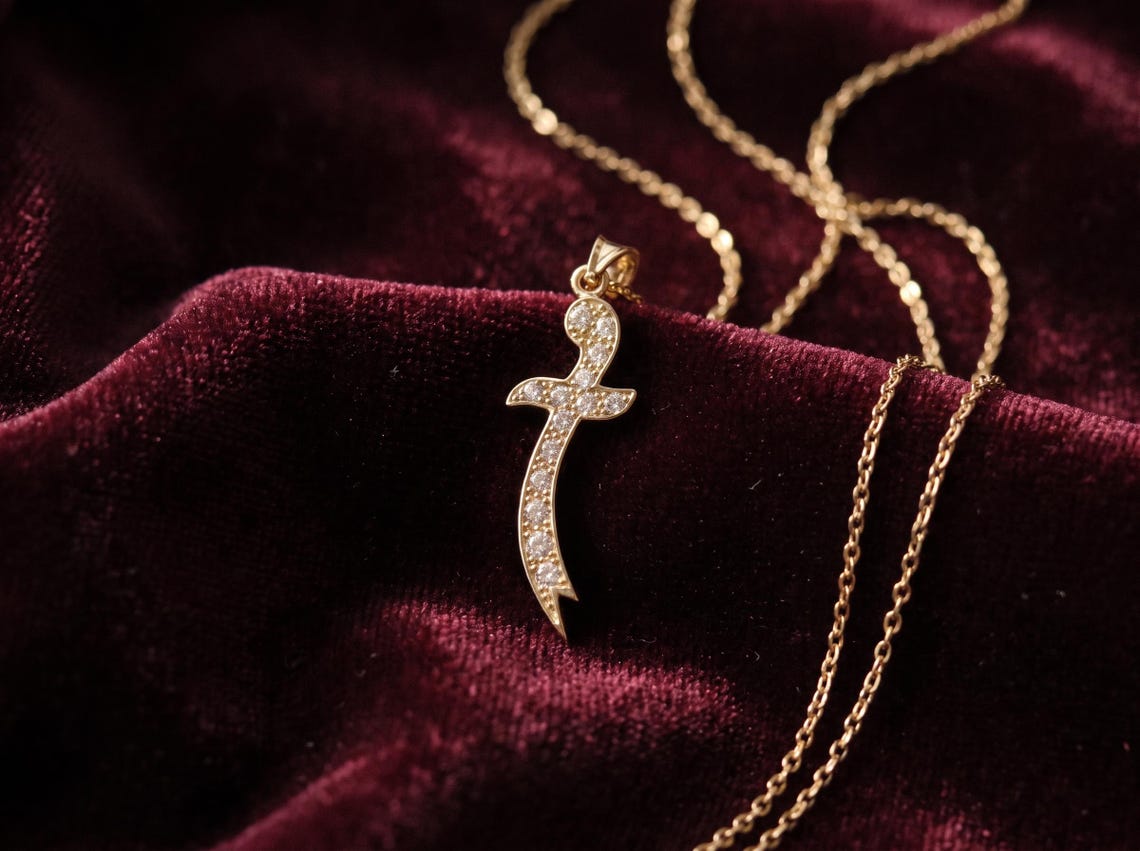
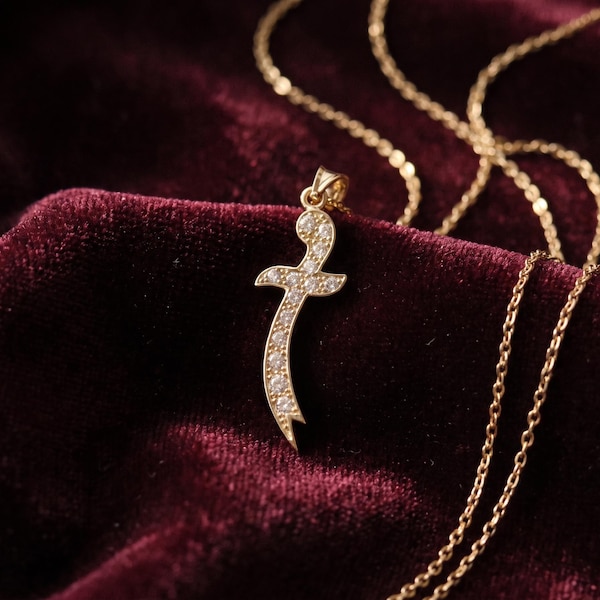
A sword necklace usually stands for courage, protection, justice and the strength to defend what you love. In Turkey and across the Muslim world, the best-known sword pendant is the Zulfiqar, the double-pointed sword traditionally associated with Ali ibn Abi Talib, and many people wear it as a sign of faith, devotion and resolve.
In our Grand Bazaar atelier the Zulfiqar is one of the symbols customers ask about most, often with a personal story attached. This guide covers what swords have meant in jewelry over the centuries, the history of the Zulfiqar told plainly, and what to look for if you want a sword pendant in solid gold.
Swords appear in the art of almost every culture, so their meaning shifts with context. A few ideas come up again and again:
As with any symbol, the meaning is what the wearer brings to it. We describe these as traditions and associations, not as powers a piece of jewelry has.
The Zulfiqar (also written Dhu al-Fiqar or Zülfikar in Turkish) is the sword that Islamic tradition associates with Ali ibn Abi Talib, the cousin and son-in-law of the Prophet Muhammad and the fourth caliph. According to widely told accounts, the Prophet gave the sword to Ali, and it is linked with the Battle of Uhud in the early years of Islam.
The origin of the name is discussed by scholars. It is often connected to an Arabic word for vertebrae or notches, which may describe grooves along the blade. In art, the Zulfiqar is most often drawn with a split, two-pointed tip, and that forked blade is what makes a Zulfiqar pendant instantly recognizable.
A well-known Arabic saying links the sword and its bearer: "There is no hero but Ali, and no sword but Zulfiqar." The phrase appears in calligraphy and on objects across many centuries.
The Zulfiqar is honored across Islamic traditions and holds special importance in Shia Islam and, in Turkey, among Alevi and Bektashi communities, where Ali is deeply revered. The forked sword also appeared on Ottoman military banners. Today, in Turkey, people wear the Zulfiqar for many reasons: as an expression of faith, as a symbol of courage and justice, or as a link to family and heritage.
Because it is a religious symbol for many, we encourage respect when wearing or gifting it. If you are buying it for someone else, it is worth knowing what it means to them.
| Symbol | Main associations | Typical design |
|---|---|---|
| Zulfiqar | Faith, devotion to Ali, courage, justice | Forked, two-pointed blade |
| Straight sword or dagger | Strength, protection, determination | Single point, cross guard |
| Sword with scales | Justice, fairness, the law | Blade paired with balance scales |
| Archangel's sword | Protection in Christian tradition | Often shown with wings or a figure |
| Crossed swords | Military service, honor | Two blades crossing in an X |
We make the Zulfiqar in solid 14K gold, stamped 585, in two styles. One has pave stones set along the blade for sparkle. The other comes plain or pave set, so you can choose a cleaner polished look if you prefer.
The stones in our pave sword pendants are cubic zirconia, and each listing says so clearly. A plain polished sword reads as more understated and suits daily wear; the pave version catches more light and suits someone who likes a little shine. You can see the full range of pendants in our gold necklaces.
We see sword pendants chosen for many occasions:
Sword pendants are worn by men and women alike. A medium pendant on a sturdy chain works well for men, while a smaller pendant on a fine chain sits nicely for women. Our necklace length guide will help you decide where the pendant should fall.
Many customers layer the sword with other meaningful symbols. Popular pairings include the crescent and star, which we cover in our guide to the crescent moon and star meaning, and the nazar, explained in our Turkish evil eye guide. If you are drawn to symbols of guidance and protection more broadly, the compass necklace is a natural companion.
 Crescent Moon Star Necklace
View Crescent Moon Star Necklace on Etsy
 Evil Eye Necklace
View Evil Eye Necklace on Etsy
When layering, give each pendant its own length, about 5 cm apart, so the shapes do not tangle or overlap.
The pointed tips of a sword pendant can catch on knitwear, so take it off before pulling a sweater over your head. Clean it with warm water, mild soap and a soft brush, paying attention to pave settings where lotion builds up. Store it on its own or in a lined compartment so the points do not scratch other pieces.
The Zulfiqar is the forked sword Islamic tradition associates with Ali ibn Abi Talib. People wear it as a symbol of faith, devotion, courage and justice, and it is especially meaningful in Shia, Alevi and Bektashi traditions.
Yes. Sword pendants are worn by men and women. A smaller pendant on a fine chain suits a delicate style, while a larger one makes a stronger statement.
The forked tip is how the Zulfiqar has been shown in art for centuries. It is the feature that sets it apart from other swords in jewelry and calligraphy.
No. The pave stones on our sword pendants are cubic zirconia, set in solid 14K gold, and each listing states the stone plainly.
It can be a meaningful gift, especially for someone who shares the tradition. Because it is a religious symbol for many people, choose it with care and respect for what it means to them.
Share:
Moon jewelry meaning explained: what crescent and full moons symbolize, moon phases, the Turkish crescent and star, and how to pair moon pieces with…
Snake jewelry meaning across cultures: renewal, wisdom, healing and protection, the Anatolian Sahmeran legend, and how snake chains differ from snake…
Horseshoe jewelry meaning: where the lucky horseshoe tradition comes from, the debate over which way it should point, and how to wear the motif in go…