July Birthstone Ruby Jewelry: Meaning, History and Gold Pieces
July birthstone ruby jewelry explained: ruby meaning and history, natural ruby vs ruby-colored CZ, and how to choose solid 14K gold for a July birthd…

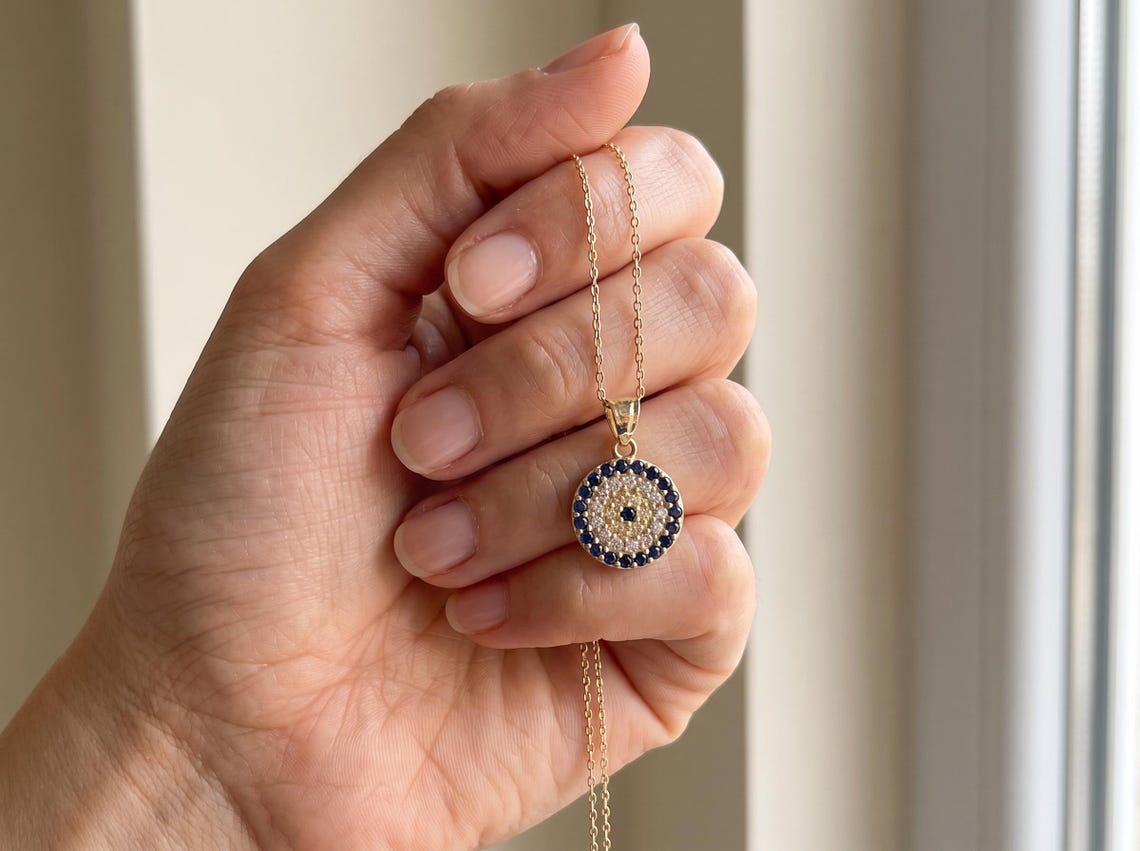
In popular folklore, each evil eye color carries its own meaning: dark blue for protection and calm, light blue for clarity and peace, green for happiness and balance, red for courage and energy, and white for purity and fresh starts. The classic Turkish nazar is cobalt blue, and that deep blue remains the color most closely tied to the tradition.
Our atelier sits inside the Grand Bazaar, where blue glass nazar beads hang by the hundreds, so we hear questions about colors every day. This guide explains the color meanings as folklore and modern custom, not as guaranteed effects, and helps you choose a color you will enjoy wearing.
The belief in the evil eye, the idea that envy or a harmful glance can bring bad luck, is very old and appears across the Mediterranean, the Middle East and beyond. In Turkey, the nazar boncuğu is a glass bead with concentric circles, usually dark blue, white, light blue and a dark center, meant to "look back" at the envious gaze. It is hung in homes, cars and shops, pinned to baby clothes and worn as jewelry.
For a full history, read our guide to the Turkish evil eye and nazar meaning. The color meanings below are a newer layer of custom that has grown as evil eye jewelry has spread worldwide.
| Color | Folklore and popular meaning |
|---|---|
| Dark blue | The traditional color: protection, calm, good fortune |
| Light blue | Clarity, peace, a broader outlook |
| Turquoise | Health, communication, connection to tradition |
| Green | Happiness, balance, new beginnings, success |
| Red | Courage, energy, passion |
| Pink | Friendship, affection, calm |
| White | Purity, clarity, fresh starts |
| Yellow or gold | Strength, health, optimism |
| Purple | Imagination, balance |
| Black | Strength, resilience |
Different sources list slightly different meanings, so treat this as a guide to custom rather than a fixed rulebook.
Cobalt blue glass is the heart of the Turkish nazar, and if you want the traditional look, this is the color to choose. Light blue appears in the inner ring of many classic beads and is often described as the color of the sky and the sea, linked to peace and openness. A blue evil eye is the safest choice for a gift because it reads as the original symbol everywhere.
 Evil Eye Necklace
View Evil Eye Necklace on Etsy
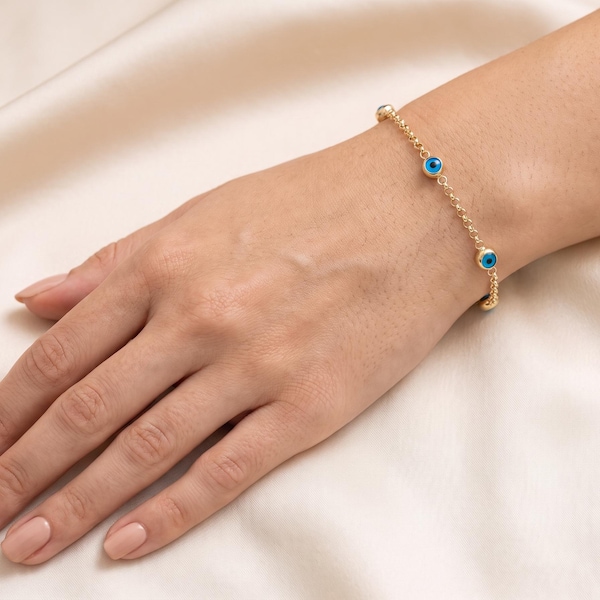 Evil Eye Bracelet with Five Glass Nazar Beads
View Evil Eye Bracelet with Five Glass Nazar Beads on Etsy
Our pave medallion sets blue cubic zirconia in solid 14K gold for a sparkling take on the classic bead. The bracelet carries five glass nazar beads on a rolo chain, the closest to what you would see hanging in the bazaar.
Turquoise has its own long history in Turkish and Anatolian jewelry; the name itself is thought to come from the French for "Turkish stone." A turquoise evil eye blends two traditions and is often linked with health and connection. Green is associated with happiness, balance and growth, and many people choose it for a fresh start such as a new job or a new home.
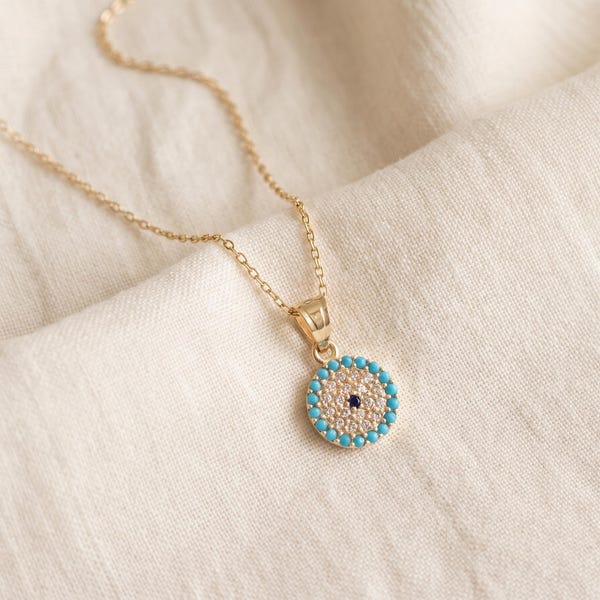 Turquoise Evil Eye Necklace
View Turquoise Evil Eye Necklace on Etsy
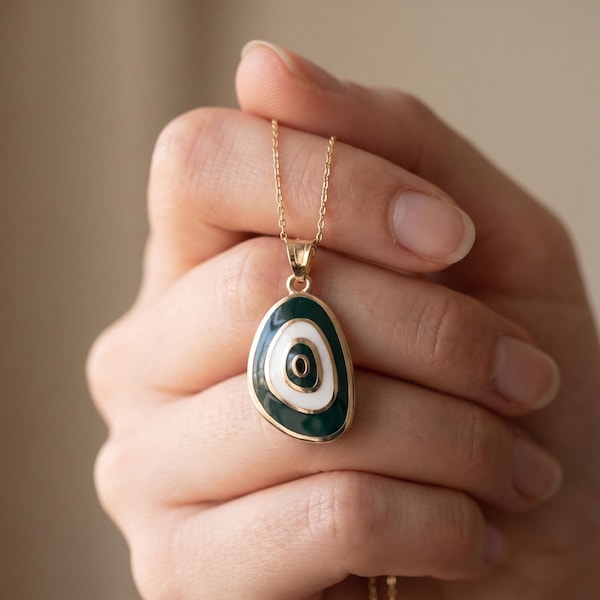 Evil Eye Necklace
View Evil Eye Necklace on Etsy
The dainty turquoise disc suits everyday layering, while the green enamel pebble pendant gives a softer, modern look. Our turquoise jewelry meaning guide goes deeper into that stone.
Red evil eyes are chosen for courage and energy, sometimes before a big challenge. Pink is a gentle color associated with friendship, which makes it popular for best friend gifts. White suggests purity and clarity and pairs well with pearls. Purple, yellow and black are less common but carry the meanings shown in the table above.
If you cannot choose, multicolor evil eye bracelets combine several shades, and many people simply pick the color they like most. In Turkish custom the symbol itself matters far more than the exact shade.
The nazar appears on every kind of jewelry. Small charms work well on rings and hoop earrings, where they catch the eye without dominating, and a hand chain makes the symbol a feature.
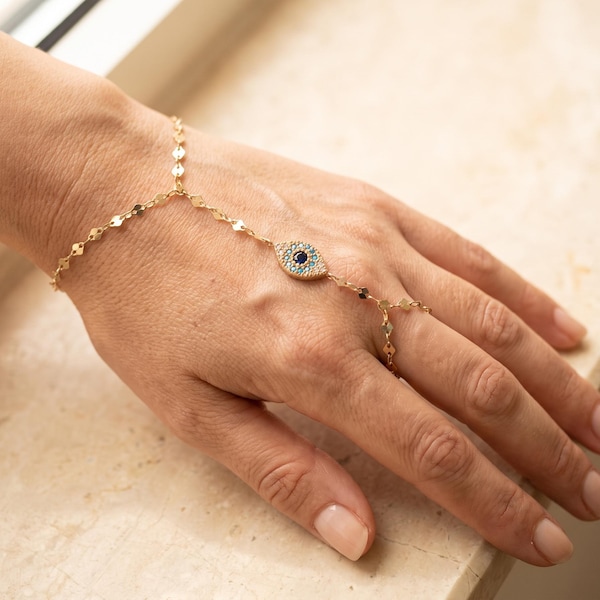 Evil Eye Hand Chain Bracelet
View Evil Eye Hand Chain Bracelet on Etsy
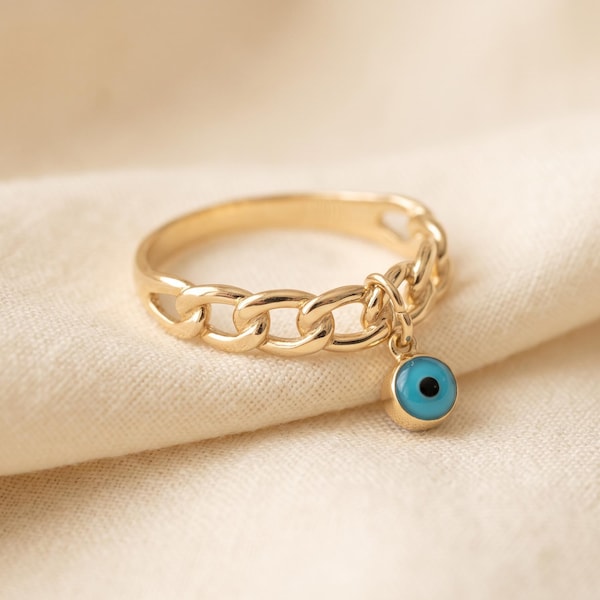 Curb Chain Ring with Turkish Nazar Charm
View Curb Chain Ring with Turkish Nazar Charm on Etsy
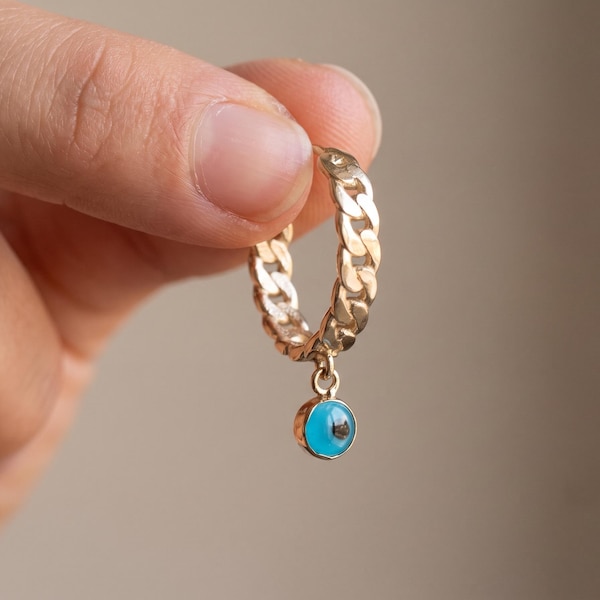 Curb Chain Hoop Earrings with Turkish Nazar Charm
View Curb Chain Hoop Earrings with Turkish Nazar Charm on Etsy
Our evil eye bracelet guide covers sizing and styles, and you can find more chains in our hand chain collection. For other protective symbols from the same region, read about the hamsa hand and Anatolian jewelry motifs.
You can also think about how the color sits with your other jewelry. Blue and turquoise look bright and fresh in yellow gold. Green and red stand out well against plain gold chains. White and pink are soft enough to pair with pearls. If you wear an evil eye every day, a single color that matches most of your wardrobe will get worn far more than a bold shade saved for special occasions. Some families also choose a color for each child, which turns a simple nazar into a small, personal tradition of their own.
Whatever the color, check that the metal is solid gold stamped 585 if you want a piece that lasts. Glass beads can crack if knocked, while enamel and CZ in gold are more durable.
The traditional Turkish nazar is cobalt dark blue glass, with rings of white and light blue around a dark center.
In popular folklore, a green evil eye is associated with happiness, balance, success and new beginnings.
The evil eye is a cultural tradition, and the color meanings are folklore and modern custom. Most people simply choose the color that means the most to them.
Yes. Gifting is a common custom in Turkey, but many people buy and wear a nazar for themselves.
Blue and turquoise are the most common choices for babies, following the classic Turkish custom of pinning a blue nazar to a baby's clothing.
Share:
July birthstone ruby jewelry explained: ruby meaning and history, natural ruby vs ruby-colored CZ, and how to choose solid 14K gold for a July birthd…
May birthstone emerald jewelry guide: emerald meaning and history, natural vs CZ green stones, and how to choose a solid 14K gold piece for a May bir…
Sword necklace meaning explained: strength, protection and the Zulfiqar's history in Islamic and Turkish tradition, plus tips for a solid gold sword…