How Jewelry Is Polished: Inside the Goldsmith's Finishing Process
How jewelry is polished: filing, sanding, tripoli and rouge, tumbling and ultrasonic cleaning, plus the difference between high-polish and matte fini…

Anatolian jewelry motifs are the symbols that have decorated jewelry, textiles and homes across Turkey's Anatolian heartland for centuries, including the nazar (evil eye), the Şahmeran, the hand of Fatima, the tree of life, the tulip and the geometric symbols of kilim weaving. Each carries traditional meanings, usually of protection, fertility, abundance or good fortune.
These motifs are part of everyday life in Turkey, and many of them appear in the pieces our goldsmiths make. Below we explain the best-known ones, where they come from and how they are worn today. As always, we describe these meanings as tradition and folklore, not as guaranteed effects.
Anatolia, the peninsula that makes up most of modern Turkey, has been home to many civilizations over thousands of years. Its symbols reflect that layered history: some are linked to ancient Mediterranean beliefs, some to Turkic nomadic culture, some to Islamic art and some to local folklore. Many motifs traveled between media, appearing in carpets and kilims, embroidery, tiles, wood carving and jewelry.
Because meanings vary by region and family, the explanations below are the most widely shared interpretations rather than fixed definitions.
The nazar is the blue eye-shaped charm seen everywhere in Turkey, from doorways and cars to baby clothes and bracelets. Traditionally, it is believed to deflect the "evil eye," harm caused by envious or admiring looks. Classic nazar beads are made of blue glass with concentric circles of dark blue, white and light blue.
In jewelry, the nazar appears as enamel, glass, colored stones or pave settings, and in many colors beyond blue. Our article on the Turkish evil eye (nazar) covers the tradition in depth, and evil eye colors and their meanings explains the different shades.
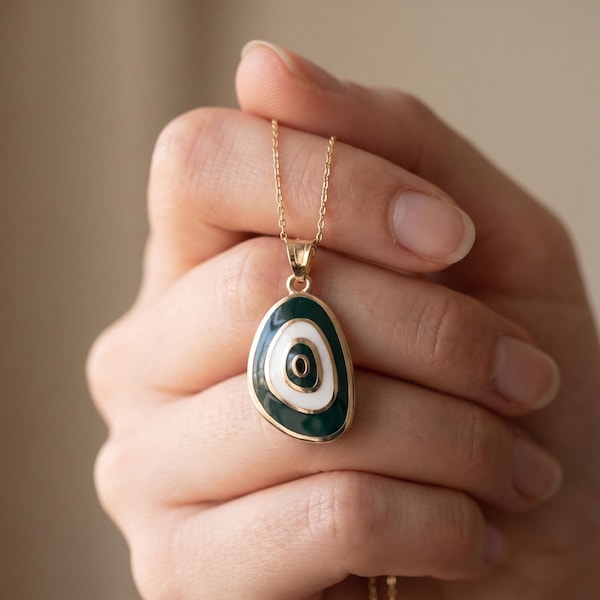 Evil Eye Necklace
View Evil Eye Necklace on Etsy
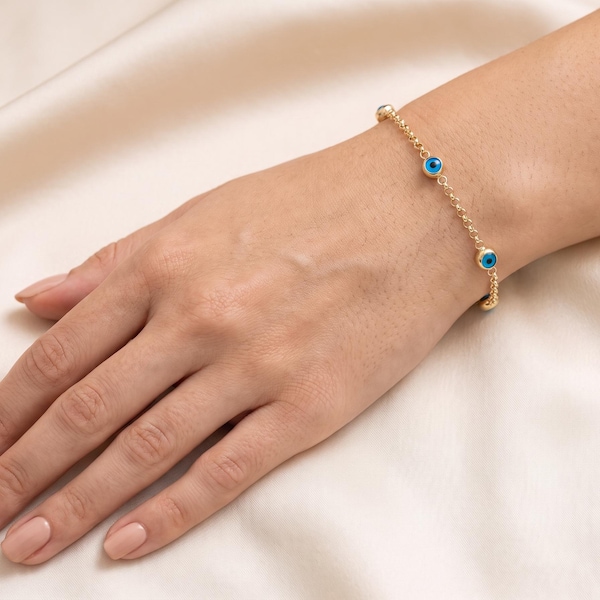 Evil Eye Bracelet with Five Glass Nazar Beads
View Evil Eye Bracelet with Five Glass Nazar Beads on Etsy
Şahmeran is a figure from Anatolian folklore: a wise queen of snakes, usually shown with a woman's head and upper body and a serpent's tail. In the best-known versions of the legend, she shares her knowledge of healing with a young man who later betrays her secret. The story is especially associated with southeastern Anatolia and the Mardin region, as well as Tarsus in the south, where Şahmeran images are traditionally painted on glass, embroidered and worked into silver and gold.
In jewelry, Şahmeran is often represented by segmented, scale-like links that flow across the hand or wrist, as in Şahmeran hand chains. Read more in our Şahmeran meaning guide and in our article on snake jewelry meaning.
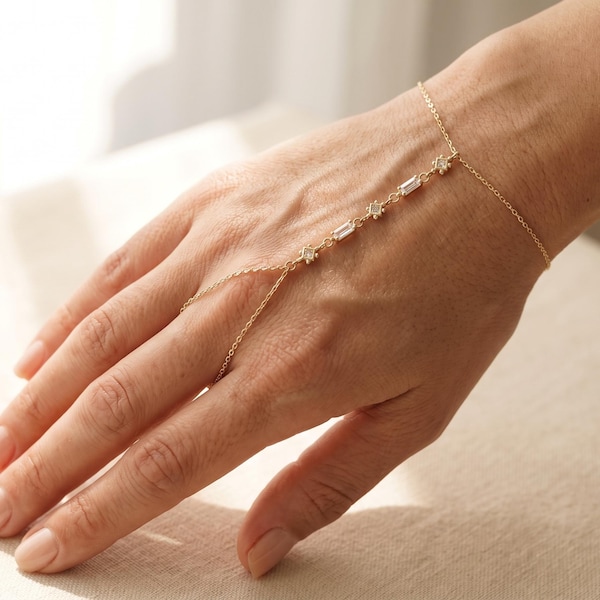 Hand Chain Bracelet with Baguette Stones
View Hand Chain Bracelet with Baguette Stones on Etsy
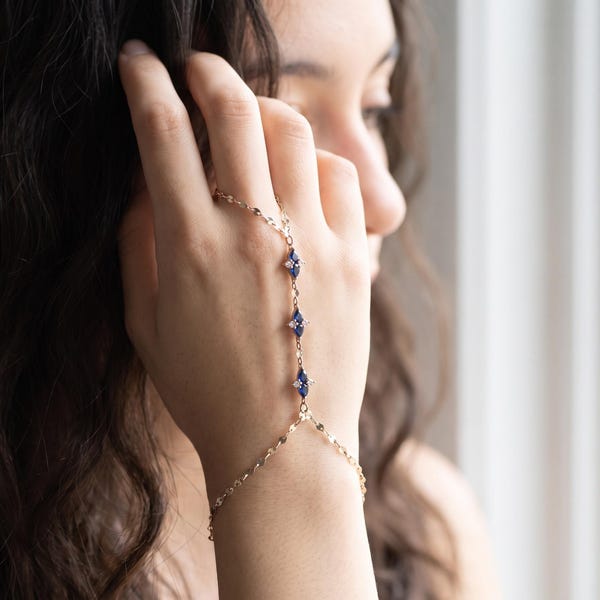 Hand Chain Bracelet with Blue Sapphire
View Hand Chain Bracelet with Blue Sapphire on Etsy
The stones on these pieces are described on each listing; colored stones are not presented as natural sapphires or emeralds unless the listing says so.
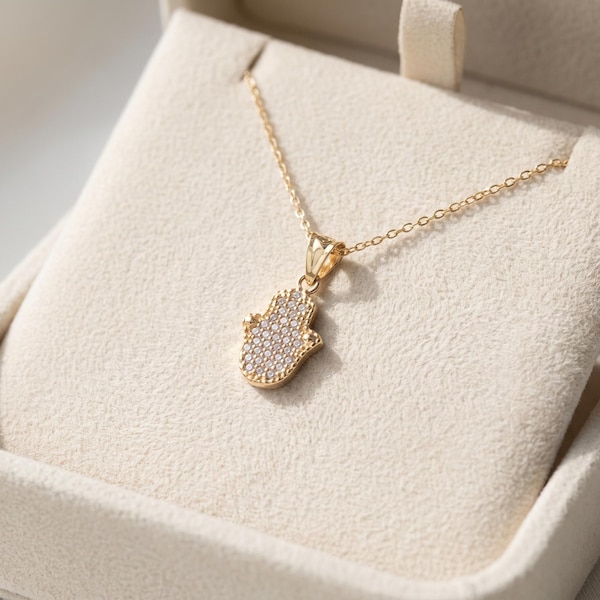
In Turkey, the open-hand symbol is commonly called the hand of Fatima (Fatma Ana'nın Eli). It is found across the Middle East and North Africa and is traditionally seen as a protective sign, sometimes combined with an eye in the palm. Our hamsa hand meaning article explains its history across cultures.
Anatolian kilims (flat-woven rugs) use a rich vocabulary of geometric motifs. Many have found their way into jewelry, especially in engraved and stamped patterns.
| Motif | What it looks like | Traditional meaning |
|---|---|---|
| Elibelinde ("hands on hips") | A stylized female figure with hands on hips | Motherhood, fertility, femininity |
| Koçboynuzu (ram's horn) | Curling horn shapes | Strength, masculinity, heroism |
| Göz (eye) | Diamond or rhombus shapes | Protection from the evil eye |
| Hayat ağacı (tree of life) | A vertical tree or branching form | Life, continuity, the wish for immortality |
| Bereket (abundance) | Combined elibelinde and ram's horn forms | Fertility and plenty |
| Yıldız (star) | Eight-pointed stars and rosettes | Happiness, good fortune |
| Su yolu (water path) | Zigzag or wave lines | The importance and flow of water, life |
Meanings like these are passed down by weavers and vary between regions and families, so treat them as traditions rather than strict rules.
The tulip has deep roots in Turkish culture and was a favorite of Ottoman art. It appears on tiles, textiles and jewelry as a symbol of beauty. Our article on Ottoman jewelry history covers its role at court.
With its many seeds, the pomegranate is a traditional symbol of fertility and abundance across Anatolia and the wider Mediterranean.
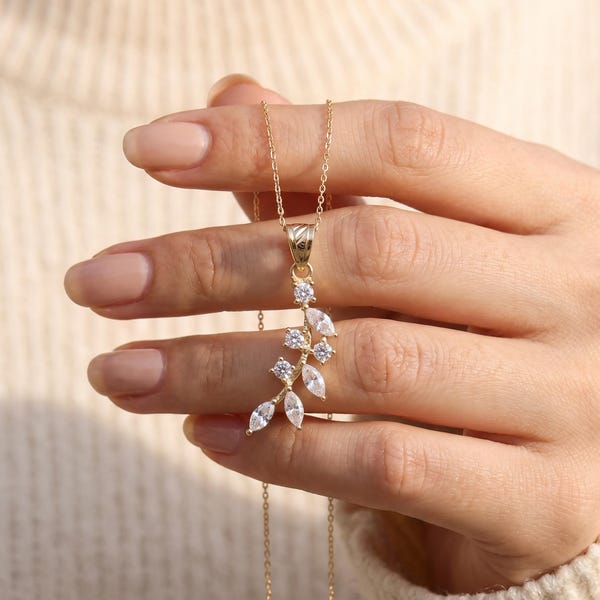
Leaves and branches recall the tree of life and the land itself. The olive branch, grown across the Aegean and Mediterranean coasts, is widely seen as a symbol of peace.
The crescent moon and star became a symbol of the Ottoman state and is the central emblem of the Turkish flag today. It is worn as a sign of national pride and heritage. See our guide to the crescent moon and star meaning.
Modern jewelry often takes a single motif and makes it simple enough to wear every day: a small nazar disc on a fine chain, a slim Şahmeran hand chain, a pave hamsa, a leaf pendant. Plain polished versions suit everyday wear, while pave or enamel versions add color and sparkle. Some people wear a motif for its traditional meaning, some as a link to family roots, and others simply because they like the design. All of these are good reasons.
Read more about customs in Turkish jewelry traditions, or browse our Şahmeran hand chains and symbol necklaces. Every piece is solid 14K gold, stamped 585.
The nazar, or evil eye, is the most widespread. It appears on jewelry, homes and baby clothes throughout Turkey as a traditional protective symbol.
In Anatolian folklore, Şahmeran is the wise queen of snakes, associated with knowledge, healing and the keeping of secrets. She is especially tied to the Mardin and Tarsus regions.
Elibelinde, a stylized figure with hands on hips, is traditionally linked to motherhood and fertility in Anatolian kilim weaving.
Generally yes. Symbols like the nazar are widely given as gifts to visitors and friends. Wearing them with an understanding of their meaning is a respectful way to appreciate the culture.
No. Regional pieces were made in both silver and gold, and today many motifs are made in solid gold for everyday wear.
Share:
How jewelry is polished: filing, sanding, tripoli and rouge, tumbling and ultrasonic cleaning, plus the difference between high-polish and matte fini…
How gold chains are made: alloying, drawing wire, forming and soldering links, shaping rope, wheat and curb patterns, then diamond-cutting and polish…
Lost-wax casting explained: how a wax model becomes a solid gold ring or pendant, from carving and investing to burnout, pouring and finishing at the…