Earring Backs Guide: Push Backs, Screw Backs, Hinged Hoops and More
Earring backs guide: push backs, screw backs, locking backs, hinged and snap hoops. See which is most secure, how to fit them and how to stop losing…


A good jewelry maintenance checklist comes down to four rhythms: daily habits (put jewelry on last, take it off first), a weekly wipe, a monthly check of clasps, stones and chains, and a yearly professional inspection. Follow these and solid gold jewelry can stay in excellent shape for decades.
Gold itself is a forgiving metal. Solid 14K gold does not rust or flake, but clasps wear, prongs bend, chains collect grime and stones loosen over time. The checklist below is what goldsmiths typically recommend, written so you can print it or save it on your phone.
Most damage happens through ordinary routines, so small daily habits do the most work.
Once a week, give your most-worn pieces a gentle wipe with a soft, lint-free cloth. This removes skin oils and residue before they build up and dull the shine.
 Flat Wedding Band Polished Ring for Him and Her
View Flat Wedding Band Polished Ring for Him and Her on Etsy
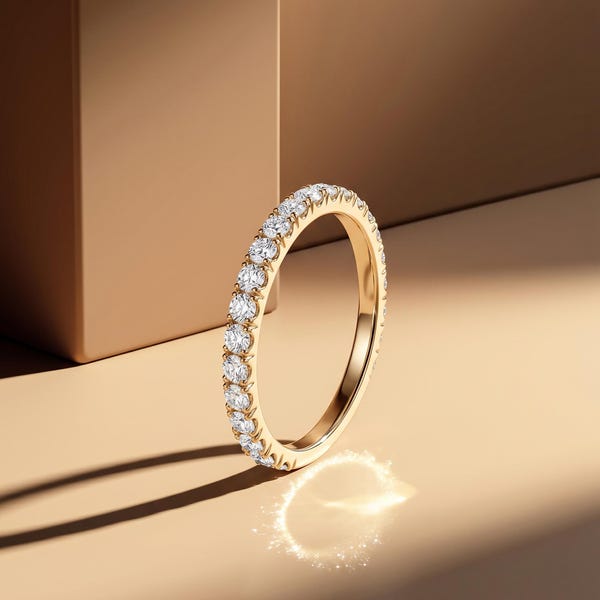 Half Eternity Ring
View Half Eternity Ring on Etsy
Once a month, do a proper clean and a careful look at each piece you wear often.
Our full guide on how to clean gold jewelry at home covers details for pearls, enamel and natural stones, which need gentler handling. For pieces set with CZ, see how to clean cubic zirconia.
Every few months, take everything out of your jewelry box and look at how it is stored.
Our gold jewelry storage guide goes into more detail.
Once a year, ask a goldsmith or jeweler to look over the pieces you wear every day, especially rings with stones and heavily used bracelets. A professional check typically includes:
Our lifetime guarantee covers the craftsmanship of our own pieces, so if something looks wrong, message us on Etsy and Şerif will answer personally.
| How often | Task | Why it matters |
|---|---|---|
| Daily | Put jewelry on last, take it off first; remove rings for hard work | Prevents buildup, scratches and knocks |
| Daily | Remove before pools, hot tubs and the sea | Protects solder joints and settings |
| Weekly | Wipe with a soft cloth | Keeps the shine, removes oils |
| Monthly | Soak, brush and rinse | Restores sparkle to stones and chains |
| Monthly | Check clasps, prongs, jump rings, backs | Catches small problems before a loss |
| Seasonally | Reorganize storage, rotate pieces | Prevents tangles and scratches |
| Yearly | Professional inspection and clean | Tightens stones, reinforces worn parts |
Do not wait for the next scheduled check if you notice any of these:
Stop wearing the piece and have it looked at. Small repairs are simple; lost stones and broken chains are harder. If a chain has already broken, our guide on fixing a broken gold chain explains your options.
Solid gold makes this checklist shorter. You do not need to worry about plating wearing off, green marks from base metal or re-dipping. Solid 14K gold may develop a soft patina and fine surface scratches over the years, which many people like, and it can be polished back to a bright finish. Our piece on whether 14K gold tarnishes explains why. Browse our gold rings or gold necklaces to see pieces made for everyday wear.
Wipe pieces you wear daily once a week and give them a soap-and-water clean about once a month. Pieces worn occasionally can be cleaned when they look dull.
Hold the piece near your ear and tap it gently; a rattle or click is a warning sign. You can also look for movement under a magnifier or feel for a prong that catches on fabric.
For rings with stones and pieces you wear daily, a yearly check is a sensible habit. Plain pieces worn occasionally need professional attention less often.
It is better not to. Both are abrasive and can leave fine scratches on gold and dull some stones. Mild dish soap and warm water are safer.
Our lifetime guarantee covers craftsmanship. If you notice a problem with one of our pieces, message us on Etsy with photos and we will look at it with you.
Share:
Earring backs guide: push backs, screw backs, locking backs, hinged and snap hoops. See which is most secure, how to fit them and how to stop losing…
Jewelry clasp types explained: lobster, spring ring, box, toggle and magnetic. Learn how each works, which is most secure and how to keep a clasp hea…
Why does gold turn skin black? Usually makeup or metal particles rub off tiny flecks, or sweat reacts with alloys. See the real causes and easy fixes.